Archive for Tenkara Philosophy

Novel Tenkara

Novel Tenkara . . .

Hudson River Sunset 11 2014

Hudson River Sunset
11 2014

Tenkara infuses writing with rhythm. The result can be, sometimes, a longer form for pure soulful entertainment:

8.

. . . He heard a crow, birds seen as conspicuous black spots adorning the cooler bare branched times. The call from above, the coal black guest from the nest perched attentive on the center point of the house’s gabled third floor. Bird in interaction rocked up and down a few times and spoke again.

“Smart-ass bird! Are you cheering me on, or laughing at me?”

“Caw-Caw-Caw,” the crow replied.

*** *** ***

. . . He took out his frustration by reeling in as hard as he could without knotting up the line. Such little private protests were all he would muster. He was too timid to show anger. Petey was a valuable shield against bullies. Let Petey lead; they shared other fun.

Once, without Petey, he missed school bus and had to wait for PAT Transit to take him down the long inclined face of the hill. A kid his age but bigger, cloaked in a long, untucked white shirt, appeared from behind a parked van:

“Hey! Catch this!”

Football flew forth in his direction. Young Robert, stalled in thought, cringed a bit and stubbed his left index finger in fending off the hammer ball.

“I’m a basketball player,” he yelled in his defense, which he followed with the first and only passable spiral pass of his life. The other kid caught his ball.

All was cool until a Saturday afternoon, when on his way to Center Arcade, he found himself sweating at the same bus top. This time he heard first the sound of a hard ball bouncing on pavement. A pause followed the kid’s appearance from behind another, different van:

“Hey, Basketball Player.”

Rubber burned. Young Robert ran, thus beginning his secured future as a cross country player.

Hudson River Sunset 11 2014 (photo by Maryann Amici)

Hudson River Sunset
11 2014
(photo by Maryann Amici)

– rPs 11 24 2012

Postscript: (excerpts from Little Hills: a novel by ron P. swegman)

Leave a Comment

Football Helmets and Fall Fishes

Football Helmets and Fall Fishes . . .

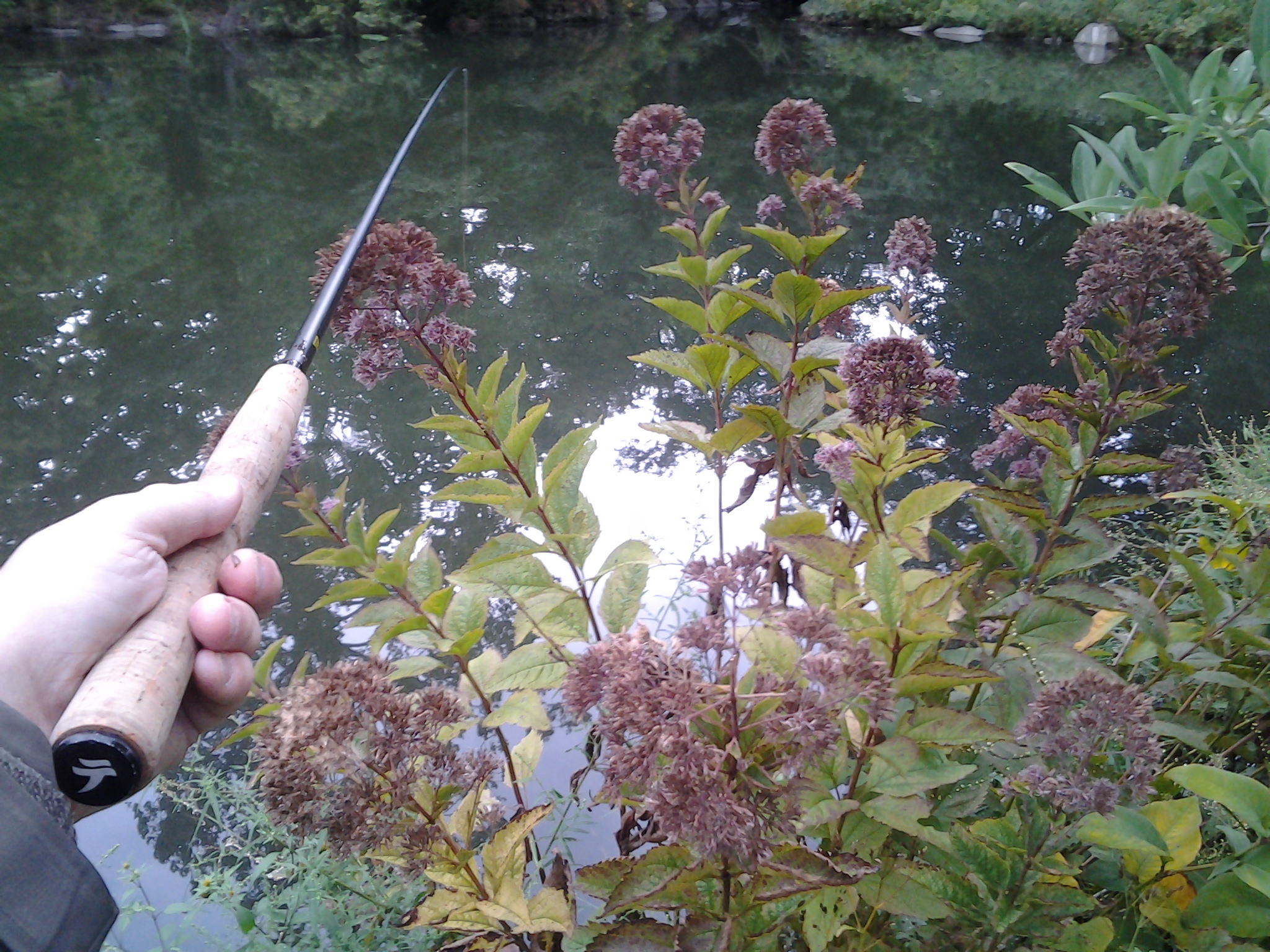
The Reach of Tenkara (photo taken 09 2014)

The Reach of Tenkara
(photo taken 09 2014)

The night game of summer has moved on to new rules played in the daylight. Rain may pass through, and the reopening of the sky brings good time to go outside and fish. When the dark does descend, quickly and almost cold, home calls as the nostalgia door opens to college year memories or past seasons, some of national championship caliber.

Part of my own continued education in life experience has been set amidst a geography where home waters caress manes of watercress. There trout abound. Other neighbors on the stream, offered perhaps a polite wave from a fly fishing undergraduate, have included names of Harvey, Humphreys, and Meck and a Gordon, too, among many others; my constant sense of the eastern provincial in America stays connected, centered on a Pennsylvania county as well as five boroughs of New York City.

Neighbors of the urban angle abound also and some distant shores have been or shall be explored alone and together with even more others. Before such diversions, the sharpened focus on a single bass, any bass, remains first in line.

Largemouth Bass (photo taken 09 16 2014)

Largemouth Bass
(photo taken 09 16 2014)

Bass season is again back in session.

Temperatures drop to fifties and sixties Fahrenheit. Sunlight remains bright, often unfiltered, but days of rippled gray skies do pass. Rain remains brief unless it’s a hurricane trailing through for four to five days. Ponds again begin to clear and darken. A frosting of bright duckweed foots cattails and pickerel weed. Slow presentation with a long horizontal reach, a natural fishing problem for tenkara to tackle and bring to quick resolve, can take a kebari to the bass level (a multifaceted pun too compelling not to intend).

The largemouth and smallmouth bass alike, after striking your pattern in a singular fashion near the water column’s bottom, bring fast reactions to the top. This athleticism has had a portion of its antecedence come from the fish’s own daily hunting. Black and blue damselflies, measured in inches, still pass time in the air. Nymphs that resemble such varieties in various stages of development swim and crawl throughout a still water. Bluegill fry swim in small schools, too. Bass can be lured when these larger naturals are mimicked by an equal kebari tied to a generous tippet matched with a Level Line or a Traditional Tapered.

A largemouth, hooked on such a kebari of size 8 or 10, may jump three times and roll on each leap skyward. Size varies by location. Any fish that is perhaps best sized to a September zucchini may be noteworthy to big fish fans.

Smaller fish – dill pickle bass and slab bluegill – still insist on being counted. Vigorous takes by a quarter pound fish inhales the pattern deep in the mouth, doubles the perceived strength of pull during breaking sprints, which brings added utility to the longer tippet with its greater capability for stretch.

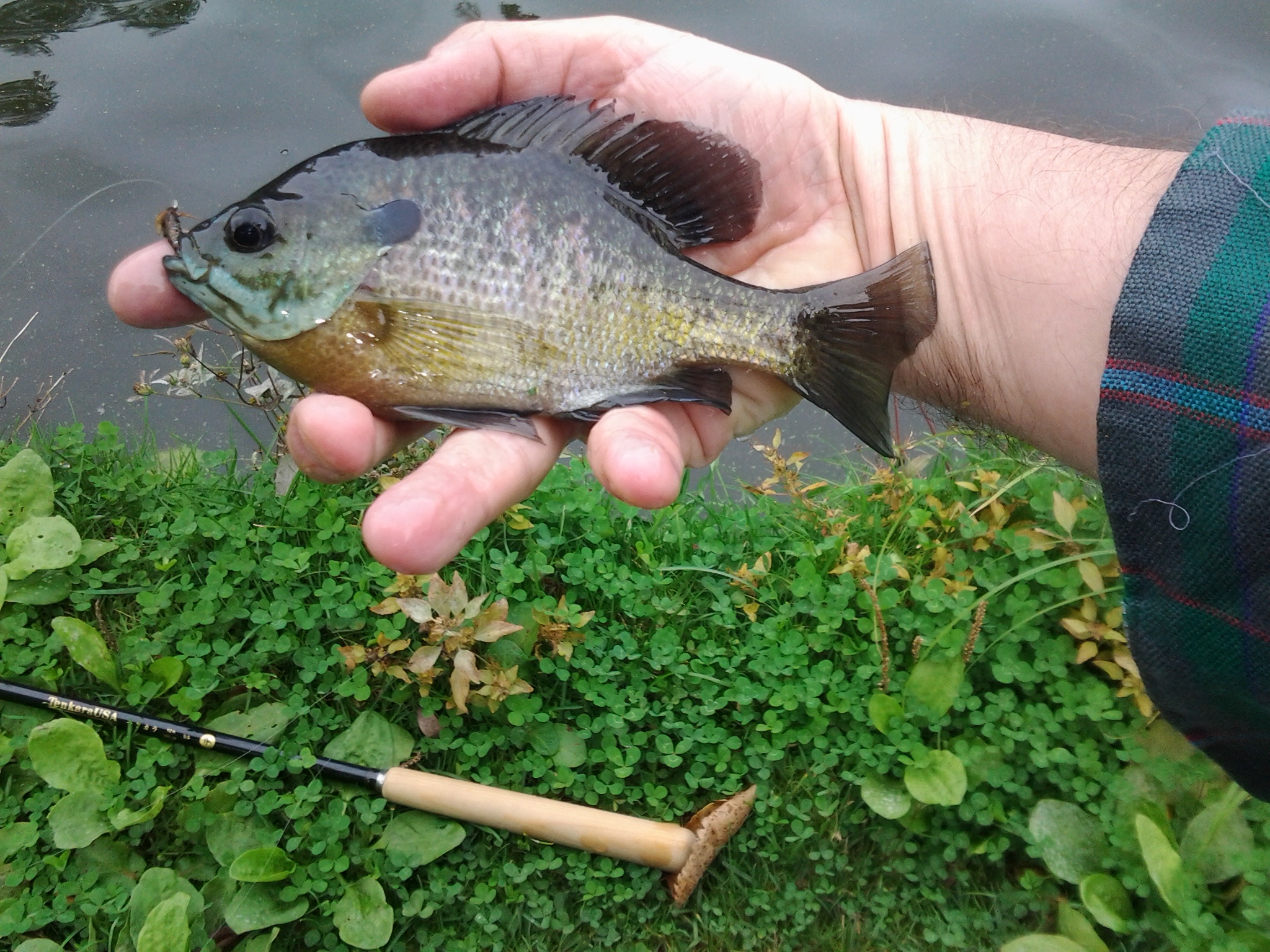
Be mindful to bring clamps with a few inches of reach. To release a bluegill hooked so deeply, first fold the fish’s spiny dorsal fin down with the inside of your wet fingers, grip the fly with the teeth of the clamp, twist as far as necessary as a slight downward push on the pattern is made. This most often dislodges the hook with minimal penetration of the fish’s interior. Most small fish will thrust voluntarily from hands placed low over the water and depart with a resounding and reassuring splash.
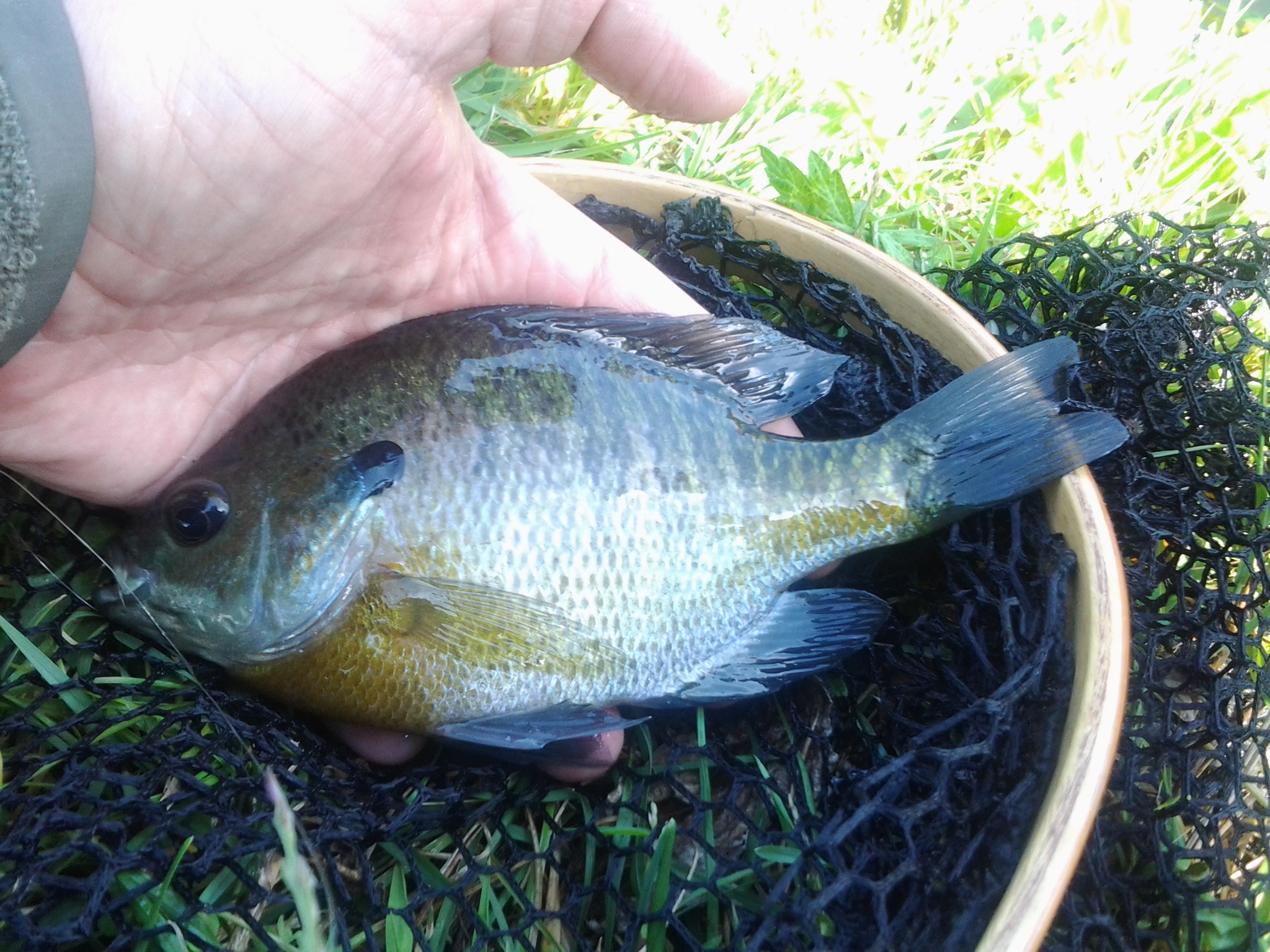
A net facilitates the unhooking of an autumn bright bluegill. (photo taken 09 16 2014)

A net facilitates the unhooking of an autumn bright bluegill.
(photo taken 09 16 2014)

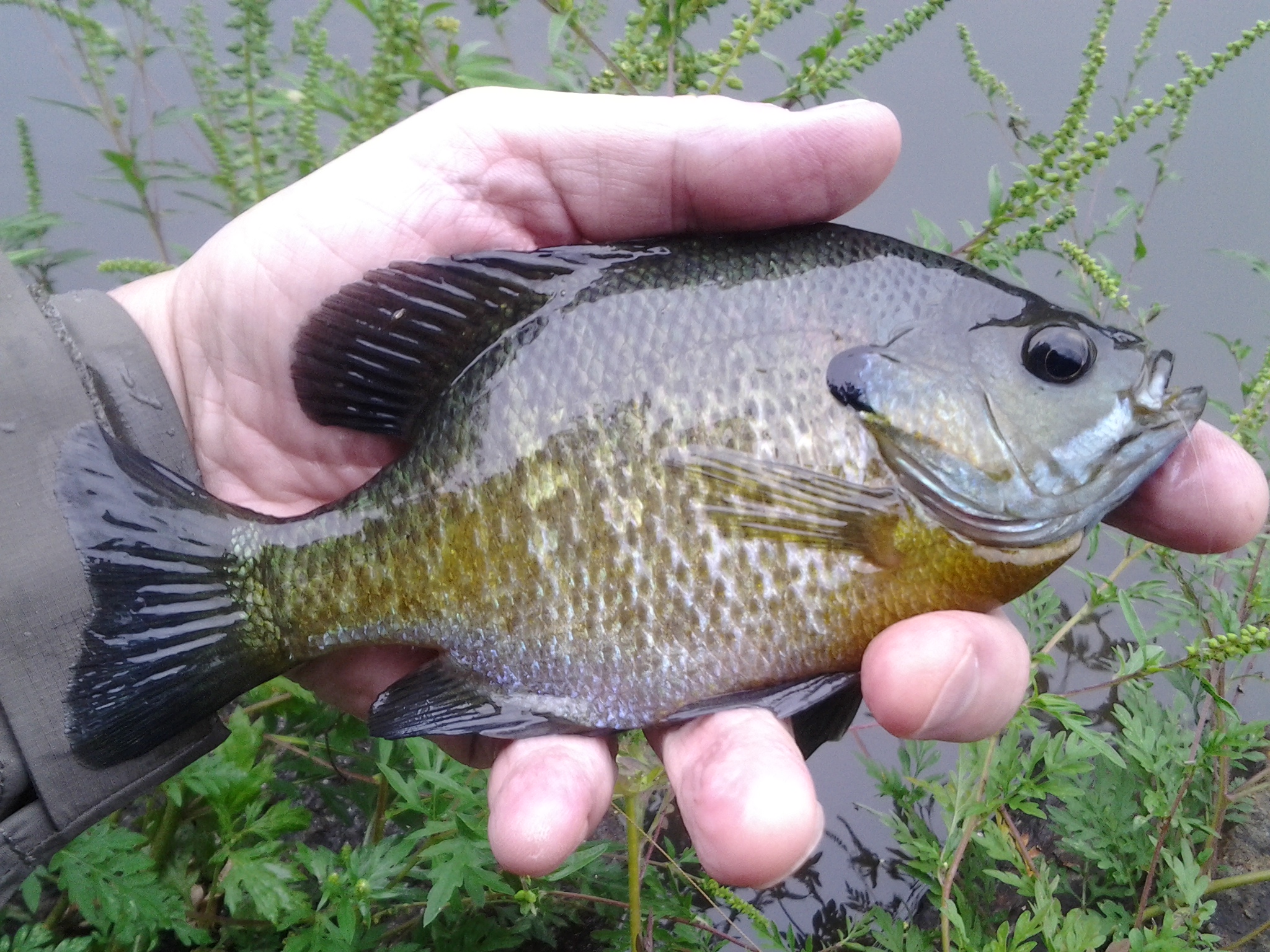
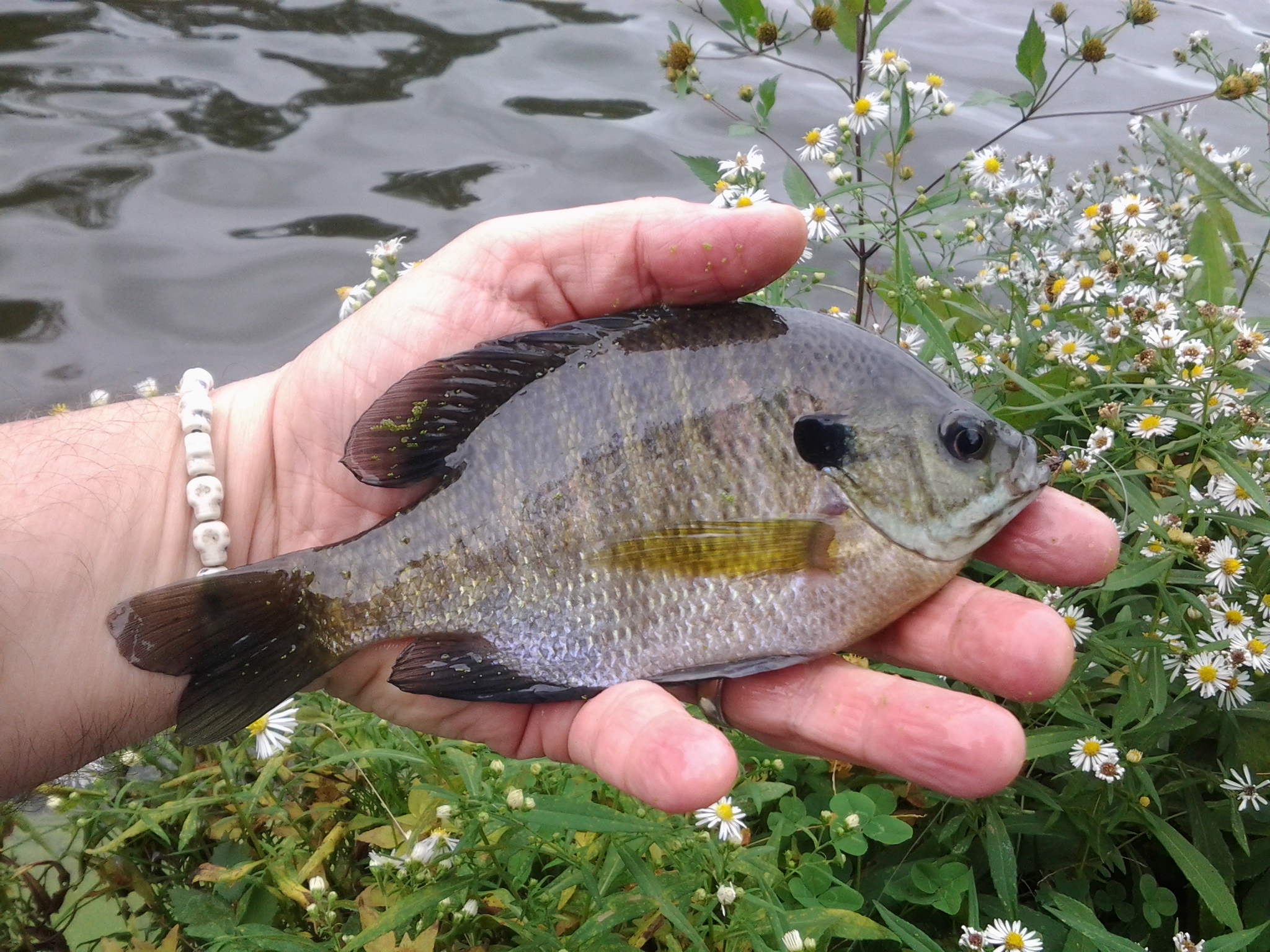
Orange Jewelweed and pale purple clusters of New York Ironweed border many New York stillwaters by late September. The green of leaves has acquired a more yellow cast. Some bluegills exhibit similar rusted or buttered bellies below strong barred sides. The bass remain silvered and green with a distinct black lateral band. Colored patterns all that would fit on a football helmet with ease.

The Football Helmet Bass (photo taken 09 2014)

The Football Helmet Bass
(photo taken 09 2014)

– rps 09 24 2014

Postscript: Read more about the damselfly and dragonfly at Backyard and Beyond here: http://matthewwills.com/2013/08/07/lilypad-forktail/

And here: http://matthewwills.com/2013/05/31/dragonfly-pond-watch/

Comments (1)

Tenkara Any, Any

Tenkara Any, Any . . .

August in NYC 1:  Bluegill Male (photo taken 08 2014)

August in NYC 1:
Bluegill Male
(photo taken 08 2014)

My ultimate life raft kit shall henceforth include always a tenkara rod, kebari, and the tackle pictured in “On the Water, On Line” weeks earlier. Saltwater casts from an inflated raft will lure lifesaving sashimi sustenance. Extended alpine accident withdrawal may be sustained by mountain trout or swamp panfish. Universal tool is tenkara.

During the good times, the catch remains best when made a repeatable encounter.

August in NYC 2: Bluegill Female (photo taken 08 2014)

August in NYC 2:
Bluegill Female
(photo taken 08 2014)

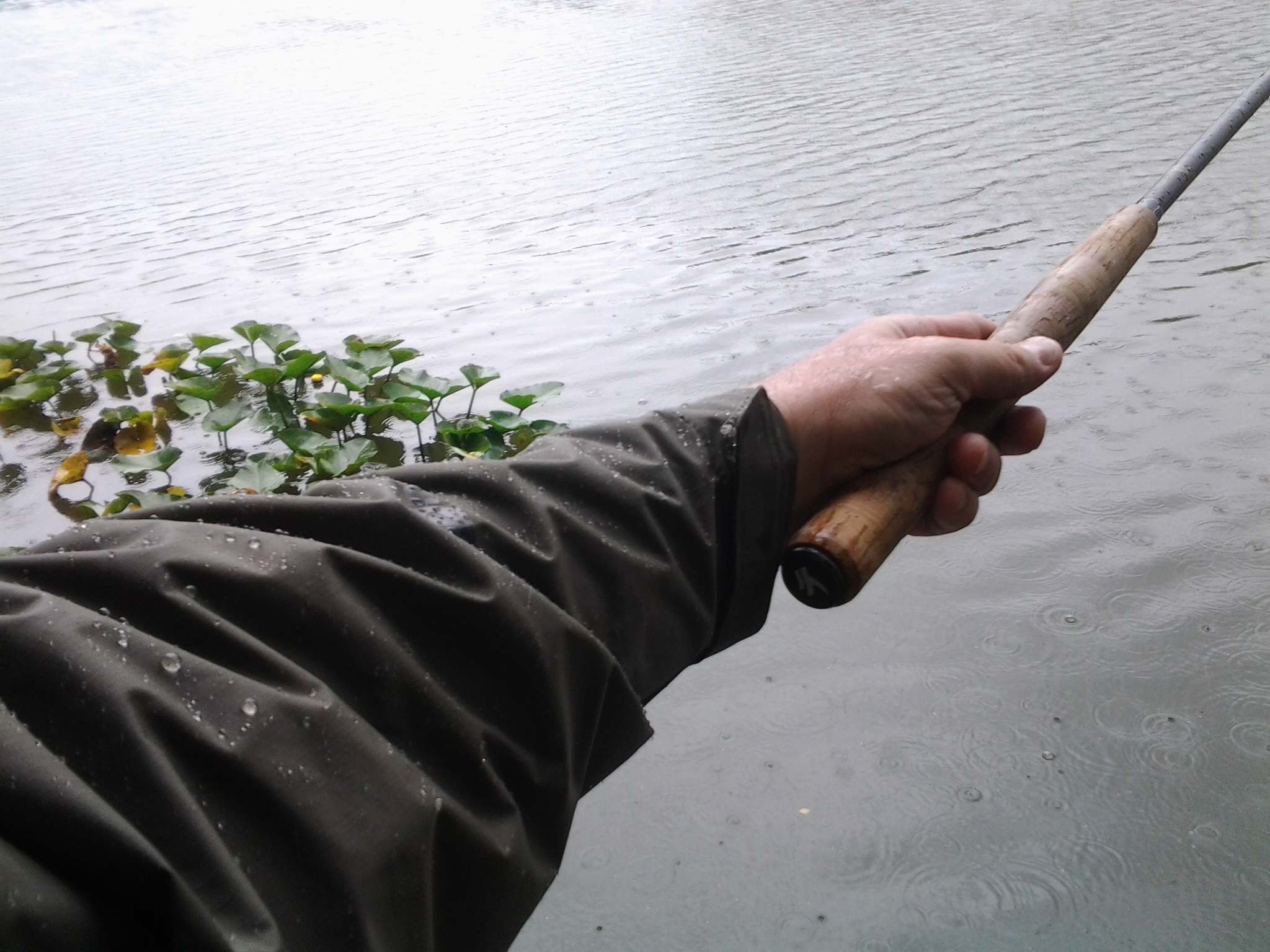
Rain may fall. Good. Fishing better then is my usual state of play when best embraced by a wading jacket.

Padded Rain

Padded Rain

Tenkara Any . . . Time, Any . . . Where.

Yamame at Rest

Yamame at Rest

As for the necessary Kebari, that is one field, universal . . . in scale, in choice.

Any ideas?

– rPs 08 27 2014

Comments (1)

On the Water, On Line

On the Water, On Line . . .

On the Water August 2014

On the Water
August 2014

On the Water

On the Water, the magazine, is in print this August and the new issue is now available. “Fishing the Five Boroughs” suggests one group of NYC lakes to fish during a long weekend. My Tenkara USA Ebisu makes another cameo in one of the photos.

Saltwater Line Leader Ingredients (photo taken 08 11 2014)

Saltwater Line Leader Ingredients
(photo taken 08 11 2014)

On line
Saltwater panfishing on a tenkara rod flex of 7/3 requires a line leader formula more specific than general freshwater fishing. One I have found has fitted my form of casting and catching.

The Ingredients: 3.5 Level Line; 4 to 8 pound monofilament; one #10 swivel; optional split shot or egg sinker

The 3.5 Level Line I cut to length of the rod (I match my 12-foot Tenkara USA Yamame.) One end I use for the rod connection. I tie a slip knot to match the rod’s silk Lillian. The opposite tip is simple knotted to a #10 swivel. This midsection hardware tackle is my nod to the fascinating myriad of conventional bait rigs used for porgies, fluke, and other such inshore and estuary species. The tippet consists of a single straight length of monofilament between 4 and 8 pounds sized from one half to two-thirds the length of the Level Line.

One can go a little lighter or higher on the line’s strength. The choice depends on an individual’s hook setting and fish playing techniques and whether or not one can tolerate a three dollar Clouser Minnow lost on a piling.

The range of the leader tippet’s length provides a casting distance equal to line, rod, and outstretched arm. Twenty-five feet is a workable average and allows a captured fish to be raised over a fence or bannister without too much stress on fisher and fish.

Docks and piers over the water, a jetty projecting into the surf, or flats and estuary grass banks can all be fished with tenkara equipment. The main point is a line leader similar to this one can cast small saltwater kebari patterns, reach fish, and bring fish to net or hand.

– rPs 08 11 2014

Leave a Comment

Happiness

Happiness . . .

Green Sunfish along a New Jersey road. (photo taken 07 10 2014)

Green Sunfish along a New Jersey road. (photo taken 07 10 2014)

That little brook beside the road, a scene repeated across this globe creased by moving water. My most often wonder as a child until now is what may swim toward the artificial fly within this flow or that flow.

This one, near Passaic, New Jersey, poured forth in runs shin deep along the green edge of a Jazz Age duplex neighborhood bordered by a small park. This run of preserved water flowing through a garden city urban setting offered up on a sunny July afternoon a final treasure, finality found in a firm belief:

One Rod. One Line. One Fly.

One Fish!

Green Sunfish, Lepomis cyanellus, is my favorite freshwater tenkara tackling opponent that does not fall under the separate heading of Salmonid.

Lepomis cyanellus, the fins of this fish often exhibit a commonality with the east coast’s native char, Salvelinus fontinalus. Both fish possess rusty fins edged precisely in white.

The mouth of the green sunfish, like the rock bass and the redbreast sunfish, presents an elongated jaw like the largemouth and the smallmouth bass. Coloration, in addition to the fins, may exhibit barred or mottled jade. Sky blue vermiculation often decorates the cheeks and pronounced jawline.

I dedicated an entire chapter to the green sunfish in my most recent book, Small Fry: The Lure of the Little. One included claim of experience included the observation this species will take the wet fly when swung or pulsed beside submerged ledges of rock. Stretches of this little back alley run runs deeper along a smooth rounded ledge, casting shade at high sun and the rest of the day throughout. New Jersey bedrock: carved by water.

Additional shade here is often provided by Norway Maple trees. This introduced species, a popular planting during earlier generations, holds broad leaves that can cast a lush cover of shade over a city sidewalk and its parallel greenway brook. Numerous green sunfish dared forth from the ledges under tree shade cover and savaged passing offerings with the voracity of brookies swarming a floating beetle pattern just as it lands on a foothill creek flanked by hemlocks.

The length of the two fish runs in parallel fashion, ranging between three and eight inches in small streams. A plump green sunfish of six inches marks my personal best so far caught and released from this Passaic-area creek. This fatness counts in the strength department. The rounded green sunfish body holds more bulk against a tenkara rod’s tenderer, Lillian-tipped, rod tip.

Between dapping and pocket picking between banks set ten feet apart, successful narrow casts can be made. I practice my bow and arrow here, too. A careful bow flip can land beneath the branches where frequently a larger brooding fish often holds. Tenkara rods cover this variety of water well.

Outings spent in intense fishing, green sunfishing in a tight quarter, will leave most anglers exercised after a summer day’s length. Happiness comes from the experience, perhaps accompanied by ice cream with a fishing amigo, with which one enjoys also a cooling sunset. Fireflies began a cold, incandescent dance beneath the tree canopies as Sol submerged behind cumulus cloud and the tree line standing behind living city water.

A tenkara lesson learned with the green sunfish pointing the way.

Happiness.

– rPs 07 14 2014

Leave a Comment

April Light

April Light . . .

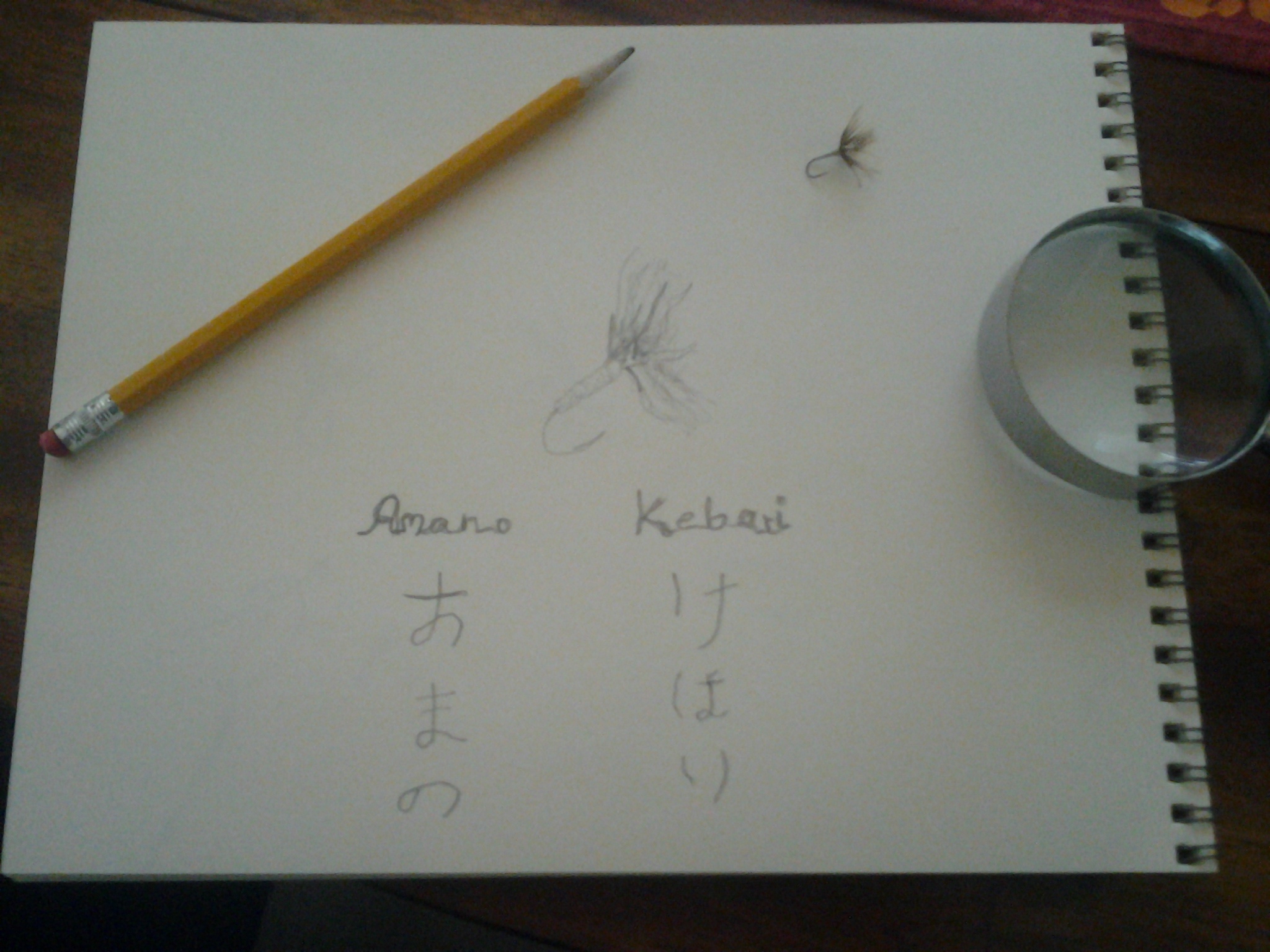
A Portrait-in-progress of an Amano Kebari (photo taken 04 28 2014)

A Portrait-in-progree of an Amano Kebari
(photo taken 04 28 2014)

May in Manhattan may start as predicted; beginning with cool rain.

The eye finds light labor and mind thinks how to work out images in contrast in two dimensions. This time the one color wrought shades gray: the gray that some years gives May as much abundant green as there is on this day of April light.

Clear, bright, today refracted sun sets the pencil in motion with an Amano Kebari portrait in repose on paper.

Just sketchin’ . . .

– rPs 04 28 2014

Comments (1)

John Gierach: “All Fishermen Are Liars”

John Gierach: “All Fishermen Are Liars” . . .

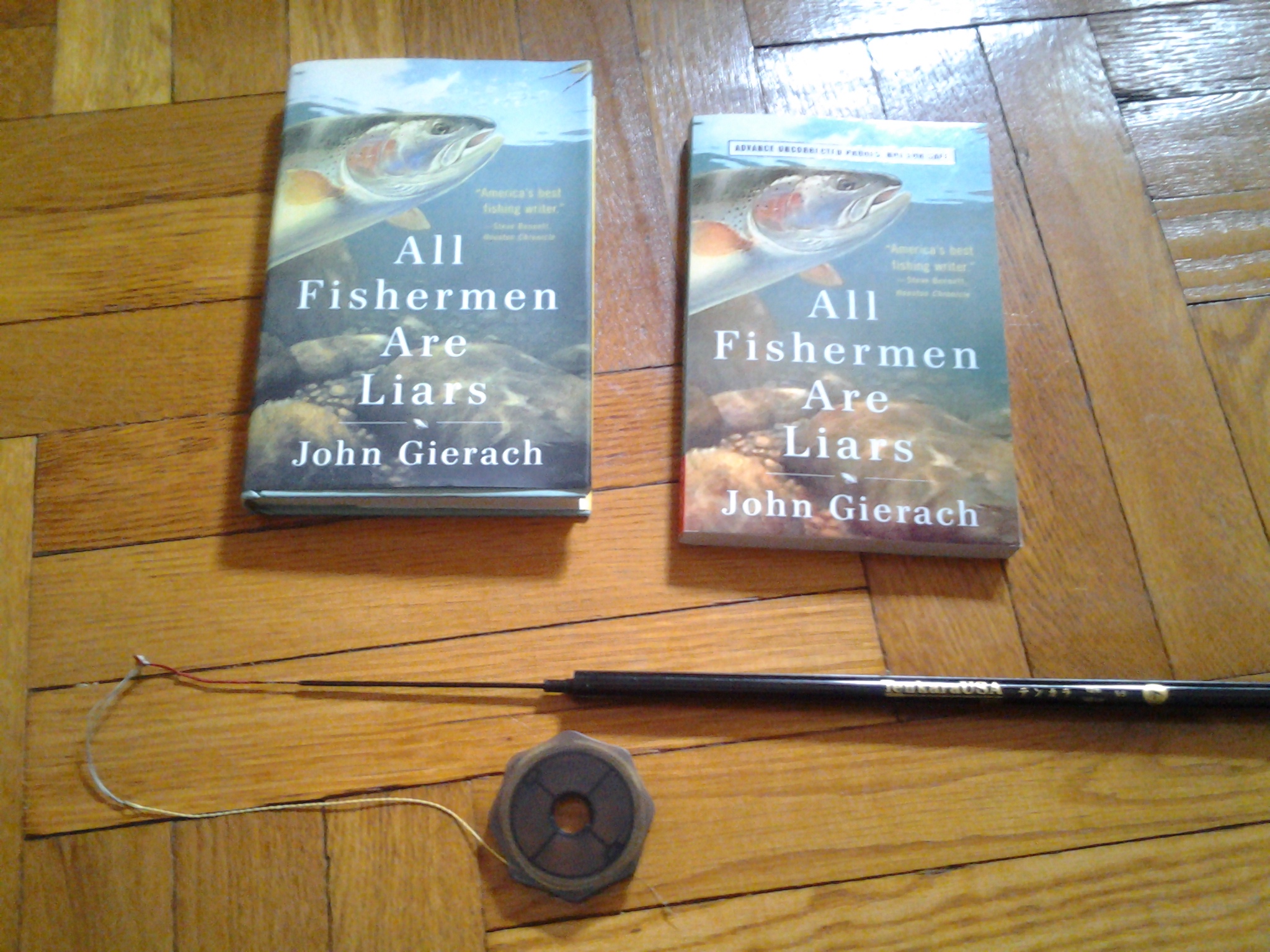
All Fishermen Are Liars by John Gierach Ebisu by Tenkara USA (photo taken 04 11 2014)

All Fishermen Are Liars by John Gierach
Ebisu by Tenkara USA
(photo taken 04 11 2014)

John Gierach’s new collection, All Fishermen Are Liars, was released by Simon & Schuster on April 15th. I had the enjoyable task of reading an advanced copy and writing a review, which has been bundled with a video interview hosted by Tenkara USA. Here is the link:

http://www.tenkarausa.com/blog/?p=6048

Many thanks to Stephen Bedford and Daniel Galhardo for making this literary angling experience possible.

And thank you, John Gierach, for the good words . . .

– rPs 04 17 2014

Leave a Comment

One More

One More . . .

Tenkara is an excellent way to connect with bluegill in October. (photo taken 10 09 2013)

Tenkara is an excellent way to connect with bluegill in October. (photo taken 10 09 2013)

When the leaves are just about to turn and the asters are flush with their tiny daisy faces, there appears one more window of decent bluegill and largemouth bass fishing before the inconsistent angling of the cold months arrives. Ponds are pretty places at this time and the fish remain within the fixed range of tenkara equipment.

My fly shop coworker, Jesse Valentin, wanted to squeeze in one more outing this month before some necessary dental work. I happily accompanied him . . . to Harlem Meer. There I employed my technique of a large nymph, fished slowly and steadily, in and around the pond’s deeper areas. A size 10 Zug Bug brought two nice fish quickly to hand; I noted a slow lift, rather than twitches, teased these fish into striking.

Bluegill with Asters. (photo taken 10 09 2013)

Bluegill with Asters. (photo taken 10 09 2013)

A chilly wind from the northwest began to pick up as the sky turned gray after noon. Satisfied with the bluegill, I decided to experiment in my quest for a bass. I used a dropper loop to attach a size 6 Olive Flats Fly, a weighted pattern designed for bonefish and permit, yet its greenish tones and split tail make an excellent crayfish imitation.

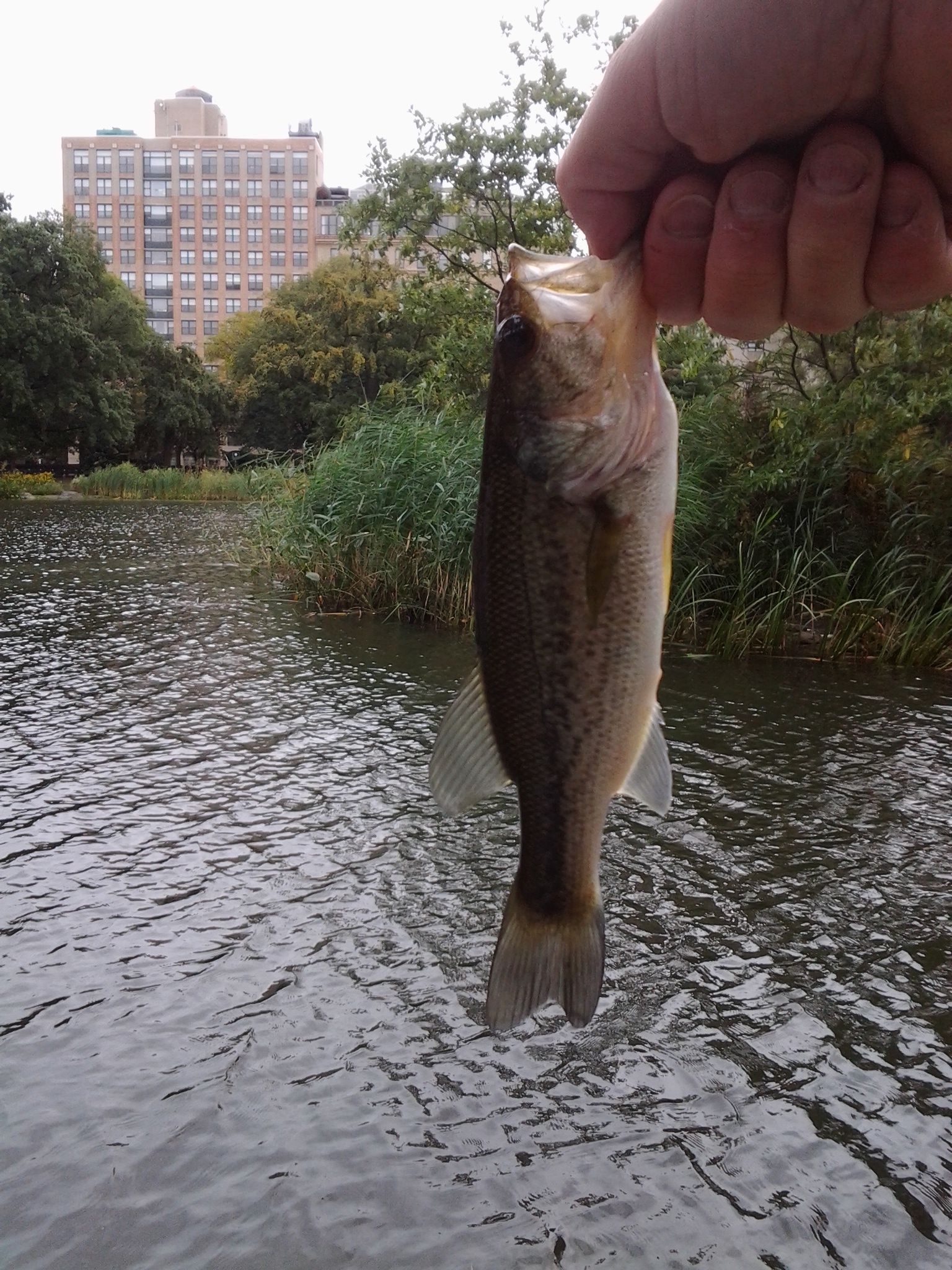
The extended length of my Ebisu model allowed me to precisely work the fly along the base of some reeds going brown where a flash of bright green connected with me. Three jumps later, a modest largemouth bass allowed itself to be brought ashore for an authentic urban angling photograph: a bucolic pond with a brick highrise standing in the background.

Bright Bass, Big City. (photo taken 10 09 2013)

Bright Bass, Big City. (photo taken 10 09 2013)

Jesse, for his part, caught a bass and a black crappie with one of the jigs from his own vise, so we both headed home happy, knowing we had seized the opportunity for one more easy, fish-filled day. The gray and brown months, the time when methodical angling in uncomfortable weather produces sporadic catches, arrives with holiday season, which begins today on Halloween . . .

Boo!

– rPs 10 31 2013

Leave a Comment

Bloomsday 2013

Bloomsday 2013 . . .

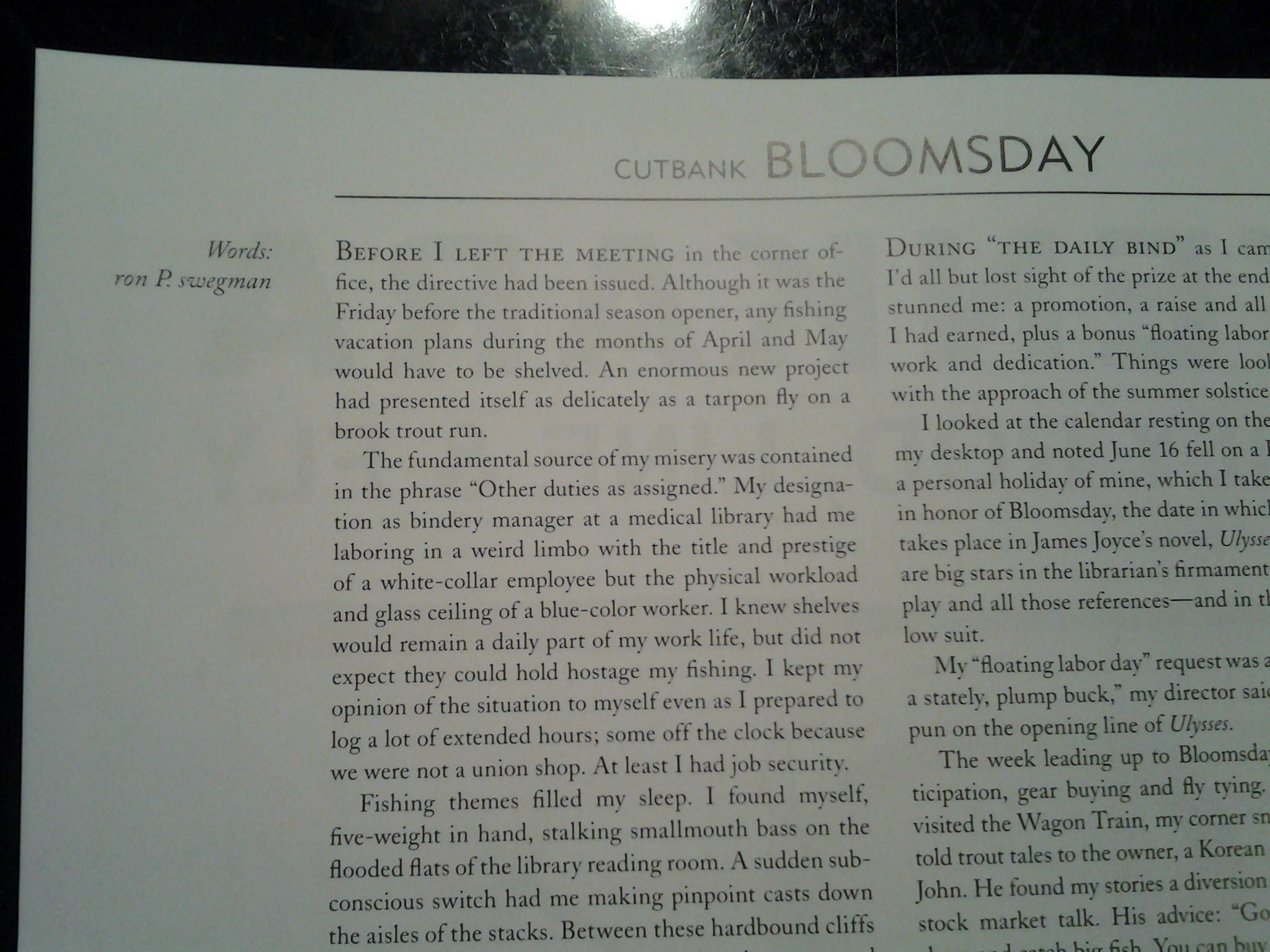
A snippet of my new short story, "Bloomsday" (photo taken 06 2013)

A snippet of my new short story, “Bloomsday” (photo taken 06 2013)

June 16th – the date in which all the action takes place, in Dublin, in James Joyce’s novel, Ulysses.

Speaking of which . . . I have a new short story titled “Bloomsday” in the new issue 4.4 of The Flyfish Journal. There is a thrill in this, having fused a literary favorite with my love of the outdoors. The magazine is on newstands now. Perhaps you, too, can enjoy my latest attempt at pairing words with the natural world.

rPs 06 16 2013

Leave a Comment

On the Eve of the Opener

On the Eve of the Opener . . .

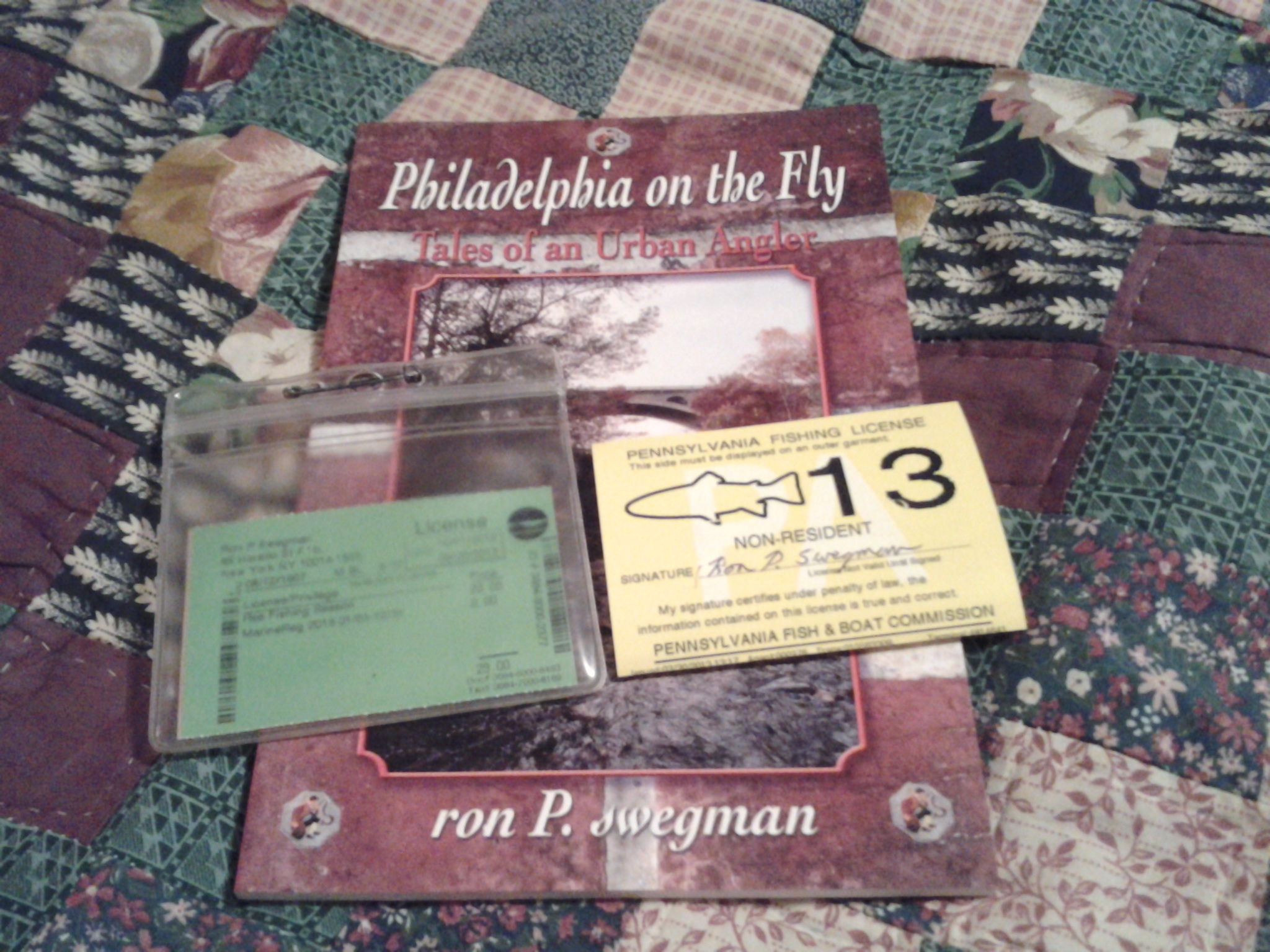
20130331_184940

The start of the season for trout in Pennsylvania coincides with the Easter holiday weekend this year. Since I am here visiting the in-laws (who live just a few blocks from a trout stream), we took the time to purchase our annual non-resident licenses (with trout stamp). Tomorrow may be a cold and damp Monday, but with that extra day scheduled off, I would be an April fool if I did NOT go tomorrow!

— rPs 03 31 2013

Comments (1)

« Newer Posts · Older Posts »
Design a site like this with WordPress.com
Get started