Archive for Tenkara Trips

Tippets and Tibbetts

Tippets and Tibbetts . . .
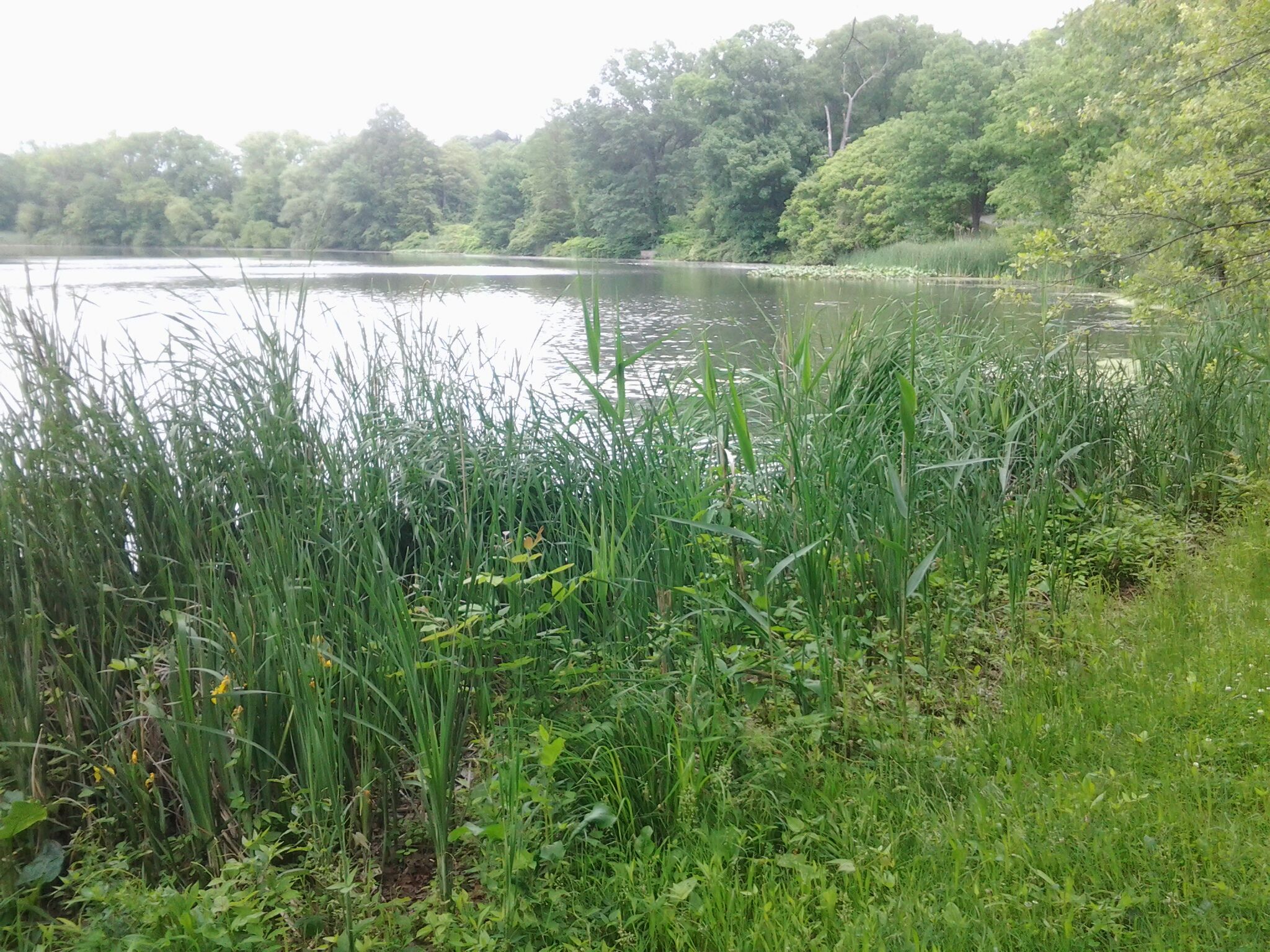
 

Tibbetts Brook (06 2015)

Tibbetts Brook
(06 2015)


George Tippett, a colonial loyalist, lost his land where a major skirmish in alliance with native tribes was waged against the British crown during the American Revolution. The battle was lost, the war was won. The outcome turned the land over and again, a name alteration emerged into a new standard, and land acquisition through marriage came to Jacobus Van Cortlandt.

Tibbetts Brook flows, rather meanders, meanders down through a forested vein in The Bronx. Two parks: Tibbetts Brook and Van Cortlandt, give the northern frontier of New York City freshwater fishing as close as the salt of the Hudson River where the striped bass swims.

Water Lily, Spatterdock, and sediment flats offer a few fit and fat Centrarchidae with an appetite. Females, finished doing duty and ready for a meal, make up the bulk of the menu in June. Scattered few have fallen for a kebari. Others have been and may be in future flushed by frisky waterfowl or a passing cyclist if one pauses to inquires “How’s the fishing?” or “Catch any?” The most polite individual encountered, the one I ally with, is instead the semiaquatic genus Ondontra. The only one of its kind, the Muskrat deserves a most elevated status for its humble, pleasant nature and mild, herbivorous ways.

Calm water, or perhaps rippled from a sustained breeze, both enjoy the presence of the solitary bass of several pounds lurking below. Patterns may take the form of a size 6 Green Guarantee streamer or perhaps a kebari of a different kind, such as the foam Panfish Spider. Experiments on the latter pattern using all game feather and fur remain ongoing and make for awesome time at the vise.

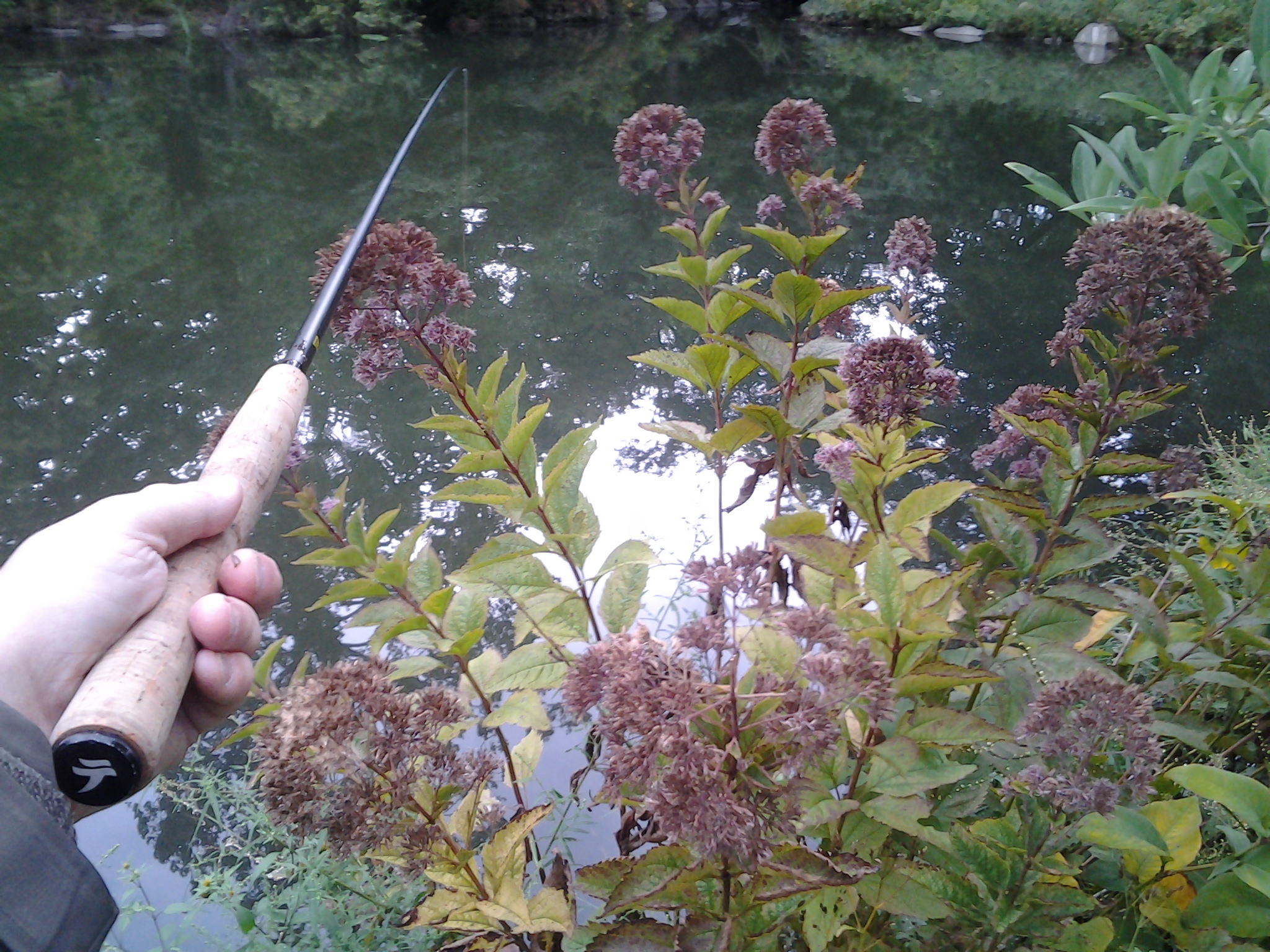
Tippet, here in 2015, takes the form of three to six feet of 4x monofilament knotted to a twelve foot Level Line or Traditional Tapered Line. The less opaque Level Line makes a better choice in skinny water and finds itself used more often for this fly fishing. The line and leader formula gives a surging bass of three pounds sporting opportunity to break free into cover. Fishes with a face full of weed can come with this territory, making a stiffer 7/3 flex like that of the Tenkara USA Yamame rod a prudent choice.

Fights are fun, and fishes landed by bending rod and body in the protracted wrestle strike the profile of a true football. Nerf nerds might appreciate a comparison in the mix as well. A female, long and muscled, at this time of year will feel deflated and seem somewhat airy next to an earlier one heavy with eggs, the kind of bass an angler with a soul let rest, as she is best then left alone.

Aggressive females: the after party is a second story. Hungry, collected, they strike if presented a morsel of opportunity during a cruise in open water. A big girl emerges from cover with a slow, confident pulse that excites. Casting form may suffer from adrenaline jitters unless absolute focus is maintained.

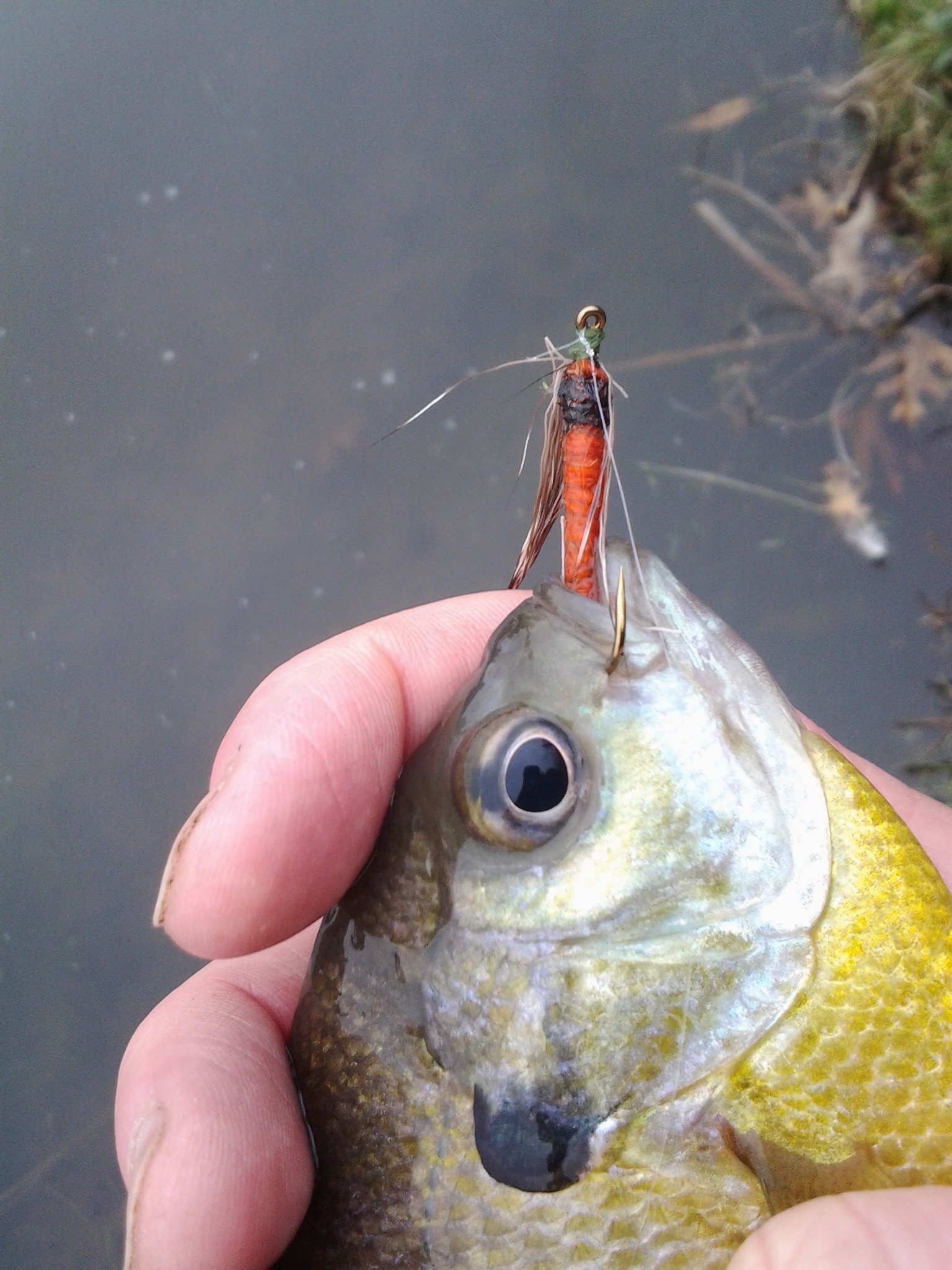
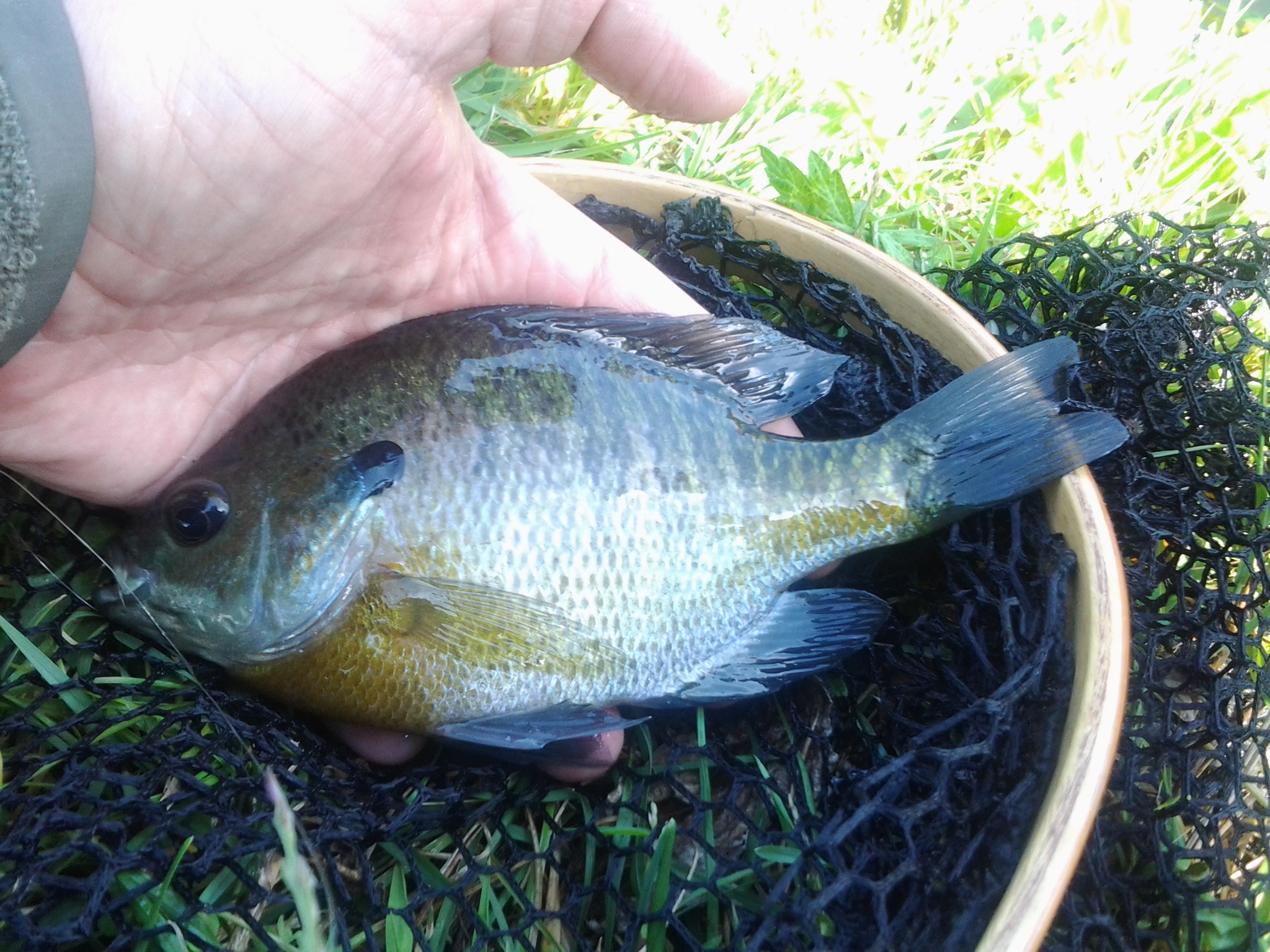
The female Largemouth Bass now wants to bite, to pounce on prey lingering too far from a green algae mat or lily pad or stand of pickerel weed. The pond permit, the Bluegill, shares the pattern. Olive and silver in tone with distinct vertical bars, the ladies inhale a fly, hold it in mouth often without the hook penetrating, making release easy if forceps have been brought along.
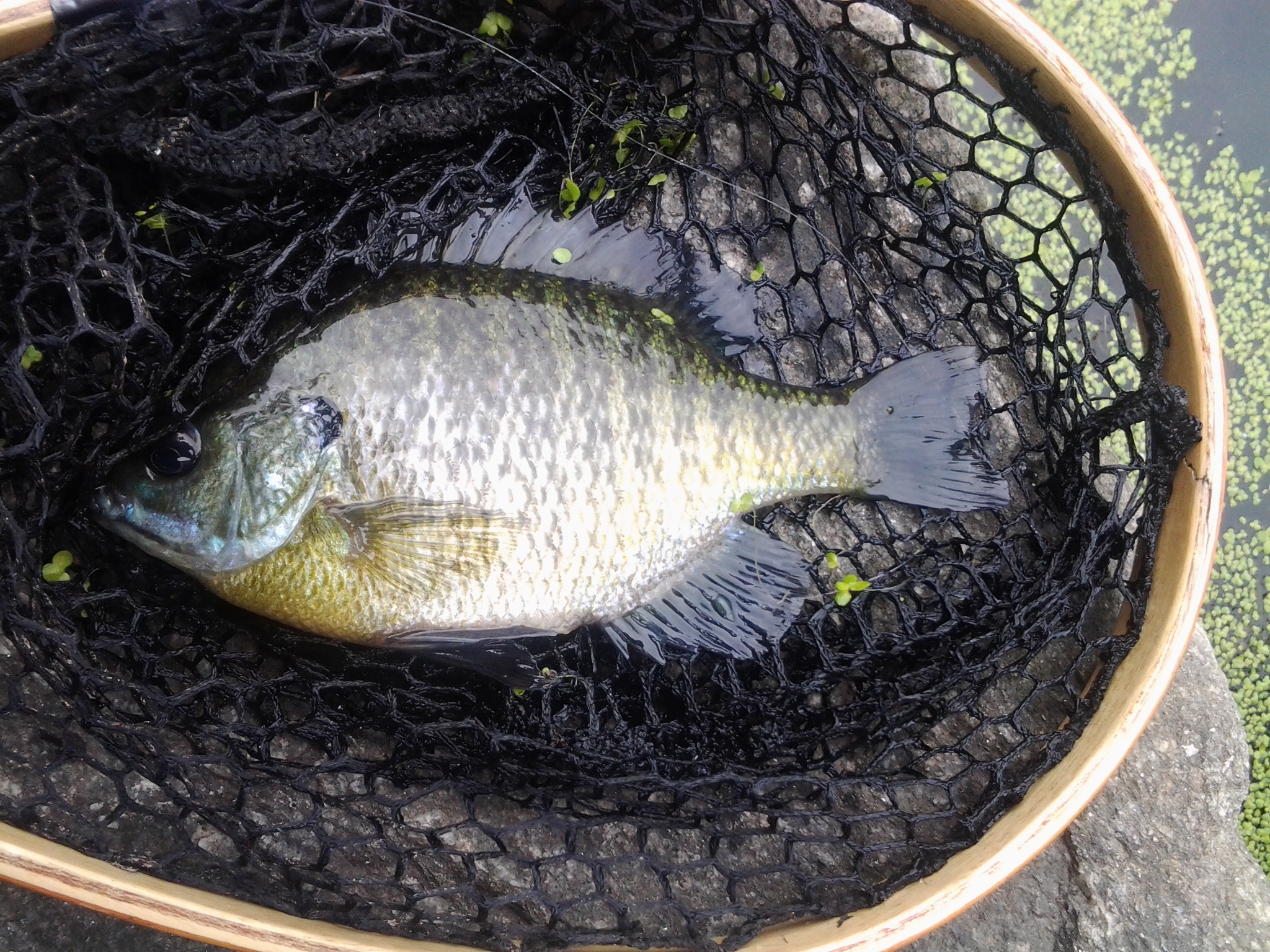
 

Aggressive Female Bluegill (06 2015)

Aggressive Female Bluegill
(06 2015)


Meanwhile, male Centrachidae are too busy to bite. Young bucks are swift, nimble, and chase instead of take. Try your best. The men are interested in pushing you away, not pulling. Noses nudge a fly pattern along, far away from nests full of fry, far from from a potential hook set. Smart behavior expressed by strong fish.

From bottom to top, from end to end, full fishing reportage takes at minimum a full day to cover. The explorer angler’s hike, jog, or bike best includes some time in between to stop and read the informative historical markers and enjoy the wildflowers. Tippett’s land has changed, as has the legacy of his name. Still, scattered spots along this namesake brook in the Bronx may offer encounter with the kind of Largemouth Bass that can begin and end a memorable day in one respectable cast.


A size 8 Panfish Spider lured this solid female largemouth bass to the top. (06 2015)

A size 8 Panfish Spider lured this solid female largemouth bass to the top.
(06 2015)

– rPs 06 12 2015

Postscript: In Memory of Andrew Victor Amici, United States Navy, 1950-2015
Leave a Comment

Trout 3, Ebisu 1

Trout 3, Ebisu 1 . . .


Eastern PA Trout Stream (05 2015)

Eastern PA Trout Stream
(05 2015)


Streams that for whatever reason hold a sparse number of trout, perhaps two or three per mile, can make even a stocked trout fishery a challenge tenkara can handle.

Handle of pine: the Ebisu this time out. The 12-foot rod’s more limber 5/5 flex allowed tighter casts within side channels the width of city sidewalks. Runs walled by spring green, everything from tenacious native saplings to the shallow-rooted immigrant Japanese Knotweed.


Side Channel Drift (05 2015)

Side Channel Drift
(05 2015)


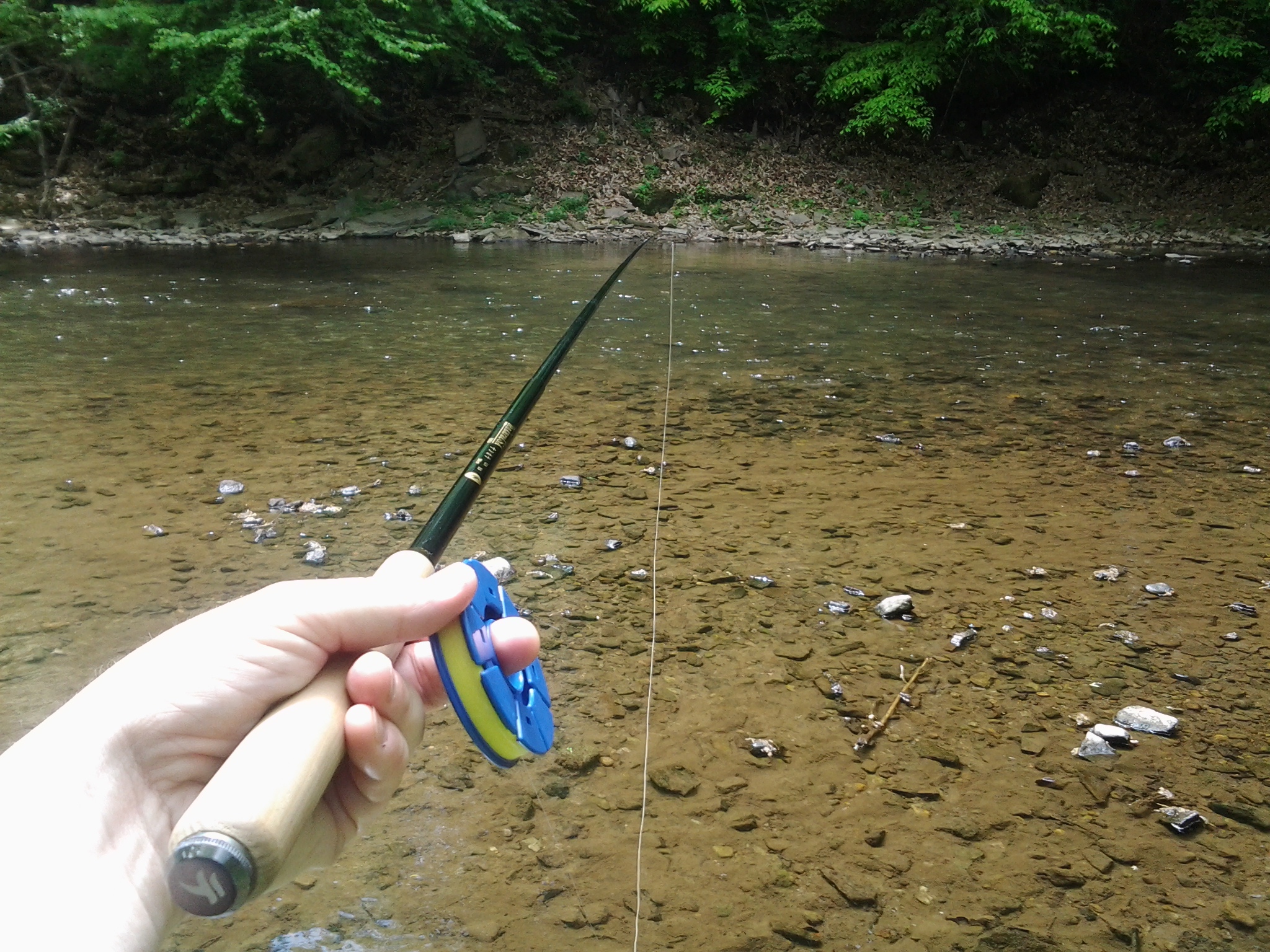
The traditional tapered line with six feet of 6X tippet landed soft hackles and nymphs with stealth along promising seams. The pine handle gives the Ebisu the feel of a baseball bat tapering to a 1-weight graphite tipped with a matching fly line.


Pointing In The Trout's Direction: Ebisu, Line Holder, Traditional Tapered Line (05 2015)

Pointing In The Trout’s Direction:
Ebisu, Line Holder, Traditional Tapered Line
(05 2015)


The Philadelphia Phillies, hosting the New York Mets and Pittsburgh Pirates, in that order, brought me to Philadelphia for a few days. Valley Creek, French Creek, and Pickering Creek were nearby. The Wissahickon, The Schuylkill, and The Pennypack were within range. Waters borne on the pages of Philadelphia on the Fly and Small Fry: The Lure of the Little.

What mattered more than destination this time was the full fishing experience with all of its supporting details. Spring fishing offers riparian zones flush with wildflowers and songbirds and streams, some marginal at other times of the year, now with trout, holdovers, survivors from the weeks following the opener.

Reports of “little black stoneflies” were replaced by the actual witness to a few scattered rising Hendricksons approximated by a size 14. Forage of the moment took many, more meaty, forms: tiny black tadpoles, parent frogs, crayfish, and earthworms all were sighted in and along several streams. The flows were solid, clear, and warmer than expected given the long winter that had encased the Northeast in snow for three months.

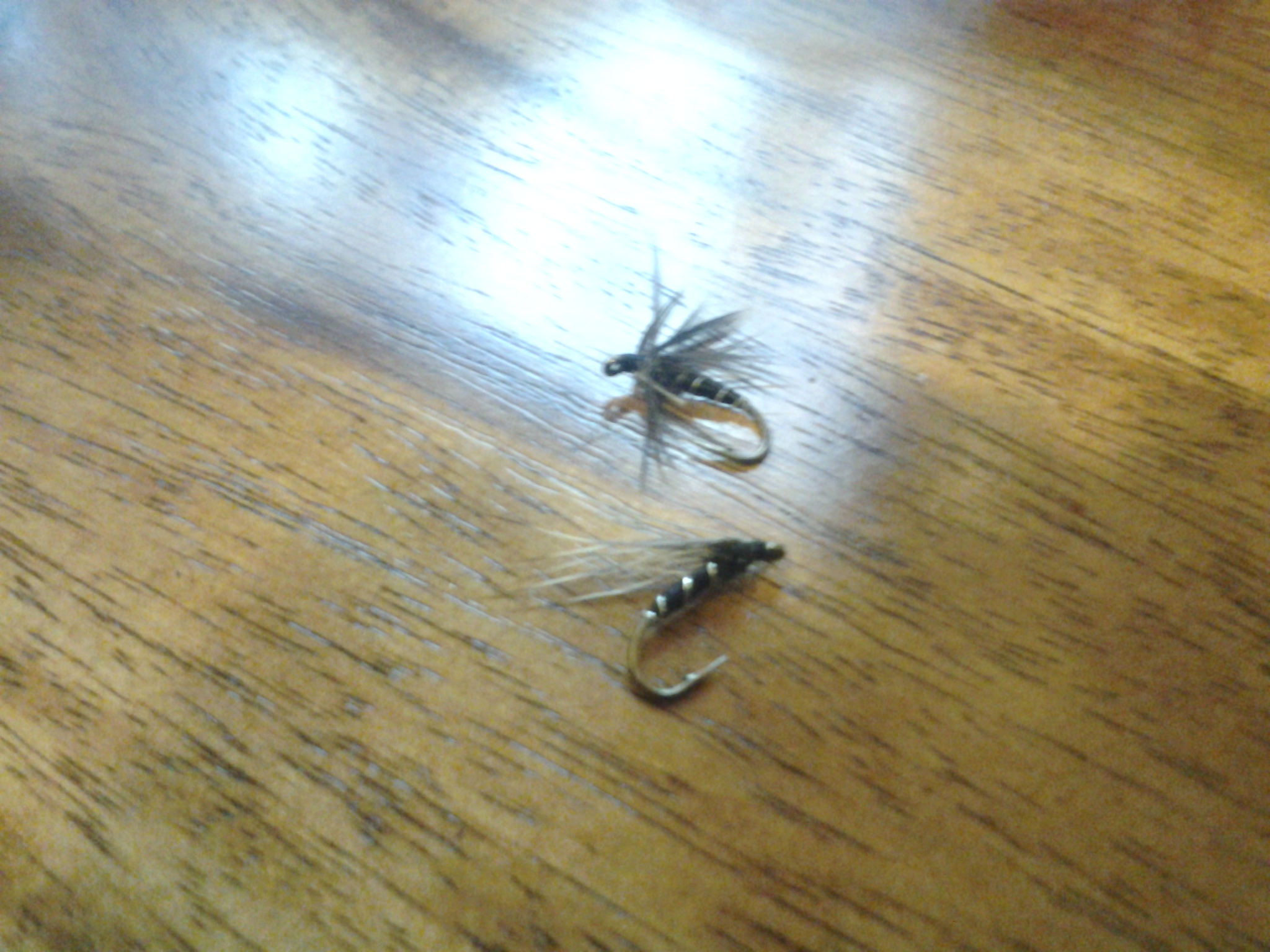
My India Hen and Herl and Silver Ribbed Deer Hair and Black soft hackles in size 12 fit just as well a hatchling tadpole. They were that small; the squiggling creature’s head and tail resembled a comma.


The Ronnie Cash: Soft Hackles Dressed In Black (05 2015)

The Ronnie Cash:
Soft Hackles Dressed In Black
(05 2015)


Both patterns worked.

Trout, the simple fins to face direct encounter, were few. Again, these were scattered survivors of the opener. Natural forage was on their menu. Artificial colors and sweeteners had been by now learned to be avoided. Imitation, a general for the surveyed stream forage, called for some personal combination of thread, feather, perhaps fur and various glitter of some material, the blacker, the better.

Tussles on the Ebisu were strong, yet static, a kind of slow motion take that saw trout drop the fly three out of four times along two wades of a mile and back.

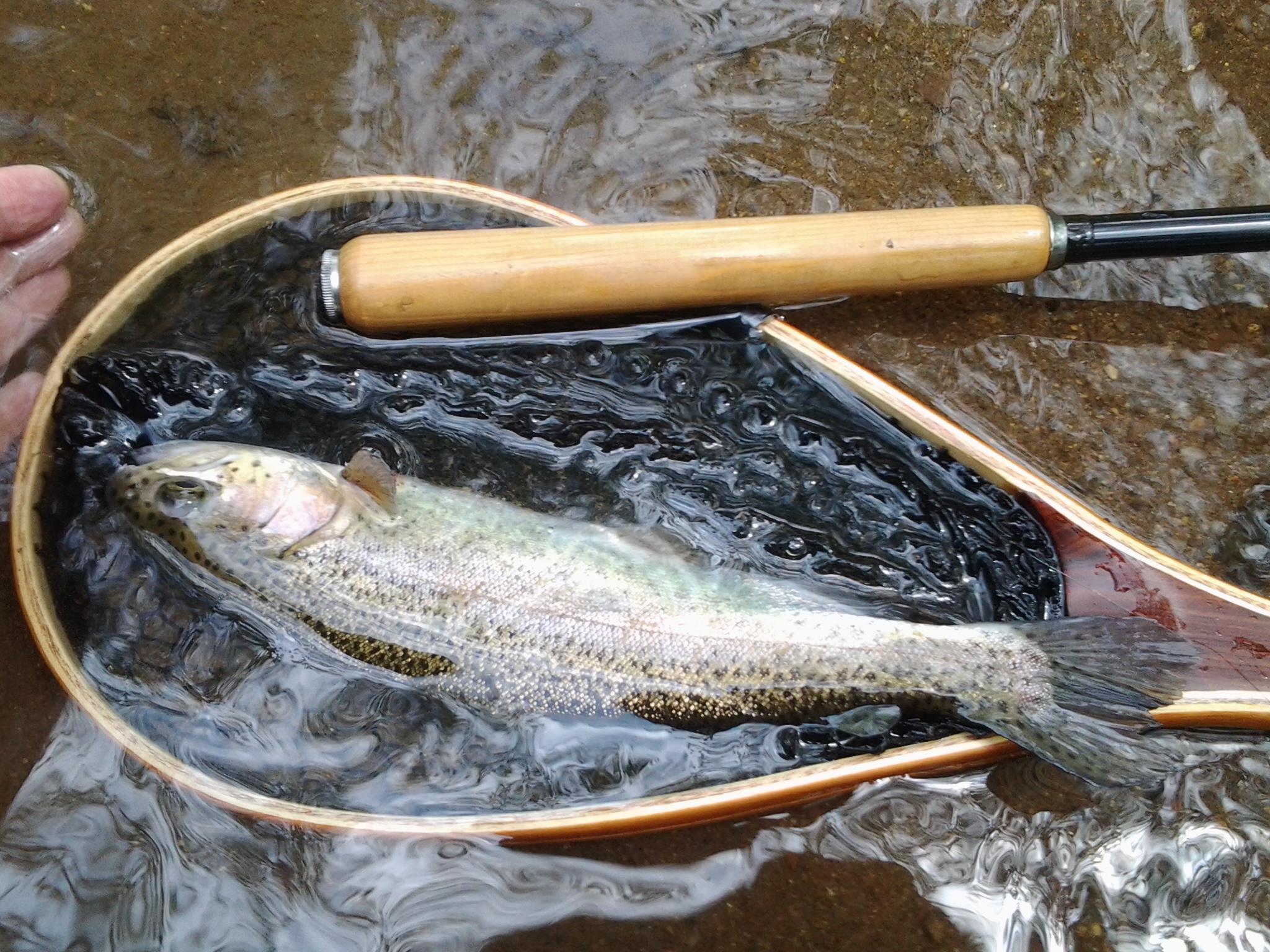
One rainbow in the net serves posterity enough. One rainbow a caudal fin short of a foot. The fish landed, and all the fish lost, were appreciated in light of the effort involved to lure their strikes.


Rainbow Trout (05 2015)

Rainbow Trout
(05 2015)


Insights on fly pattern awareness, as well as sightings of Baltimore orioles in full song and flight, wildflowers like the Mayapple, wild Mustards in abundance, plus a single Jack-in the-Pulpit, made a satisfying spring weekend of baseball and fly fishing that ended: Trout 3, Ebisu 1.

– rPs 05 13-14 2015

Leave a Comment

Swegman’s Sunfish Catches A Fish

Swegman’s Sunfish Catches A Fish . . .

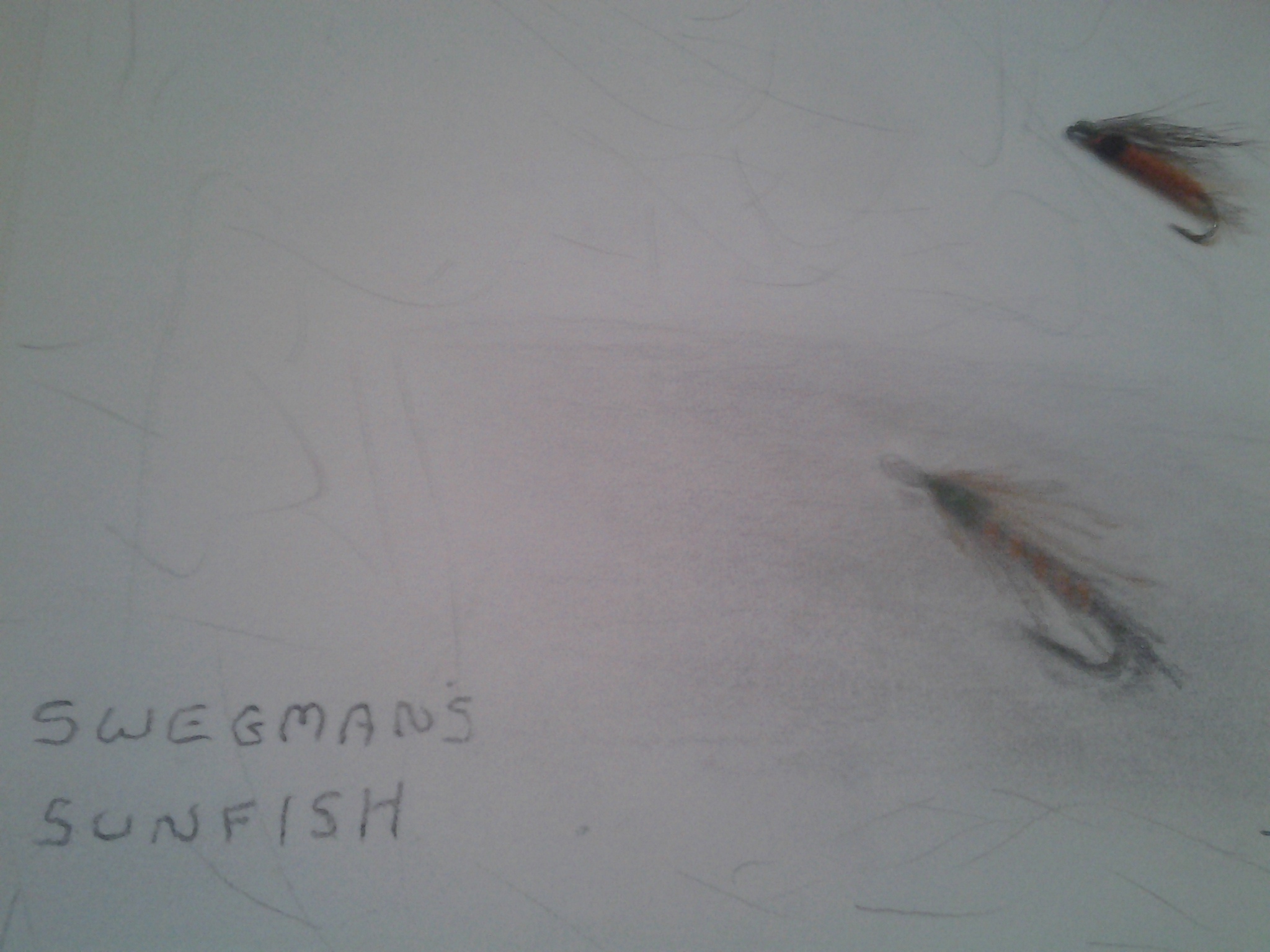
Swegman's Sunfish

Swegman’s Sunfish

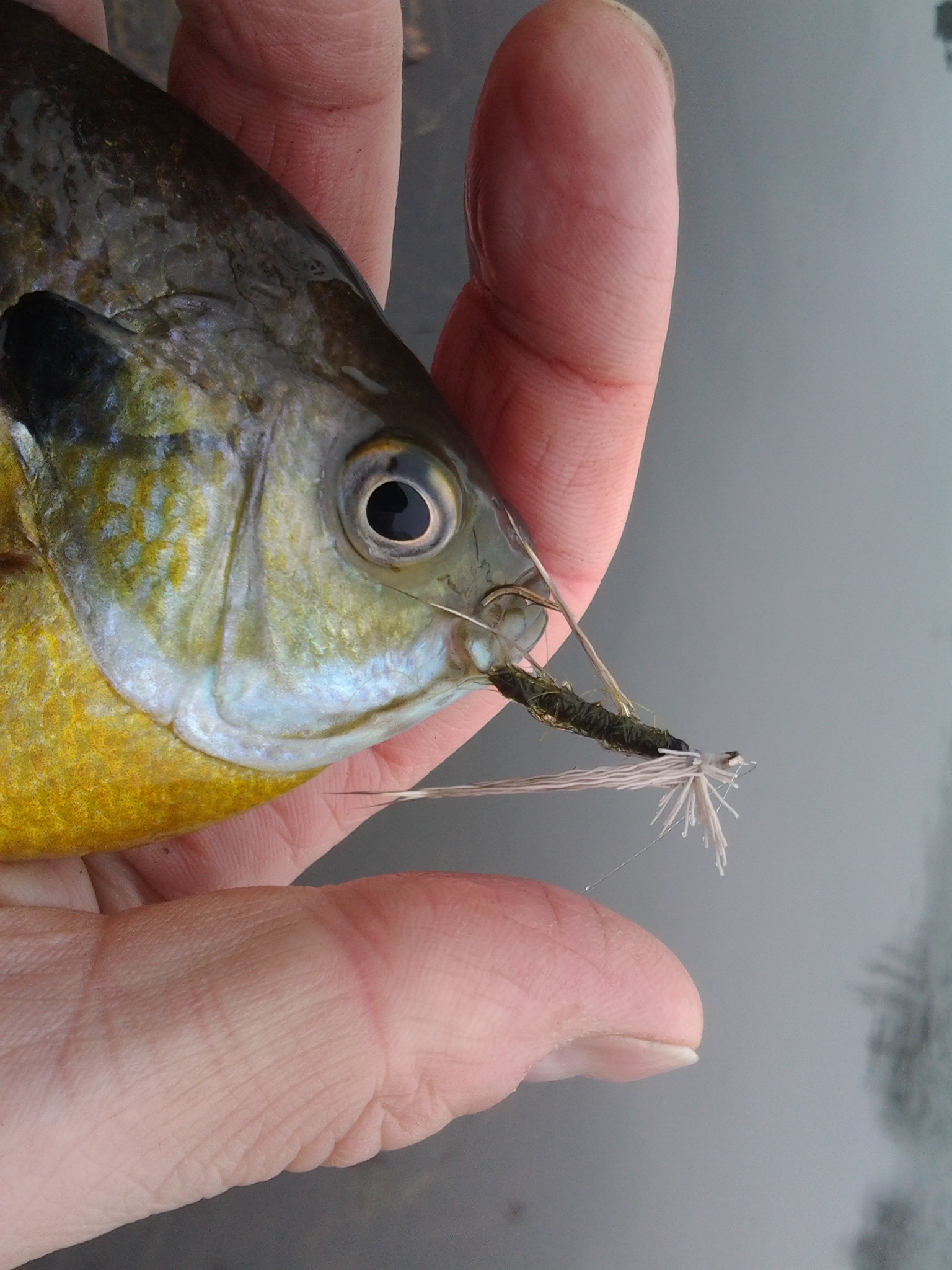
Swegman’s Sunfish lured Lepomis with orange breasts to match the twitch, hooked, and tethered to a hook holding hair rather than feather.

Swegman's Sunfish Angle

Swegman’s Sunfish Angle

Will mention also another mention of the Green Guarantee:

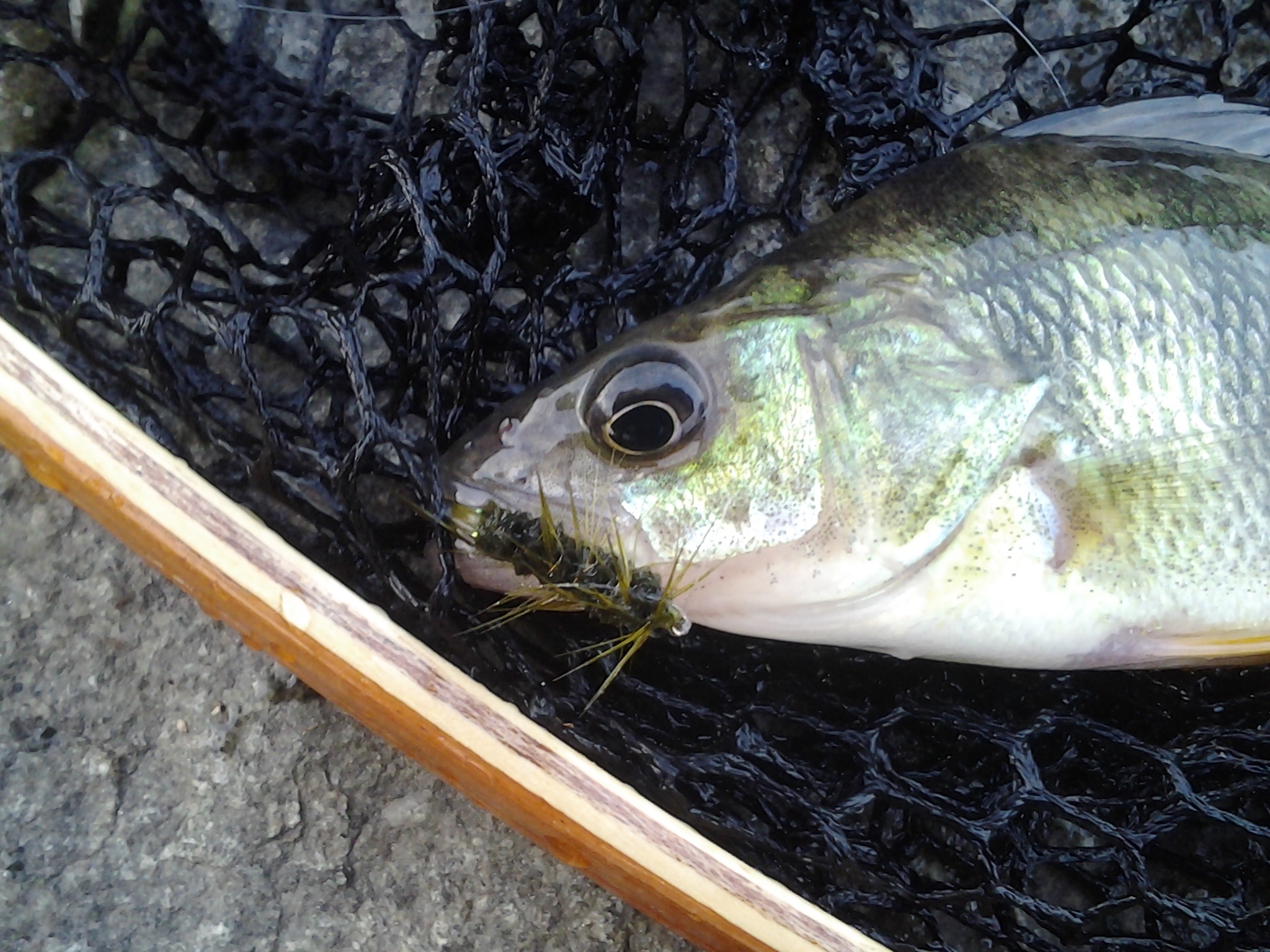
Green Guarantee Incite Bluegill

Green Guarantee Incite Bluegill

As well as the smaller Deer and Green soft hackle:

Deer and Green Incite Bluegill

Deer and Green Incite Bluegill

Green guaranteed even as the NYC region remains brown.

– rPs 04 13 2015
Leave a Comment

Year’s End, Prospect

Year’s End, Prospect

Prospect Park Lake Brooklyn, 12 29 2014

Prospect Park Lake
Brooklyn, 12 29 2014

Vapor Trails imbued with sunlight fill a blue sky on some December days. One last one above the temperature of 40 degrees Fahrenheit beckoned me to follow through on one final item of outstanding tenkara fishing business: Taking my Tenkara USA Yamame rod for a test around Prospect Park Lake in Brooklyn.

Brooklyn . . . Of course. I had to go there at least once in 2014. Completion of mission vital to my own authority added a pinch of incentive as well. Prospect Park had not seen my traditional tapered line all season. The Bronx, Manhattan, as well as Queens have all been noted as has fishing the Hudson’s New York Bight’s salt adjacent to Staten Island. Four, not all five, boroughs in total, the count found wanting a major one of New York City’s destinations: Prospect Park Lake.

The omission appears even odder considering Brooklyn’s coolwater lake has the highest notoriety for catch and release bass fishing. For nine months of 2014, I have fished hard, in and around town in between serving as a guide to new gear at an urban fly shop. My first catch of a bass happened as early as the final week of winter in March. Trips in between then and now included meeting the saltwater papio of O’ahu, Hawaii. I had been to Brooklyn a bunch of times for friends and culture. Time then to go fishing there as well at the eleventh-and-a-half hour of the year.

One of my own pioneering tenkara trips took place along a portion of Prospect Park Lake’s asymmetric circumference. The lake has over a span of years drawn me and several of my companions together in search of fish on the fly. Earliest spring and fullest summer have been experienced, never winter.

The cold day squeezed between Christmas and the New Year began bright and breezy, qualities that made the prospects look challenging in all ways but my own confidence. I knew, just knew, some kind of fishing would present itself if I maintained the kind of endurance and mental focus I must exhibit to complete a cross country run along a bright and breezy Hudson River waterfront.

Conditions lakeside enforced an immediate variation on my use of line. My traditional tapered lines were set aside in deference to Level Line attached to a much longer tippet of finer 6X. Unfocused invisibility can be seen as obvious given cold lake water’s clear visibility. Water temps in the high thirties Fahrenheit discourage green plant life, and the recent season’s remains now rest brown and settled. Prospect Park’s water and its column become a more translucent body skirted by shores of cattails, trees limbs, and stone and mortar wall.

Large nymphs work to lure fish during the cold season. Leaf litter offers ample residences for the dobsonfly among others. Whether it be a Kebari americana like The Prince, Zug Bug, your own variation on the theme, or the all-inclusive Woolly Bugger, unweighted or beaded patterns are effective. More important may be presentation. Some strip in a nymph when stillwater fly fishing. Fair the approach may be, as well as a Leisenring Lift customized to your speed theory, or a sustained swimming action that takes advantage of an unweighted fly pattern’s buoyancy . . .

The Undulating Microtug

I grinned when the technique met a take. Connection to a fish had first to endure several persistent hours of casting in and around some brisk breaths of air off the water. Coldweather tenkara this was. No topwater action was on deck. The kebari patterns were a dice roll that occupied my mind: Olive Dobsonfly, The Prince, Zug Bug, and my own Grey Wet Wool Nymph described in my second book, Small Fry: The Lure of the Little. Sizes ranged between 6 and 10.

Coldweather Tenkara (12 29 2014)

Coldweather Tenkara
(12 29 2014)

What changed during the day was the wind. Air and lake calmed during the last hour of daylight. I finished with an Olive Woolly Bugger tied by steelheader Stephen Kasperovich of Sewickley, Pennsylvania. He is adept also when angling for yellow perch, the fish that turned my fading prospects at Prospect into a grand form of fishing finale.

His pattern uses a very soft chenille body matched with an undulating saddle hackle. Several seconds after I began to swim the Olive Woolly Bugger, a fish met the fly and connected. Several runs of ten feet and head shakes bent the Yamame and played me before I lifted a perch in net from the water.

Yellow Perch (Olive Woolly Bugger by Stephen Kasperovich)

Yellow Perch
(Olive Woolly Bugger by Stephen Kasperovich)

Perca flavescens has been encountered before both at Harlem Meer and Van Cortlandt Park Lake during late August and September. The species is a popular quarry for ice fishers, making its presence and activity understandable on the calm end of this cold day. Several more perch followed, although not in a metronomic fashion one might associate with a large school. Each fish had to be worked, had to be coaxed, into striking. The hinge of the entire experience was again a willingness to put full thought into full motion forward. Full cast and retrieve with a focus on the fly at the end of the Level Line. Any slow swimming retrieve using wrist action combined with a lift can take tenkara fishing into catching. The other factor may well be that I found a spot holding some fish at prime time: the short span of minutes that can make up a wintertime bite.

Yellow Perch in Net

Yellow Perch in Net

Bird life communed on and around the lake. American coot, Fulica americana, plied the calm water and called at dusk in the manner of gas passing out of either end. Strange, mildly humorous, a sound like belching farts almost quite nearly contradicts the bird’s conservative plumage, which may bring to mind a solemn clergy’s robes.

Bird in View (American Coot)

Bird in View
(American Coot)

The day’s final sunlit moments brought a final yank transmitted down to the grip of my Yamame. The strategy of the competitor changed. Now a tight, circular fight, at net’s end my heavier opponent turned out to be a very round bluegill dressed in a pale purple sheen with olive details and black chain link bars twisted and reminiscent of the double helix. Bluegills can be a rare encounter after the spawning bed period. Even small waters may find a bluegill population strangely reticent despite a circumscribed space. I felt more than pleased to call this fish my final catch and release of the year.

The Final Fish (Bluegill)

The Final Fish
(Bluegill)

Red skies at sunset reminded me of a poem from my collection of poetry, museum of buildings: poems

Across the bridge I’m crossing
Lay the city bathed in sunset.

At the end of this “last day of December” the trees rather that the tower blocks were tinted.

Sunset (12 29 2014)

Sunset
(12 29 2014)

Farewell, Tenkara Fishing, 2014

The Year’s End

– rPs 12 30 2014

Leave a Comment

The Path of Honolulu

The Path of Honolulu . . .

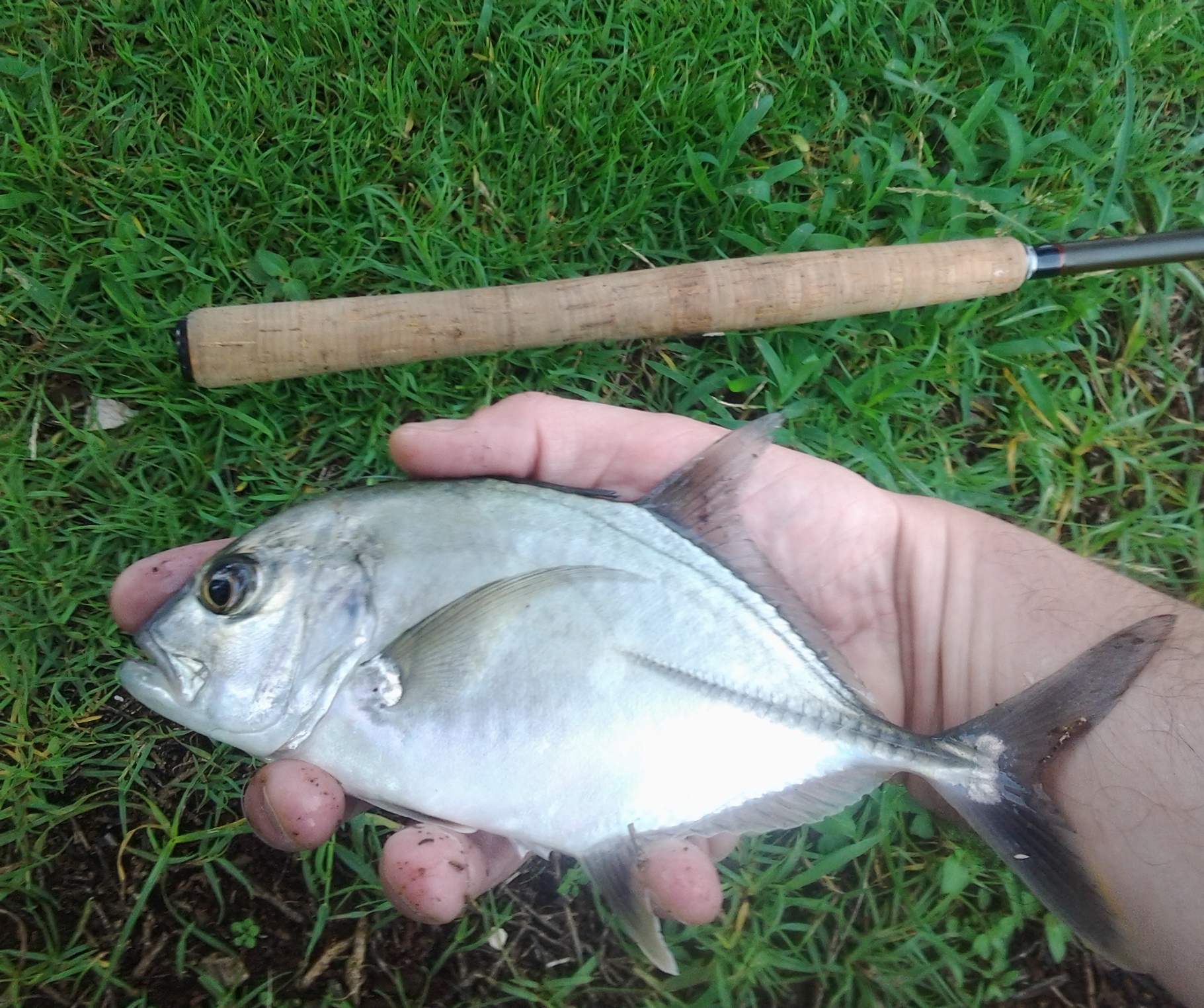
White Papio (juvenile GT)

White Papio
(juvenile GT)

Hawaii begins borne by flowers. “Aloha” is the aroma and sight of flowers around necks, pinned behind ears, hanging from trees. Gardens, lawns, and copses all in bloom as a collective fragrance carries on a mild warm breath off Pacific seawater.

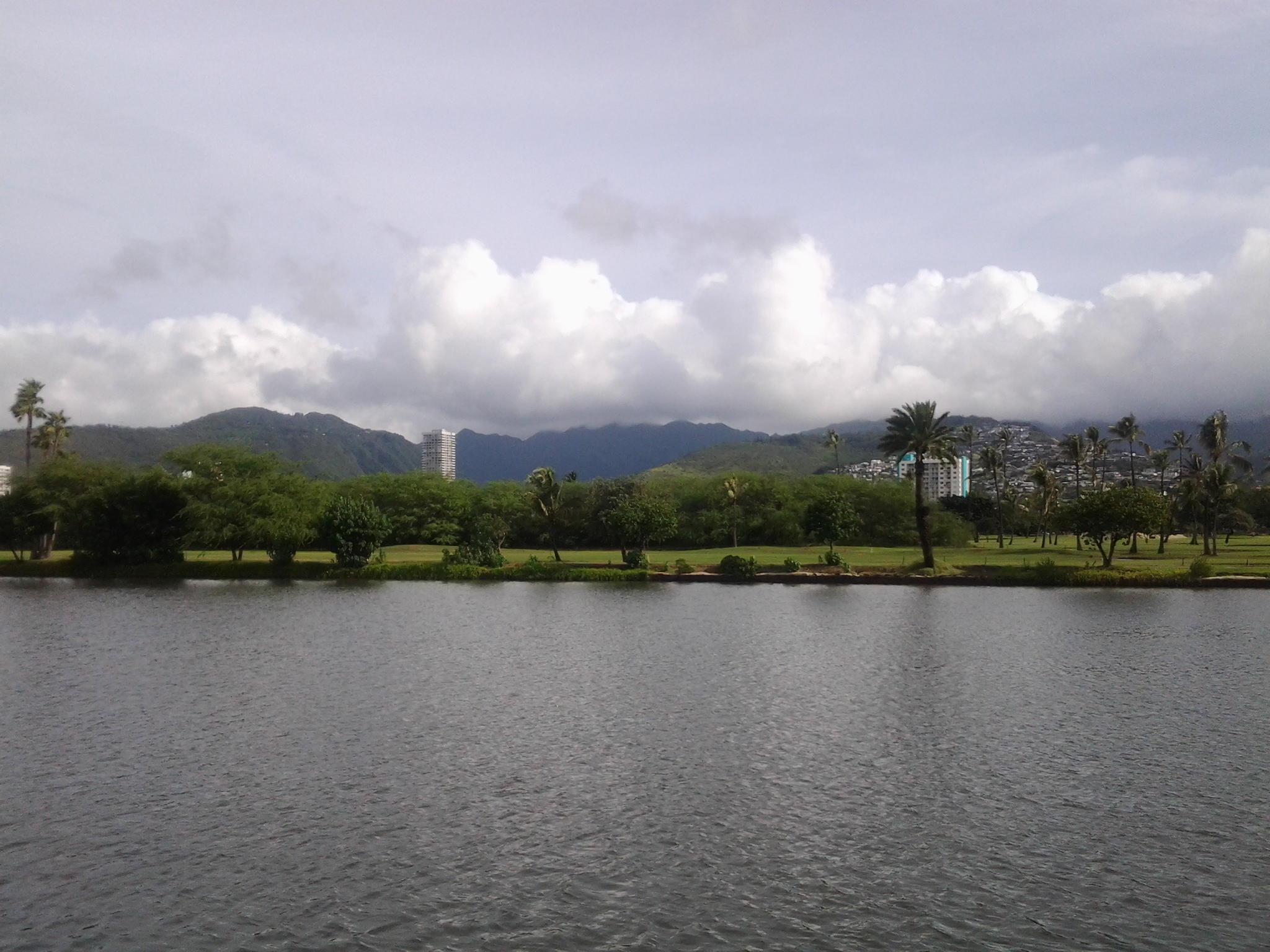
Inland, behind the two and three block rows of Waikiki, stretching one and a half miles down to Ala Manoa, sits a flow set in city nature; almost a stillwater: the Ala Wai Canal. Bordered by the Ala Wai Golf Course with green mountains to the north, and lined by either palm or plumeria trees on the constructed spots, the canal’s banks provide excellent urban angling water for tenkara equipment. Two steps of concrete, grass and tree plantings, and a sidewalk traveled by small loose waves of pedestrians, mostly runners and dog walkers, together add up to a fishable area for scattered numbers of polite anglers.

Ala Wai Canal with Ala Wai Golf Course beyond.()photo taken 10 2014)

Ala Wai Canal with Ala Wai Golf Course beyond.()photo taken 10 2014)

It must be granted this waterway has had a checkered past narrated by several chapters of brief sewage overflows during flood times. Most cities share this same, historical and ongoing, itinerant experience. I did spot a token shopping cart, submerged, yet no surface trash or oil. Stay this way, Ala Wai Canal, please.

My first visit gave me a greeting and affirmation. I believe ever more that nature, in its combined elements, communicates in elemental concepts that provide an accurate barometer of one’s own place in Life with a capital L.

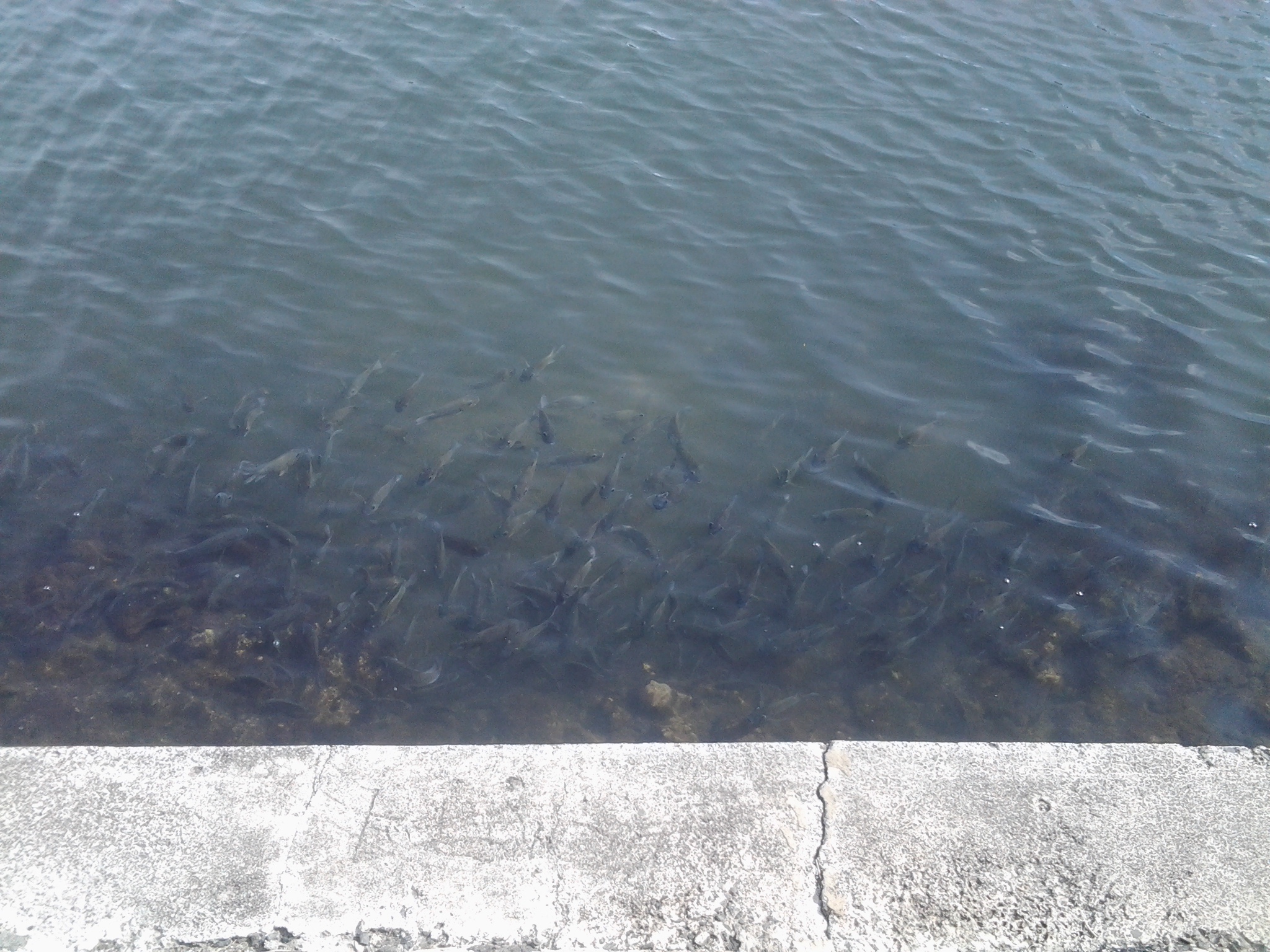
The precipice of the canal’s bank dropped to vigorous schools of curious tilapia looking up, following, actually greeting us. Tilapia is a fish who provides a welcome service in water management when not asking for added handouts from passing people. I am glad to have shared this moment in communication with other species, awareness affirmed once again whilst holding a telescoping graphite rod monogramed on the base: Te with a capital T.

Tilapia Greeting (photo taken 10 2014)

Tilapia Greeting
(photo taken 10 2014)

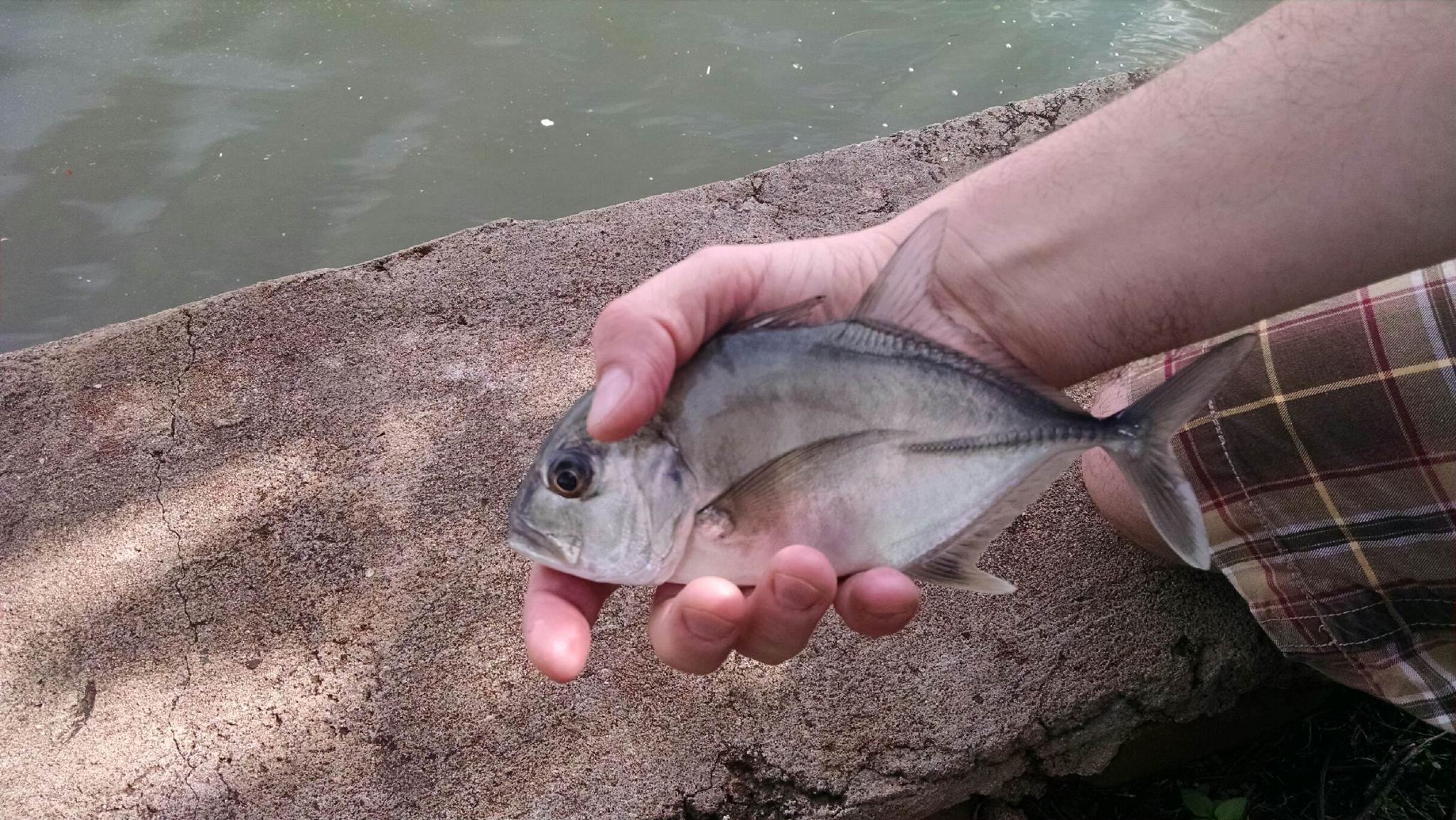
Yamame, 12-feet girth-hitched to my 16-foot saltwater line and leader formula, had handled New York’s snapper bluefish and black sea bass well enough around Manhattan. I just had to try my way along a Honolulu path accessing the yellow, white, and blue Papio of Hawaii. Three little trevally of O’ahu: the juvenile golden, GT, and blue, are encountered in modest numbers around Honolulu’s visited waters.

The status of “Fished Waters” became a bucket list item when other business in October took me to the island of O’ahu. Recreation time over a few days lived there might include a day’s hike around Diamond Head Crater – check, a solemn morning pilgrimage to Pearl Harbor and Ford Island – check, a few surf swims with schooling fish above a sand and coral bottom – check.

Catch a papio; I added that one, too.

First cast was made to work one of Edwin Valentin’s size 6 bonefish kebari along the bank upcanal. The presence of orange kickers gave me confidence this fly would attract attention. My initial try tapered to an ending of two planned twitches of the pattern, made after a pause of 1-2-3. After the penultimate pull of two feet, a papio from the bottom rocks pounced and paused it. The rip away opposite, rod raised between two boughs of plumeria, the bend did double with several insistent added pulses relaying headshakes. Papio are fishes only slightly less vicious as bluefish wrapped in the proportions of a large bluegill. Strength and shape combined to take the Yamame into a cursive condition for over a minute. The final hand-over-hand pull up of the Level Line and fluorocarbon tippet accommodated the necessity to raise the fish five or six feet from the wall base exposed by low tide.

White Papio, Yamame (photo taken 10 2014)

White Papio,
Yamame
(photo taken 10 2014)

A bright little slab of whitened silver is the juvenile GT. Fins are pointed and sharp and should be noted. A caught fish will behave for a photo before a gasp for oxygen commences. Clipped grunts are a request to expedite release. A pair of forceps grants a papio’s request for freedom more quickly.

Catch and release a papio on tenkara; I added that one, too. The happy ending became rendered in a check mark as sure as an exclamation point.

I continued after to cast in a new search for kaku, the small barracuda. No luck, although a second papio, twice as large as the first, appeared like a UFO near the water column’s top just as my rod tip collided with a plumeria branch. The instant passed with a dropped connection.

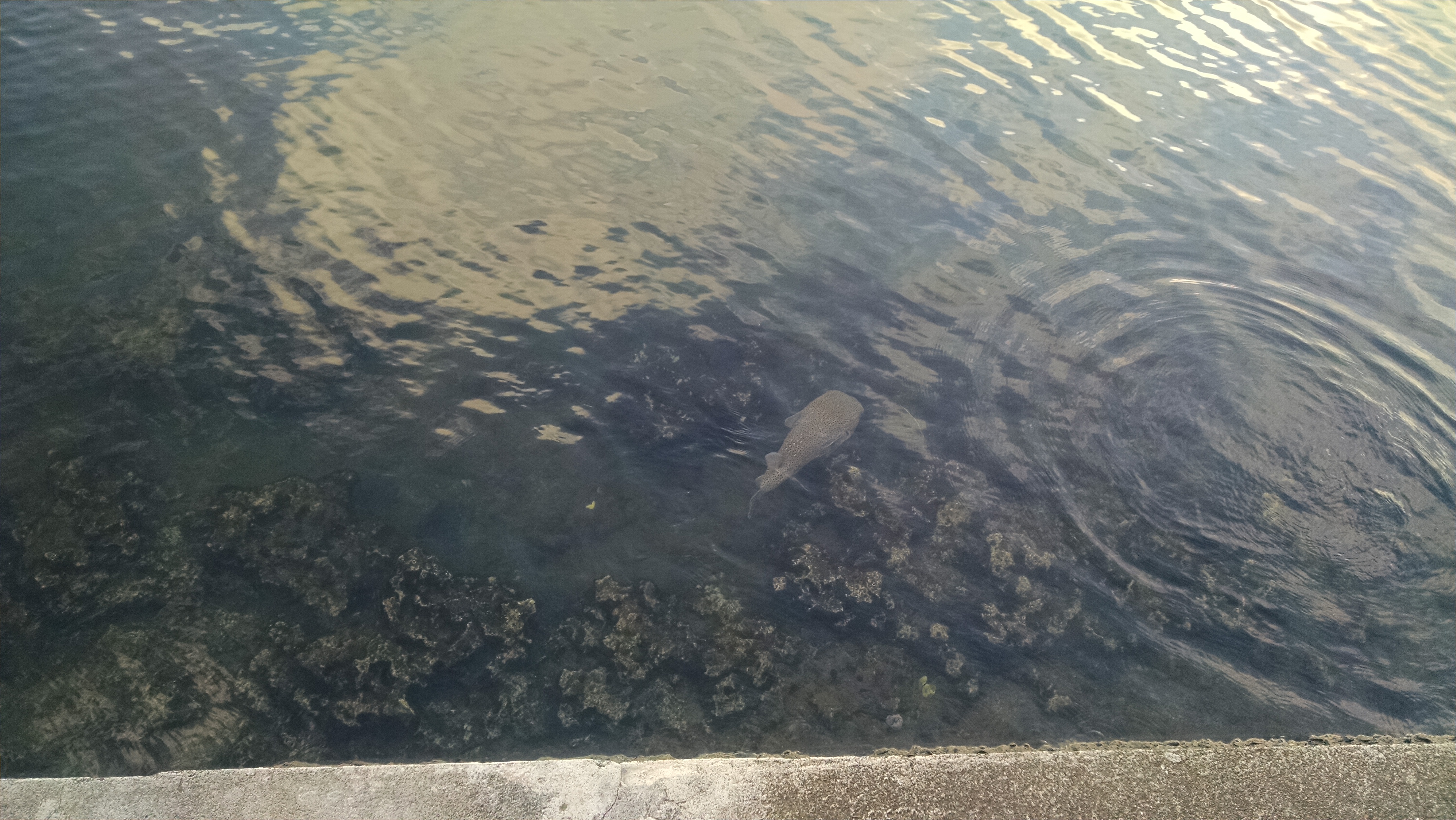
Times of this kind are best followed by a pause to contemplate the drop off encrusted with sea life, the friendly schools of tilapia, or the magnificent random passing of a speckled swimming dirigible: the giant porcupine fish. Truly amazing is this immense puffer that when swollen resembles a burdock burr the size of a beach ball. The ones I saw were at peace on a cruise following the shallow curves of the drop off.

Giant Porcupine Fish (photo taken 10 2014)

Giant Porcupine Fish
(photo taken 10 2014)

Hawaii is a place, astounding; a tremendous, rewarding, alternative place to try tenkara in an additional way: The Path Of Honolulu.

– rPs 10 31 2013

Postscript: Hi Tide Fly Fishing provides an excellent fly fishing experience in Hawaii. http://www.hitideflyfishing.com/

Leave a Comment

Football Helmets and Fall Fishes

Football Helmets and Fall Fishes . . .

The Reach of Tenkara (photo taken 09 2014)

The Reach of Tenkara
(photo taken 09 2014)

The night game of summer has moved on to new rules played in the daylight. Rain may pass through, and the reopening of the sky brings good time to go outside and fish. When the dark does descend, quickly and almost cold, home calls as the nostalgia door opens to college year memories or past seasons, some of national championship caliber.

Part of my own continued education in life experience has been set amidst a geography where home waters caress manes of watercress. There trout abound. Other neighbors on the stream, offered perhaps a polite wave from a fly fishing undergraduate, have included names of Harvey, Humphreys, and Meck and a Gordon, too, among many others; my constant sense of the eastern provincial in America stays connected, centered on a Pennsylvania county as well as five boroughs of New York City.

Neighbors of the urban angle abound also and some distant shores have been or shall be explored alone and together with even more others. Before such diversions, the sharpened focus on a single bass, any bass, remains first in line.

Largemouth Bass (photo taken 09 16 2014)

Largemouth Bass
(photo taken 09 16 2014)

Bass season is again back in session.

Temperatures drop to fifties and sixties Fahrenheit. Sunlight remains bright, often unfiltered, but days of rippled gray skies do pass. Rain remains brief unless it’s a hurricane trailing through for four to five days. Ponds again begin to clear and darken. A frosting of bright duckweed foots cattails and pickerel weed. Slow presentation with a long horizontal reach, a natural fishing problem for tenkara to tackle and bring to quick resolve, can take a kebari to the bass level (a multifaceted pun too compelling not to intend).

The largemouth and smallmouth bass alike, after striking your pattern in a singular fashion near the water column’s bottom, bring fast reactions to the top. This athleticism has had a portion of its antecedence come from the fish’s own daily hunting. Black and blue damselflies, measured in inches, still pass time in the air. Nymphs that resemble such varieties in various stages of development swim and crawl throughout a still water. Bluegill fry swim in small schools, too. Bass can be lured when these larger naturals are mimicked by an equal kebari tied to a generous tippet matched with a Level Line or a Traditional Tapered.

A largemouth, hooked on such a kebari of size 8 or 10, may jump three times and roll on each leap skyward. Size varies by location. Any fish that is perhaps best sized to a September zucchini may be noteworthy to big fish fans.

Smaller fish – dill pickle bass and slab bluegill – still insist on being counted. Vigorous takes by a quarter pound fish inhales the pattern deep in the mouth, doubles the perceived strength of pull during breaking sprints, which brings added utility to the longer tippet with its greater capability for stretch.

Be mindful to bring clamps with a few inches of reach. To release a bluegill hooked so deeply, first fold the fish’s spiny dorsal fin down with the inside of your wet fingers, grip the fly with the teeth of the clamp, twist as far as necessary as a slight downward push on the pattern is made. This most often dislodges the hook with minimal penetration of the fish’s interior. Most small fish will thrust voluntarily from hands placed low over the water and depart with a resounding and reassuring splash.

A net facilitates the unhooking of an autumn bright bluegill. (photo taken 09 16 2014)

A net facilitates the unhooking of an autumn bright bluegill.
(photo taken 09 16 2014)

Orange Jewelweed and pale purple clusters of New York Ironweed border many New York stillwaters by late September. The green of leaves has acquired a more yellow cast. Some bluegills exhibit similar rusted or buttered bellies below strong barred sides. The bass remain silvered and green with a distinct black lateral band. Colored patterns all that would fit on a football helmet with ease.

The Football Helmet Bass (photo taken 09 2014)

The Football Helmet Bass
(photo taken 09 2014)

– rps 09 24 2014

Postscript: Read more about the damselfly and dragonfly at Backyard and Beyond here: http://matthewwills.com/2013/08/07/lilypad-forktail/

And here: http://matthewwills.com/2013/05/31/dragonfly-pond-watch/

Comments (1)

The Salt on the Level

The Salt on the Level . . .

Hudson River High Tide (photo taken 07 2014)

Hudson River High Tide
(photo taken 07 2014)

The Salt. I have been trying, toying in earnest, to infuse my tenkara with diversity through variety in waters flowing and still, freshwater and . . . salt.

The Salt; Saltwater: Some older classics of the printed literature hold titles such as “Dock Fish” in which a sense of history can be linked to the facet of the sport perhaps best named saltwater panfishing. During this second decade of the 21st Century, add the urban angle in Manhattan, USA, and that offers two fishes of note: black sea bass (Centropristris striata) and bluefish (Pomatomus saltatrix), in particular the yearlings known regionally as “snappers” (pronounced “snappas”).

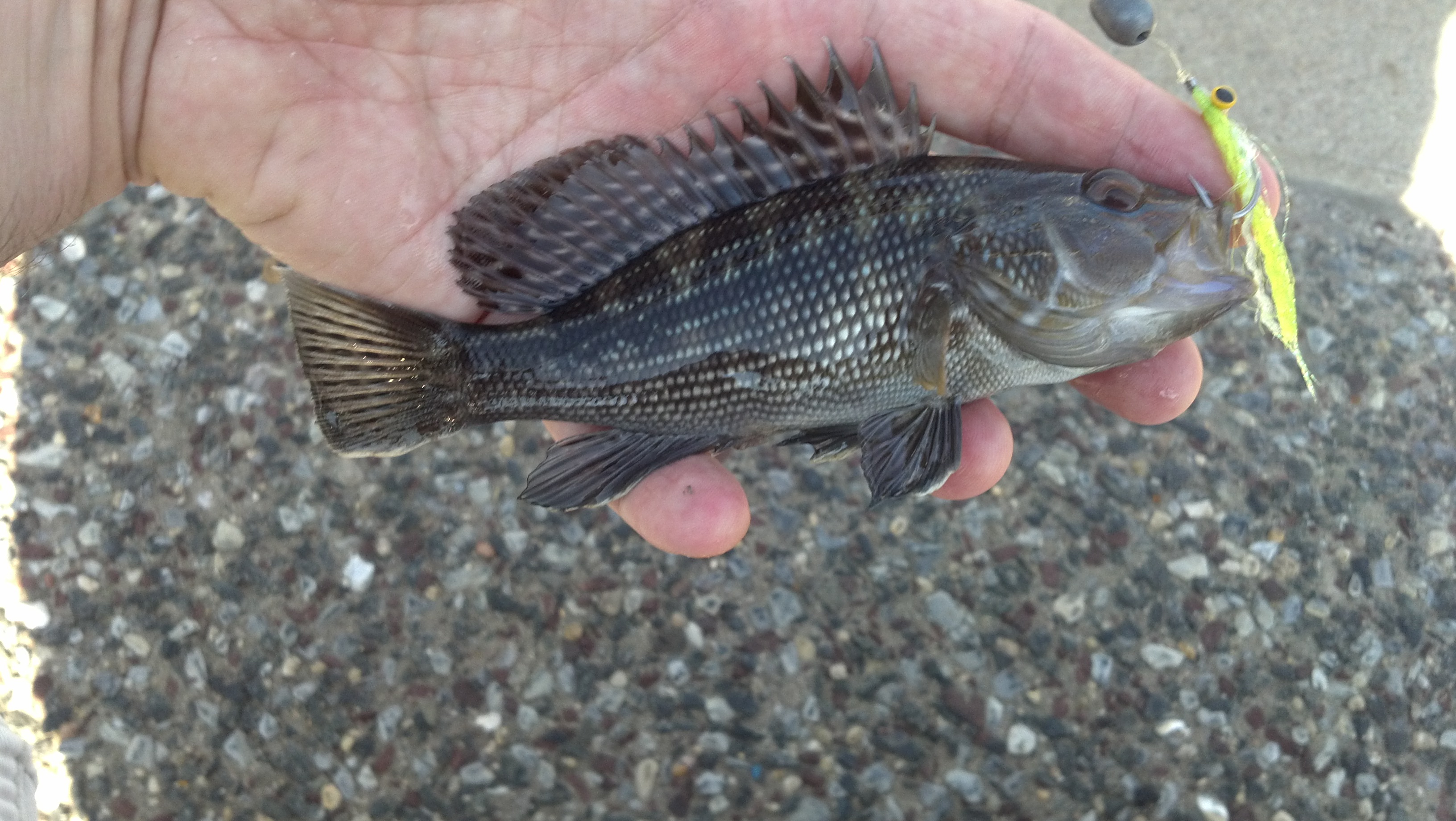
The Black Sea Bass

Black Sea Bass (photo taken 07)

Black Sea Bass (photo taken 07)

The black sea bass (those I have lost and caught and released) on the tenkara rod have coerced me to believe this is a saltwater sporting equivalent to the green sunfish found in freshwater streams. Previously I extolled on the green sunfish. The black sea bass is just as worthy.

The black sea bass is by classification a grouper, a smaller one, hardier to cold temperatures, a member of the family more well-known by its southern relations that range in color, pattern, and in size up to a 70s fly Volkswagen beetle.

The black sea bass exhibits broad shoulders, a flank thickness like the green sunfish, dressed in pearled black scales that hold an iridescence that glows bright blue around and along the lateral line. Vermiculation of a similar color resembles that of the green sunfish. The size encountered off my Manhattan dock(s) range from six to twelve inches. Only the very few largest are potentially one in the hermaphroditic phase, an interesting fact of this fish, which sets in at around specimens of ten inches or longer, in weight reaching eight to ten pounds.

Fish take a fly firmly and quiver shake in resistance. Bright weighted streamers, a chartreuse variety of Cllouser, can be cast, sunk, twitched on a line twelve feet in length supplemented by a leader of similar length tipped by the fly. Such a pattern on a swing with slow pulses of the wrist will take fish during one or two parts of a tide, often on incoming, but not always. One certainty, speed up the presentation of the fly to be intercepted by another hard hitter.

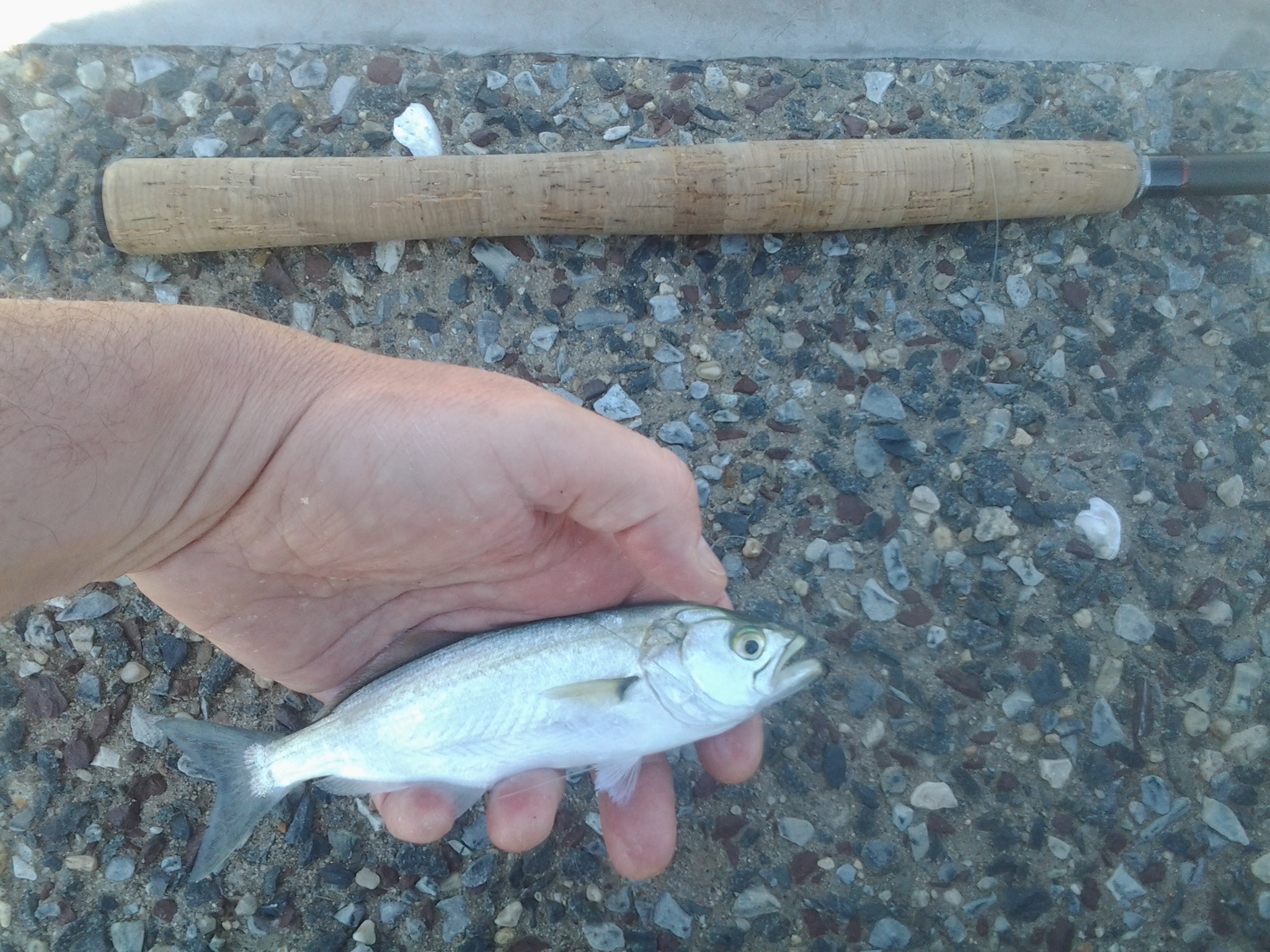
The Bluefish

First Fish! (photo taken 07 2014)

First Fish!
(photo taken 07 2014)

Closer to the surface cruise little toy soldier pods of juvenile bluefish chasing fry and rainbait schools. The schools of bluefish cutting baitfish like class come in and go out on quick waves that rarely last longer than two caught fish. Several hours of fishing will provide one half dozen waves of two minute bites on most occasions.

There also are changing skies to contemplate and inquisitive tourists, in between, plus a smorgasbord of aviation and ship sightseeing.

Fly patterns remain consistent with those best for the black sea bass. Simple half-and-half Clouser patterns tied for skinny water. Cinderworm patterns are normally ignored, although any dartible streamer of white can do. Sizes 6 through 8 are small enough for the tight-lipped bite of both fishes.

Hooks require a line. Level Line, not traditional tapered, is advised to be used. The Salt. I attach twelve feet to a small swivel and add a straight leader of monofilament in 5 or 6 lb. test. I want the leader to be breakable in case I hook into a piling of wood; an admittedly occasional hazard.
Hudson River Low Tide (photo taken 07 2014)

Hudson River Low Tide
(photo taken 07 2014)

Close fishing to the docks works best when peak tides and solunar tables meet. Check predictions on the website Tides4Fishing and study saltwater access nearest you. Tenkara may work on croakers and bergalls and many other fishes of The Salt that can fit into a pan if you force them, by hook.

Panfish, or Handfish? (photo taken 07 2014)

Panfish, or Handfish?
(photo taken 07 2014)

– rPs 07 25 2014

Postscript: Tides4Fishing http://www.tides4fishing.com/

Leave a Comment

Happiness

Happiness . . .

Green Sunfish along a New Jersey road. (photo taken 07 10 2014)

Green Sunfish along a New Jersey road. (photo taken 07 10 2014)

That little brook beside the road, a scene repeated across this globe creased by moving water. My most often wonder as a child until now is what may swim toward the artificial fly within this flow or that flow.

This one, near Passaic, New Jersey, poured forth in runs shin deep along the green edge of a Jazz Age duplex neighborhood bordered by a small park. This run of preserved water flowing through a garden city urban setting offered up on a sunny July afternoon a final treasure, finality found in a firm belief:

One Rod. One Line. One Fly.

One Fish!

Green Sunfish, Lepomis cyanellus, is my favorite freshwater tenkara tackling opponent that does not fall under the separate heading of Salmonid.

Lepomis cyanellus, the fins of this fish often exhibit a commonality with the east coast’s native char, Salvelinus fontinalus. Both fish possess rusty fins edged precisely in white.

The mouth of the green sunfish, like the rock bass and the redbreast sunfish, presents an elongated jaw like the largemouth and the smallmouth bass. Coloration, in addition to the fins, may exhibit barred or mottled jade. Sky blue vermiculation often decorates the cheeks and pronounced jawline.

I dedicated an entire chapter to the green sunfish in my most recent book, Small Fry: The Lure of the Little. One included claim of experience included the observation this species will take the wet fly when swung or pulsed beside submerged ledges of rock. Stretches of this little back alley run runs deeper along a smooth rounded ledge, casting shade at high sun and the rest of the day throughout. New Jersey bedrock: carved by water.

Additional shade here is often provided by Norway Maple trees. This introduced species, a popular planting during earlier generations, holds broad leaves that can cast a lush cover of shade over a city sidewalk and its parallel greenway brook. Numerous green sunfish dared forth from the ledges under tree shade cover and savaged passing offerings with the voracity of brookies swarming a floating beetle pattern just as it lands on a foothill creek flanked by hemlocks.

The length of the two fish runs in parallel fashion, ranging between three and eight inches in small streams. A plump green sunfish of six inches marks my personal best so far caught and released from this Passaic-area creek. This fatness counts in the strength department. The rounded green sunfish body holds more bulk against a tenkara rod’s tenderer, Lillian-tipped, rod tip.

Between dapping and pocket picking between banks set ten feet apart, successful narrow casts can be made. I practice my bow and arrow here, too. A careful bow flip can land beneath the branches where frequently a larger brooding fish often holds. Tenkara rods cover this variety of water well.

Outings spent in intense fishing, green sunfishing in a tight quarter, will leave most anglers exercised after a summer day’s length. Happiness comes from the experience, perhaps accompanied by ice cream with a fishing amigo, with which one enjoys also a cooling sunset. Fireflies began a cold, incandescent dance beneath the tree canopies as Sol submerged behind cumulus cloud and the tree line standing behind living city water.

A tenkara lesson learned with the green sunfish pointing the way.

Happiness.

– rPs 07 14 2014

Leave a Comment

New Beginnings, New Starts

New Beginnings, New Starts . . .

Hudson River Casting Platform (photo taken 06 22 2014)

Hudson River Casting Platform (photo taken 06 22 2014)

Summer Begins: “Schooled at Meadow and Hudson”

1.

Sounds like the subtitle infers something happened at the intersection of two streets. Sounds of people meeting and laughing interrupted by a sporadic clunk when and where some individual gets burned, yet learns street smarts.

The tenkara party continues to grow although, for me, the fishing fly life has become the quiet sport. The pupil piscator has been schooled at Meadow (Lake) and Hudson (River).

One spring June afternoon was made available and spent under sky around the brackish Meadow Lake in Flushing Meadows Corona Park, Queens. Stories from here, heretofore, had come conflicted between hearsay and a past issue of The New Yorker, dated August 22, 2005, which in part relayed one portrait of mi amigo, Edwin Valentin, in a quest with two other anglers for a caught, perhaps photographed, New York City snakehead on the deadline of a feature reporter.

My Snakehead Spring; I have lived through such times, too, experienced a parallel coincidence pair on a matter urban angling. I decided to inquire through my experience further. The 7 train left me a walk’s distance around the National Tennis Center and the grounds of the 1964 New York World’s Fair. The scene appeared clear, without the makeup of sunlight angle streams. The view appeared direct and in that bare way consistent under an unbroken nimbus cloud lid that did open near day’s end, eight hours later, when the sun set off in an electrum burst at the bottom of a darkening blue sky.

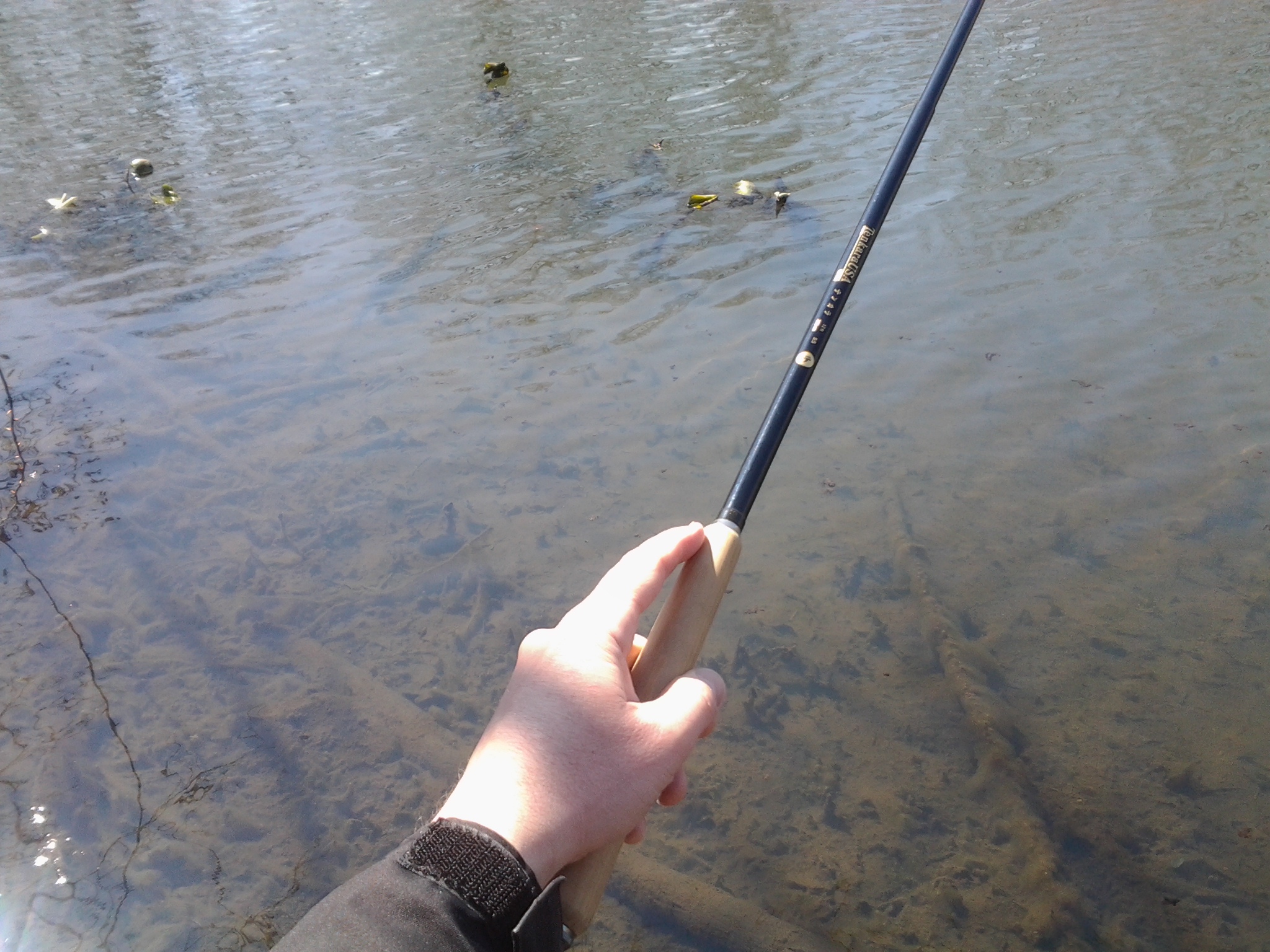
Nimbus Grip at Meadow Lake (photo taken 06 11 2014)

Nimbus Grip at Meadow Lake (photo taken 06 11 2014)

Windy this place remained, even after the last of the sun’s light. Barnacles encrusted a few pieces of old construction wood. These planks and a green great wall, a phragmite monopoly, walled in the water in all but a dozen tight places.

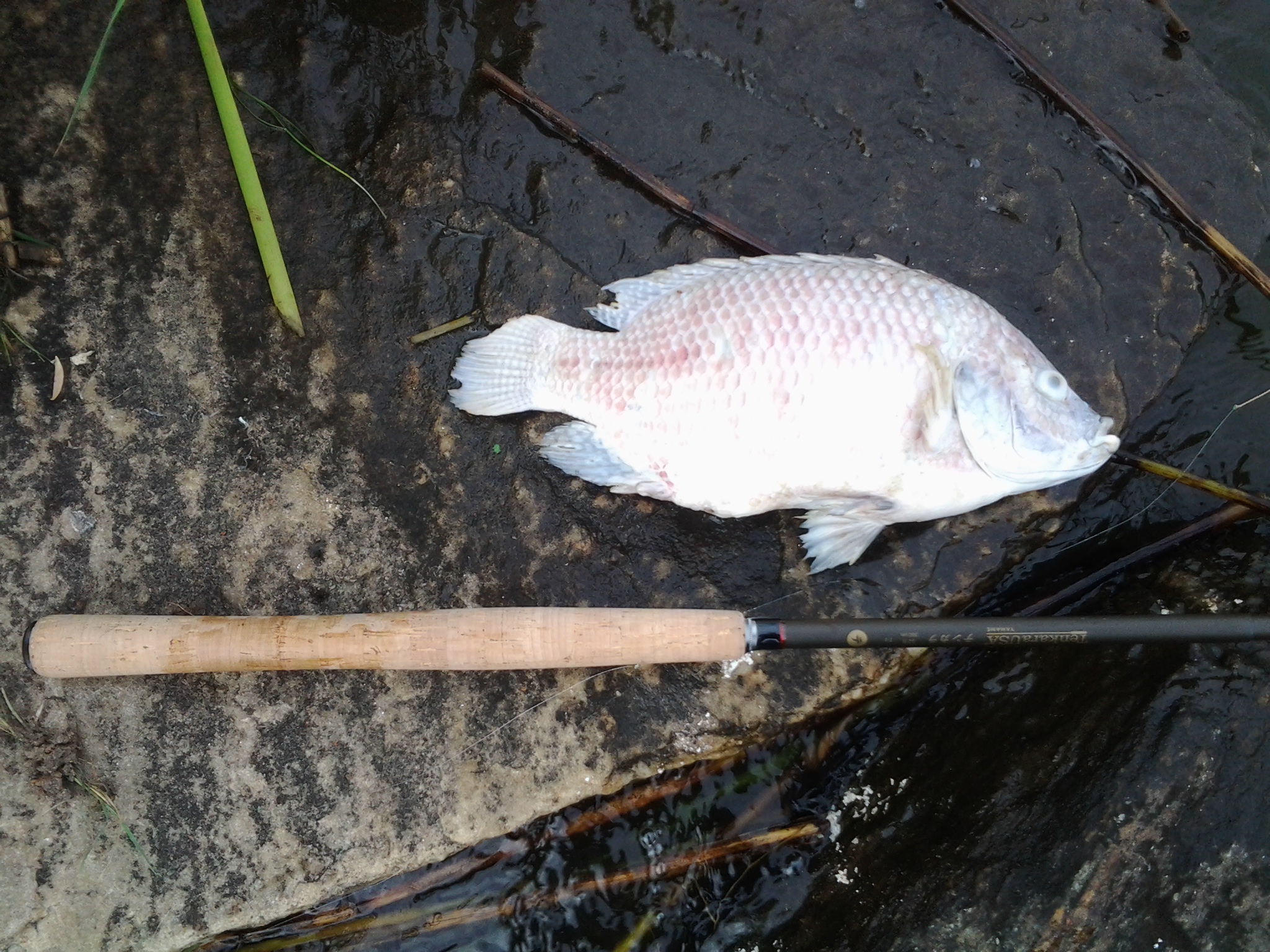
Snakehead? No, tenkara instead touched tilapia , , , one dead, a few living, seen grazing in the visible lake shallows along with carp of my favorite proportion; those the size of largemouth bass.

Yamame and Tilapia (photo taken 06 11 2014)

Yamame and Tilapia (photo taken 06 11 2014)

This is one salt lake that certainly merits more attention and shall receive more.

2.

The commercial fly life remains brisk. That’s where the block party has been going down. Tippet material, especially 6X, sells daily. I feel the standard tenkara 5X may be scaled down by one or two with most good fish played to satisfaction. Time and fish are all the necessities required to test such lines.

Two bright Sunday morning hours on the second day of summer did present a sole challenge within the wide, swift, Hudson River near Lake George.

A recalcitrant trio of brook, rainbow, and brown, this being one of the few areas in New York that possesses the potential for all three species netted on a given outing, felt near. A few glimpses of shadows defying current snaked under my sight. Was that first hang-up of a Peacock Herl Prince, the snag concluded below the water, near the cobblestone, without an explanation, actually a quick head snap of 6X under a trout take? The loose point of tippet returned clean snipped.

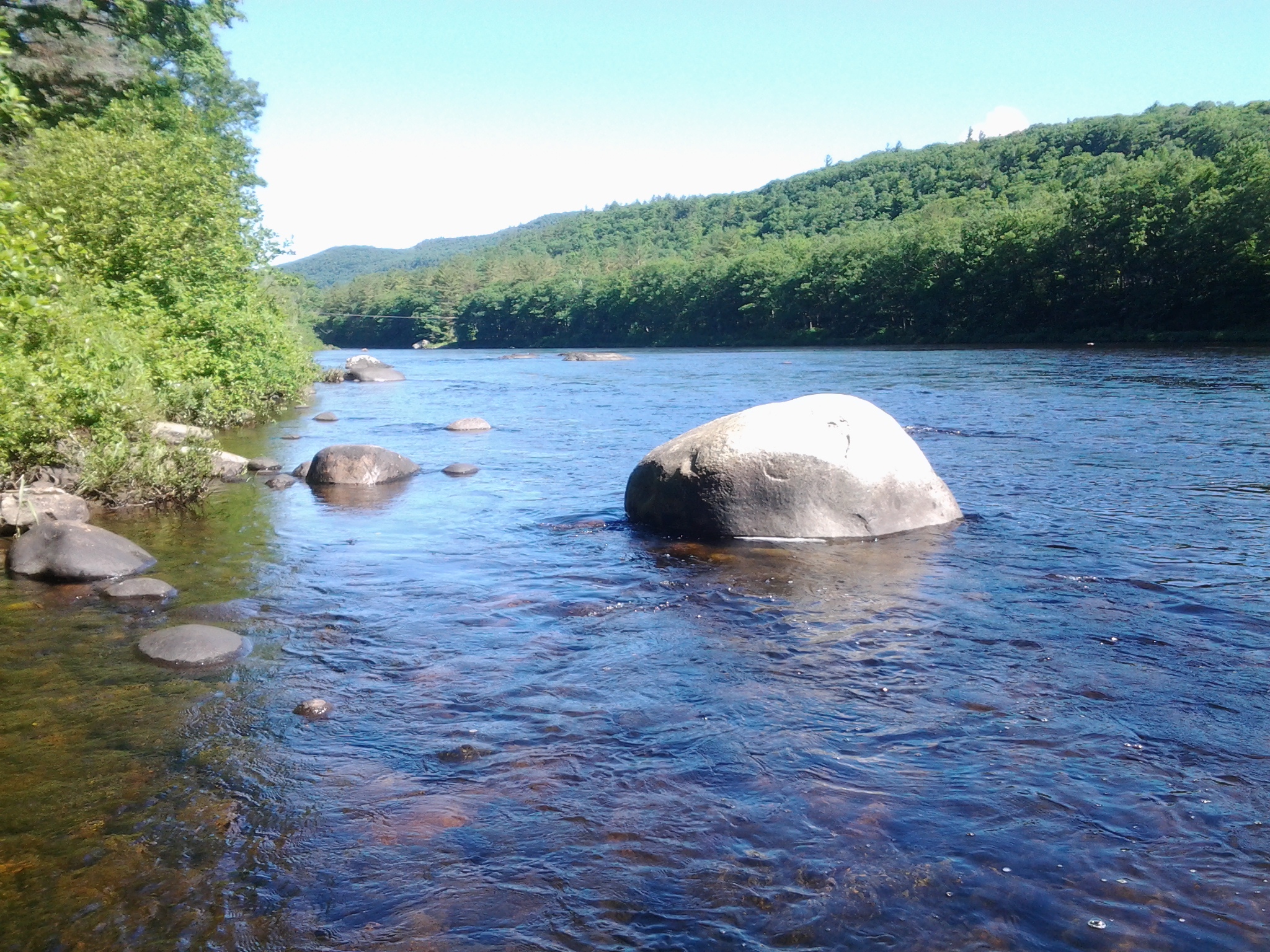
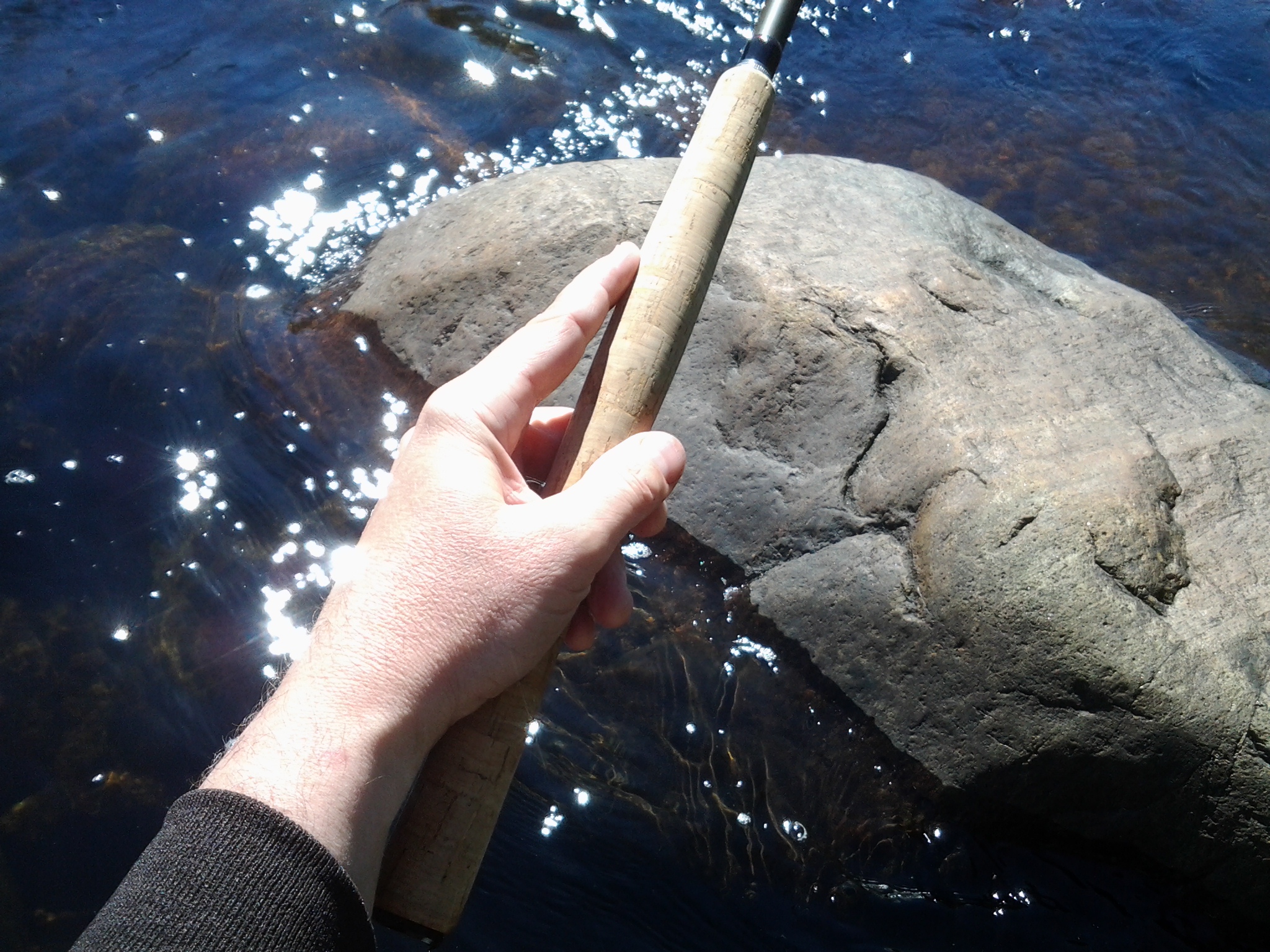
I did find the wading worthy enough for a staff. Without one, I somewhat stumbled up through a loose boulder garden. Plenty of slots and seams presented more prime soft hackle water than the time I had allotted to me. My best gave a few opportunities to hold the stick, high behind a granite monolith’s teardrop holding trout station, long enough for a short series of photos.

Bright Grip on the Hudson (photo taken 06 22 2014)

Bright Grip on the Hudson (photo taken 06 22 2014)

July Starts. “Tenkara Cameo”

Tenkara queries attract like minds. My July has been peppered with conversation several times a week with new faces on topics tenkara. Kebari practice remains close to the vise. There is time enough for deer hair and thread and the occasional bird feather. Peacock Herl is my A decoration. The wraps of iridescence are a pleasure; I never tire from the repetition, close knitted on a wet nymph fly hook.

Beginnings, some months, like this month, bear good news in the form of good press. Mid Atlantic Fly Fishing Guide, found complimentary in fly shops I have visited, gave me good news in the form of a cover appearance and a new story – “Brooklyn on the Fly” – on the pages of the new August 2014 issue. My Tenkara USA Ebisu rod makes two photo cameo appearances.

Mid Atlantic Fly Fishing Guide (August 2014)

Mid Atlantic Fly Fishing Guide (August 2014)

– rPs 07 09 2014

Leave a Comment

April: A Day; A Lake


April: A Day; A Lake . . .

April: A Lake. (photo taken 04 10 2014)

April: A Lake. (photo taken 04 10 2014)

North of Manhattan I have fished several times in several locations. A fact may be the environment of a stillwater is more important than a place name. If you have a pond accessible in early spring, do fish tenkara there. You may catch panfish, bass, even perch and trout and pike, sized to the scale of the rod you choose.

Ebisu and I ventured into a brisk wind, cold, just not enough cold to put on my fingerless wool mittens. I knotted on a 4X length of tippet a weighted chenille pattern, olive in color, 10 in size, as well as later a classic size 12 Zug Bug nymph tied expertly by the folks at Umpqua. My new tool: a treat; a tapered, woven, 11 ft. Tenkara USA line dressed in a pale olive color.

Converted, instantly, instinctively I was to this line despite the wind level; it was obnoxious enough to make me laugh out loud with myself.

Clean and neat is the tapered line. Greeted I was, after four or five casts, by a modest largemouth bass sporting a clean and neat pattern. The fish met me during a slow Leisenring Lift beside some submerged sticks. Visibility was the best in a year as I would learn further, later, casting to carp on the lily pad flats.

I added a foot or two of Berkley Trilene green 10 lb. monofilament to absorb abrasion and to act as transition between the visible tapered line and the invisible tippet. A loop to loop between tapered line and transition is matched on the other end by a double eight knot on the transition and some kind of slip or clinch knot on the fine side.

Moss gone green; skunk cabbage and onion grass in sprout; red buds tipped the trees, all below a blue as clear sky. The wind remained generous. I learned to cast in step with it toward promising stick piles and boulder banks.

My number of chances at a carp on the flats equaled one. A fish of eight pounds to my eye passed by me bankside. I decided to spin. I pulled the lever, placed the sinking fly four feet in front of fish with a light and tight ripple following its swinging caudal fin. The fish swam on ahead on a singular mission of its own.

Flats Casting. (photo taken 04 10 2014)

Flats Casting. (photo taken 04 10 2014)

The second bass proved to be a miracle of play and patterning. A strike out of visual depth pulled tightly, approached the surface; its side rippled flashes metallic, resisting in equal the bending Ebisu. I had five or six feet of bank to each side, one occupied by a sunning turtle I did not want to disturb. I tiptoed behind the shell; our eyes together, as the rod doubled down like an extended arm wrestle.

My thumb, up, won a short photo session with a long fish; a female to my eye and understanding of fish profiles. Rare have I seen such clarity and splendor in the prominent black lateral line and bordering blotches. Each bass flank is a flag. This one remains high at full mast.

Largemouth April. (photo taken 04 10 2014)

Largemouth April. (photo taken 04 10 2014)

Open brush and dry phragmite stands around an adjacent pond’s perimeter afforded me a chance to ruminate on the catch. I cleared out a measurable amount of public plastic trash, which I disposed of later at a public can. Glass and metal do not disturb me so much as these materials, in moderation, weather better. Plastic, however, and batteries? The bits and pieces add up. Besides, you want your photos to look clean!

The equivalent of three rolls of film later, I found myself wrapping up in another manner. I rolled the tapered line onto its simple, effective dispenser. One golfer passing by announced to his other friends: “I wanna go fishing. I like to go fishing!”

I did.

Ebisu Near Rising Pads. (photo taken 04 10 2014)

Ebisu Near Rising Pads. (photo taken 04 10 2014)

– rPs 04 11 2014

Leave a Comment

« Newer Posts · Older Posts »
Design a site like this with WordPress.com
Get started