Belabored

Belabored . . .

French Creek and Wildflowers. (photo taken 09 03 2013)

French Creek and Wildflowers. (photo taken 09 03 2013)

Our household is in transition. Most of September has been spent dealing with real estate issues; a business as complex as the tips of a Spey line. Free time – fishing time – time fishing simply with one fly on a slip-knotted level line – has been swallowed up in the sudden way a largemouth bass inhales a popper floating on the surface of a pond.

My fishing, then, at least during this September, consisted of a few hours on the day after Labor Day; a sunny morning along a shaded length of French Creek in Pennsylvania’s Chester County.

The scene was pretty: late summer wildflowers like orange jewelweed in bloom; mushrooms glowing white amongst the leaf litter. A frog plopped into the water in front of me and swam to a little point of stone projecting out of the current.

Wet wading was easy for me, too, as I found that flow ran summertime low, but this hampered my recent desire to experiment with the large nymph. My attempts were foiled by a steady stream of hang ups along the rocky bottom.

I did catch sight of a few rises across a slow bend downstream. A size 16 BWO was sent across to explore the spot. Two redbreast sunfish quickly came to hand.

The BWO is a great dry fly pattern for the redbreast, the stream sunfish. (photo taken 09 03 2013)

The BWO is a great dry fly pattern for the redbreast, the stream sunfish. (photo taken 09 03 2013)

A fish on the line and in the net made the day a success. Time was progressing in earnest; I therefore kept moving to see what experience I could squeeze into the remaining hour or so at my disposal. This compelled me to hike upstream to a stretch I had not fished for two years. Here there are several deep runs interrupted by an exposed outcrop of cobblestones: wrinkled water ideally suited to fishing emergers and soft-hackles.

Wrinkled Water. (photo taken 09 03 2013)

Wrinkled Water. (photo taken 09 03 2013)

The white-tailed deer seem to like the soft moss around this spot as well. I flushed a buck and two doe as I approached the carpeted bank. Each deer took its turn to bound across the creek and into the trees. I followed them as far as the water.

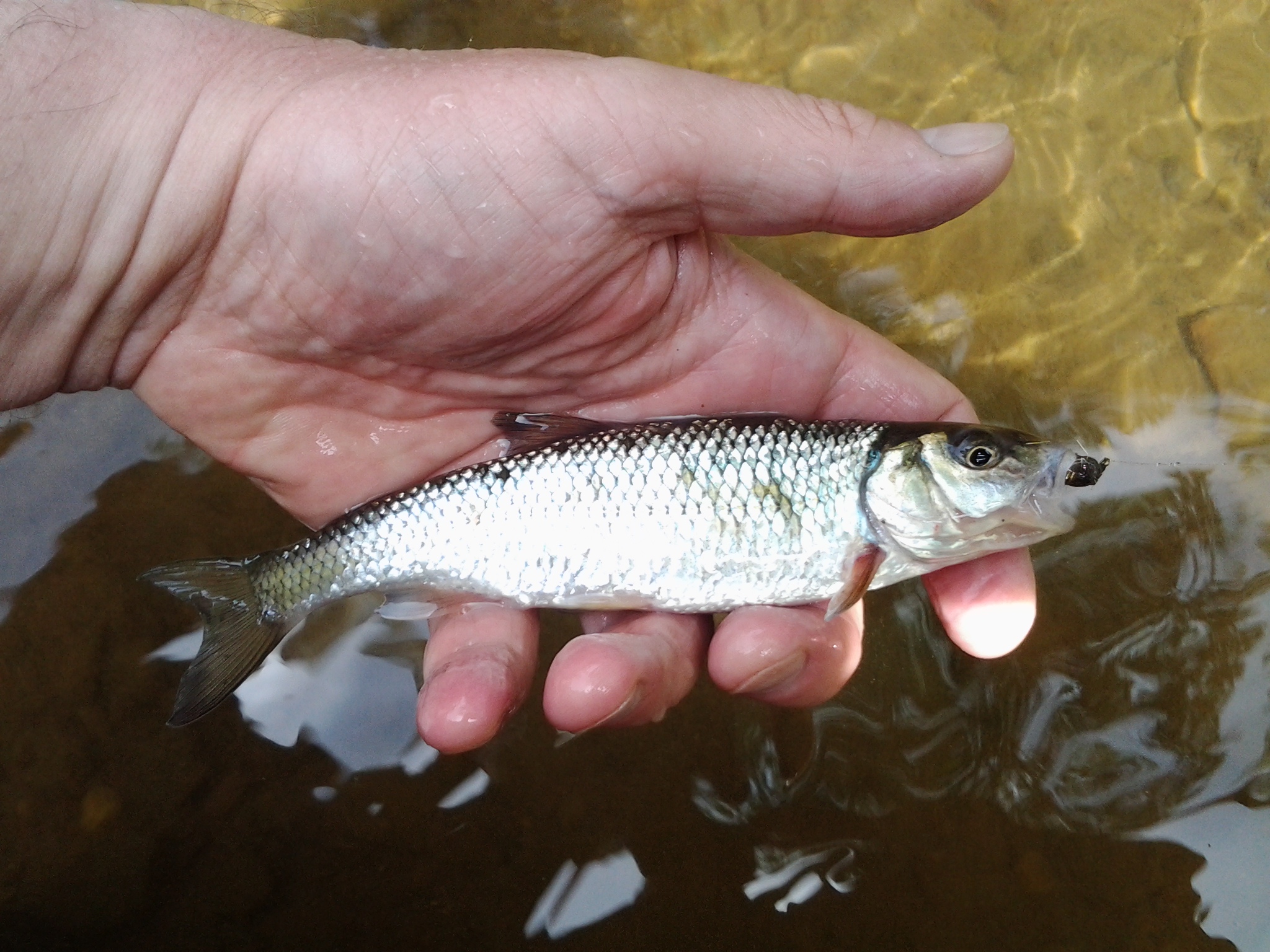
Another frog’s antics entertained me as I knotted on a small Black X-Caddis emerger. This little fly has worked well for me when sent swimming across and downstream in low flows. One brassy flash I missed on the first cast was certainly the day’s brown trout. A pause followed; one necessary to recapture my rattled peace of mind. Once obtained, the target zone shifted to a deeply shaded seam that ran down the center of the creek. The pattern swung into a strong strike, like a bat meeting a baseball, quickly followed by an athletic jump that lit up the scene. The taker then surged straight toward my legs. The net once again came to my rescue as I maneuvered it into position to handle a large and very bright fallfish.

This fallfish jumped like a rainbow trout. (photo taken 09 03 2013)

This fallfish jumped like a rainbow trout. (photo taken 09 03 2013)

My cell phone chirped a few moments later. My wife had sounded the call to come back to the in-laws so we could have lunch before boarding the train back to Manhattan. I was happy to have had this time on the water, however brief, given how belabored by the business of life we have become.

– rPs 09 27 2013
Comments (2)

Joe-Pye and the Yellow Perch

Joe-Pye and the Yellow Perch . . .

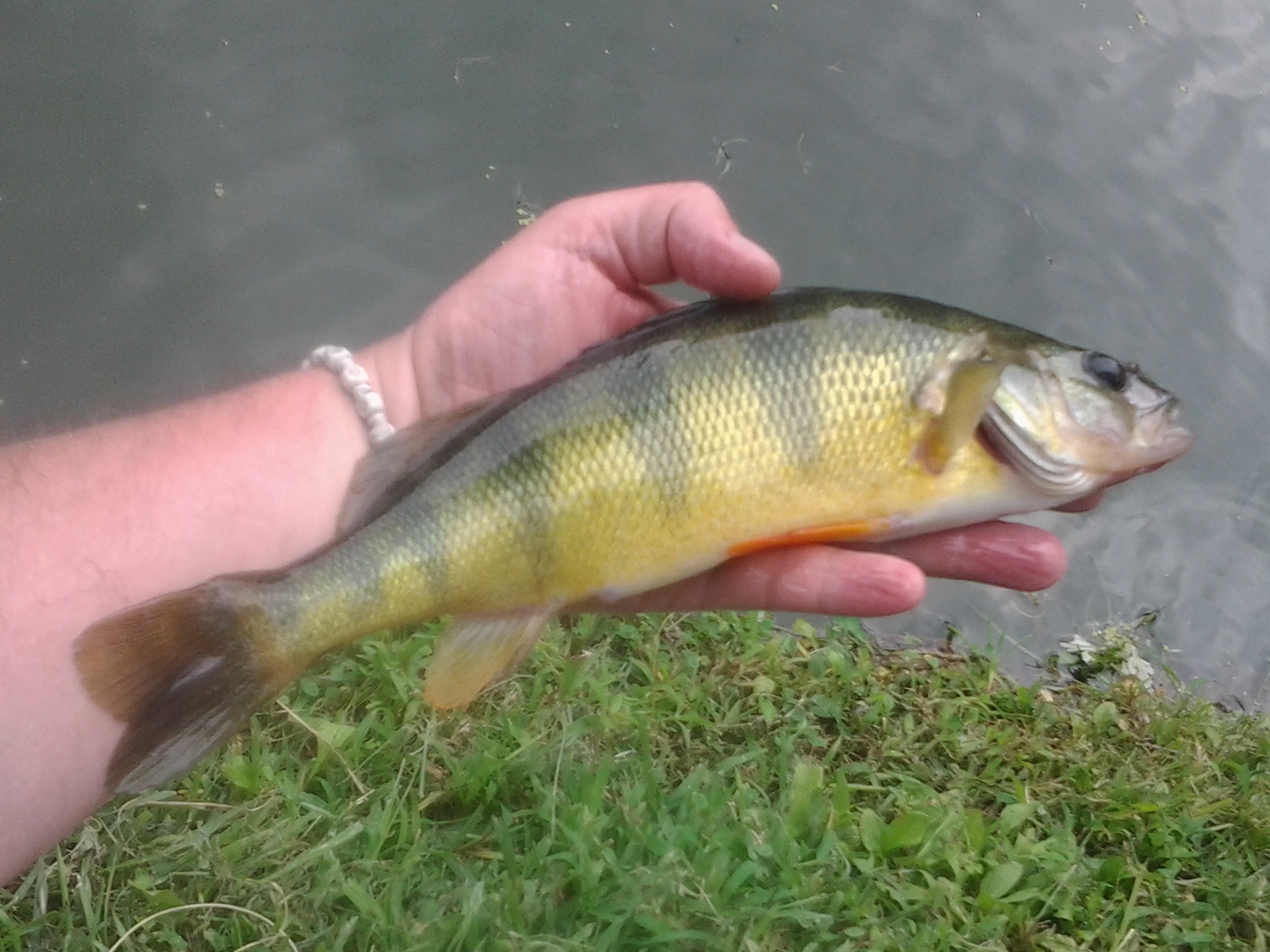
Tenkara + Streamer = Yellow Perch (photo taken 08 07 2013

Tenkara + Streamer = Yellow Perch (photo taken 08 07 2013

Tenkara fly fishing, as we know, originated along the mountain trout streams of Japan. Here, half a world away in New York City, I continue to learn how wonderful, yes wonderful, this method can be for warmwater ponds like Central Park’s Harlem Meer. I find myself surprised on almost every outing. The most recent discovery for me has been that streamers, retrieved with a slow lift of the longer tenkara rod, can entice yellow perch to strike. The photo above provides the proof . . .

I grew up catching Perca flavescens on spinning gear. Worms, minnows, spinners, and small spoons were all effective at putting several dozen on the dock. This species is a favorite sport and food fish of the Great Lakes region and one, like the pike, which is shared by our European neighbors. To them I say: “Try some coarse fishing the tenkara way!”

The tenkara technique for yellow perch is simple enough: tie a streamer such as a Mickey Finn, Grey Ghost, or Muddler Minnow to the end of your tippet and cast in areas where baitfish, the perch’s preferred forage, may be congregating. Allow the fly to sink and hover for a while before retrieving with a slow, steady lift of the rod. The result can be several strong takes in succession, as the yellow perch tends to school en masse. Once one does strike, hold on! A perch will fight a fast subsurface battle that will put an excellent deep bend in the rod.

The Yellow Perch tends to be most active in the American northeast when chalky pink Joe-Pye Weed, Eupatorium dubium, is in bloom around waterways. The months of August and September are an especially good time to visit a lake or pond and try this entertaining twist in the tenkara way.

Joe-Pye Weed graces the banks of Harlem Meer. (photo taken 08 07 2013)

Joe-Pye Weed graces the banks of Harlem Meer. (photo taken 08 07 2013)

– rPs 08 28 2013

Comments (2)

The Utility of the Net

The Utility of the Net . . .

A French Creek rainbow trout successfully landed - thanks to the net! (photo taken 05 2013)

A French Creek rainbow trout successfully landed – thanks to the net! (photo taken 05 2013)

Rarely do I fish with a net. There is no conscious reason; I simply find myself most often angling for fish small and easy enough to handle manually. Panfish are also handfish.

While sorting through a large batch of photos from the previous few months, I found the image of the netted trout above, and the story behind this moment returned to me.

Memorial Day weekend gave the time and French Creek in southeastern Pennsylvania provided the setting. The long weekend allowed my wife and me the ever more rare opportunity to slip out of New York City under the demanding noses of our respective work lives. The in-laws provided family, food, and for me, fly fishing, tenkara style.

Maryann wanted to sleep in on the morning of Memorial Day, but she did wake long enough to permit me to take along her L.L. Bean Pleasant River trout net. I sensed I might need it, as French Creek, like all freestone flows, holds more physical challenges to the landing of fish than a stillwater pond, and an encounter with trout, a fish much trickier to calm than black bass, would be a possibility.

A short stroll down a suburban road took me to the banks of the stream, which was quiet and empty of other anglers despite the bright holiday morning. A deep pool along an inviting bend in the stream above a flat bedrock run gave me a good starting point. There, on a Pheasant Soft Hackle, I caught a few small redbreast sunfish; an attractive and somewhat rare catch in this cold water

This French Creek redbreast sunfish added to the surrounding symphony of green and orange color. (photo taken 05 2013)

This French Creek redbreast sunfish added to the surrounding symphony of green and orange color. (photo taken 05 2013)

Wet wading eventually brought me several hundred yards downstream to the plane tree root jams I had fished the previous Christmas Eve. I had by this time landed a few silvery fallfish and knew the top prize, a trout or two battling my line and limber Ebisu tenkara rod, could very well be present.

This French Creek fallfish fell for an X Caddis. (photo taken 05 2013)

This French Creek fallfish fell for an X Caddis. (photo taken 05 2013)

I was not disappointed. My little Hare’s Ear paused during its second swing, snatched aggressively near the second batch of roots. Stiff resistance and a bent rod replaced the meditative mending of line. A sizable trout directed my attention upstream, where the water broke in a half jump, and then another.

At last, I thought, my net might see some action!

The lanyard sounded as I successfully gripped the handle and brought down the net toward the fish. Another, heretofore unheard tone, also now resonated. The rod tip began to scrape against the low tree canopy overhead. The length of the long rod touched limb, forcing me even lower as I bent backwards, leading the fish toward the mesh of the net. The sight of me so engaged must have resembled a circus contortionist.

The big rainbow eventually allowed itself to be landed, and photographed, and gently released, thanks to the net. The utility of this piece of gear had again, in a very timely manner, made itself clear.

The tenkara angler and his net take a break. (photo taken 05 2013)

The tenkara angler and his net take a break. (photo taken 05 2013)

– rPs 07 31 2013

Comments (1)

Bloomsday 2013

Bloomsday 2013 . . .

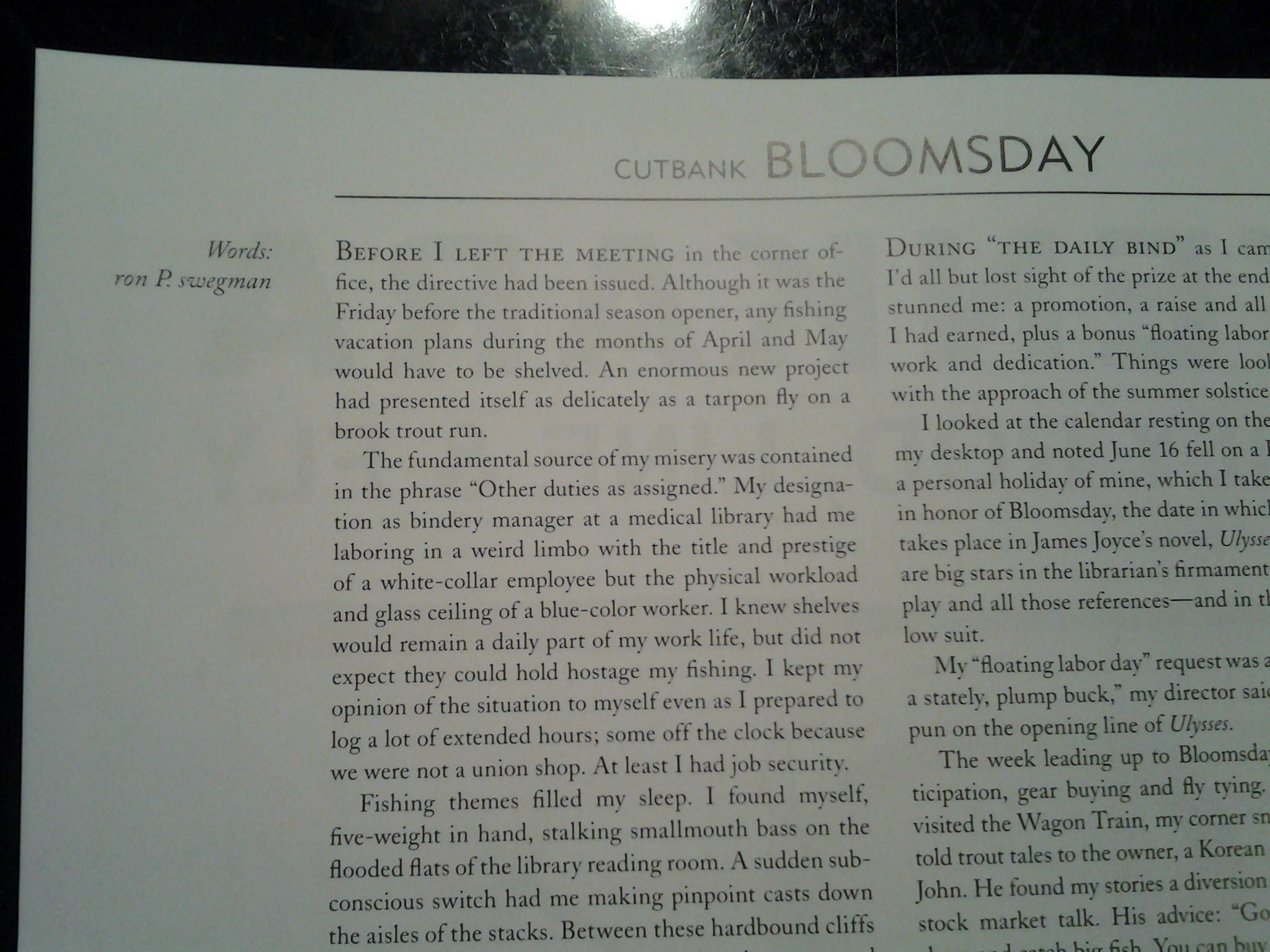
A snippet of my new short story, "Bloomsday" (photo taken 06 2013)

A snippet of my new short story, “Bloomsday” (photo taken 06 2013)

June 16th – the date in which all the action takes place, in Dublin, in James Joyce’s novel, Ulysses.

Speaking of which . . . I have a new short story titled “Bloomsday” in the new issue 4.4 of The Flyfish Journal. There is a thrill in this, having fused a literary favorite with my love of the outdoors. The magazine is on newstands now. Perhaps you, too, can enjoy my latest attempt at pairing words with the natural world.

rPs 06 16 2013

Leave a Comment

Casting for Immigrant Species in Central Park

Casting for Immigrant Species in Central Park . . .

Harlem Meer on the day I fished with The New York Observer. (photo taken 05 24 2013)

Harlem Meer on the day I fished with The New York Observer. (photo taken 05 24 2013)

The story of the alleged snakehead in Central Park continues. Last week. Matt Kassel, a reporter from The New York Observer, contacted me and asked one question to which I answered an emphatic “YES!”

“Would you be willing to go fishing?”

We arranged to spend a gray and windy Friday angling beside Harlem Meer. We were in search of the northern snakehead in one regard, that being the story of this fish and how what I prefer to call an immigrant may have established a tenuous presence in the pond. The answer I posited involves another immigrant, one of the human fishmonger variety.

The two of us fortunately failed to catch a snakehead during our outing, but I did manage to coax two bluegills from the lake, which resembled lentil soup laced with cooked spinach on account of two unbroken days of torrential rains. My highlight of the trip was successfully guiding Matt to a healthy largemouth bass. Fishes caught, story set, we parted as new friends beside the Meer now bordered by a third immigrant, the delightful yellow flag, a wildflower mentioned in American literature as far back as Henry David Thoreau’s Walden.

Matt’s story, including several excellent photos by Observer staff photographer Fernando Gomes, appeared in the newspaper on Tuesday, May 28th. Here is the link to the online version:

Gone Fishin’: Casting for Invasive Species in Central Park

On the Bright Side: immigrant Yellow Flag (Iris pseudacorus) lines the bank of Harlem Meer. (photo taken 05 24 2013)

On the Bright Side: immigrant Yellow Flag (Iris pseudacorus) lines the bank of Harlem Meer. (photo taken 05 24 2013)

— rPs 05 31 2013

Leave a Comment

Swegman on the Snakehead

Swegman on the Snakehead . . .

Today I was quoted in Marc Santora’s article regarding the alleged appearance of the snakehead fish in Central Park’s lakes. While not directly related to tenkara, the story does affect one of my Manhattan fishing destinations. Plus the inclusion of my “expert opinion” in The New York Times is an appearance worth mentioning. Here is the link to the article, which can be found in the City Room section:

“In Central Park, the Snakehead Fish Intrudes”

— rPs 04 30 2013

Comments (4)

Back in Hand

Back in Hand . . .

My Ebisu back where he belongs. (photo taken 04 29 2013)

My Ebisu back where he belongs. (photo taken 04 29 2013)

When a fishing tool is used hard, often, or both, some snafu has to be expected at some point. So it occured to me with my Tenkara USA Ebisu, although the problem did not involve wear or breakage – I somehow lost a segment and the handle screw cap in the field.

An email to Daniel Galhardo received a quick reply and a solution; send the rod to the repair center in Belgrade, MT. I found a Scotch mailing tube that fit the TUSA rod tube perfectly and mailed the package on April 19.

Today, ten (10!) days later – Ebisu is back in my grip! This has been, hands down, the best customer service I have yet experienced with any company.

Thank you, Daniel, John, and Tenkara USA!

– rPs 04 29 2013

Leave a Comment

Earth Day 2013

Earth Day 2013 . . .

Prospect Park largemouth bass (photo taken 04 22 2013)

Prospect Park largemouth bass (photo taken 04 22 2013)

Today I took the Q train to Prospect Park in Brooklyn where I spent Earth Day fly fishing, bird watching, photographing wildflowers, and . . bagging and disposing of litter.

The phrase “use the resource” seems selfish when applied to parks and other outdoor spaces. I do not consume the outdoors, I interact with and help out when I can; today by bagging the loose plastic trash that has spread like a virus over the land during the last three decades.

The day encompassed an entire story I wish to take more time to detail later in the week. Let me just state here the bass fishing was excellent using variations on the Wooly Kebari fly pattern!

Happy Earth Day . . .

– rPs 04 22 2013

Comments (2)

On the Eve of the Opener

On the Eve of the Opener . . .

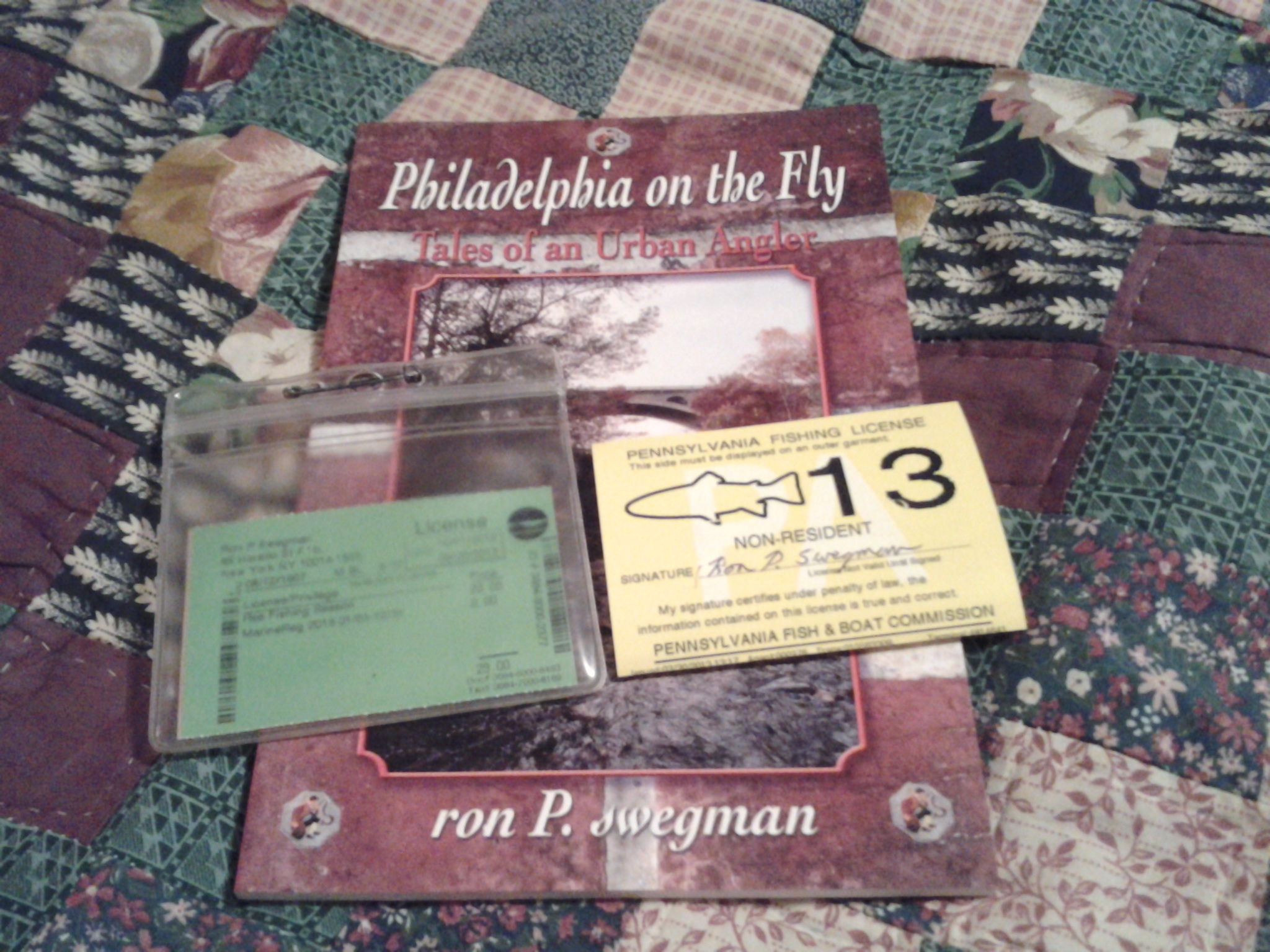
20130331_184940

The start of the season for trout in Pennsylvania coincides with the Easter holiday weekend this year. Since I am here visiting the in-laws (who live just a few blocks from a trout stream), we took the time to purchase our annual non-resident licenses (with trout stamp). Tomorrow may be a cold and damp Monday, but with that extra day scheduled off, I would be an April fool if I did NOT go tomorrow!

— rPs 03 31 2013

Comments (1)

My “One Only” Fly

My “One Only” Fly . . .

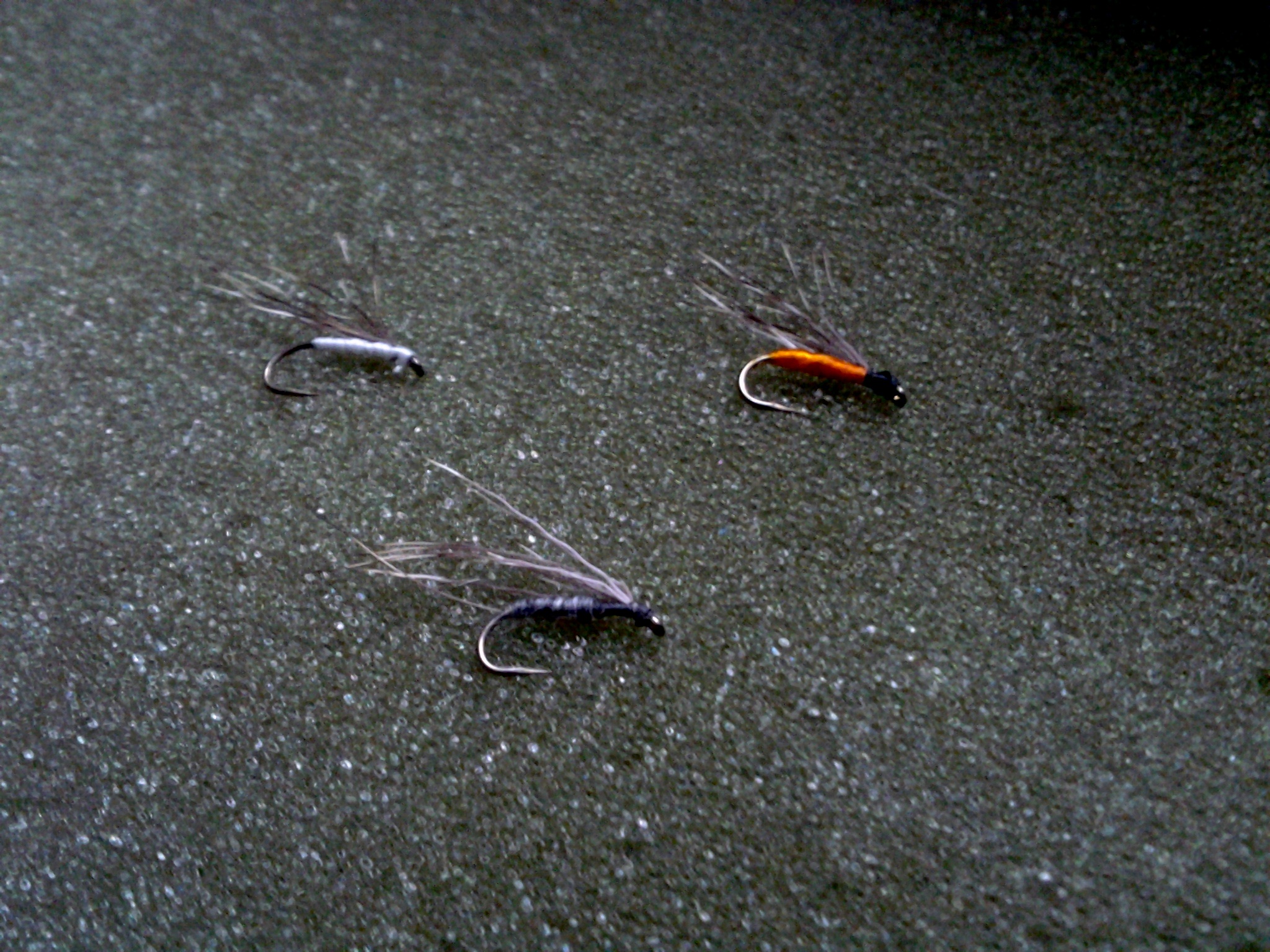
Three variations of my "one only" fly pattern: Deer Hair and White Thread; Deer Hair and Orange Floss; Deer Hair and Gray Wool. (photo taken 02 28 2013)

Three variations of my “one only” fly pattern: Deer Hair and White Thread; Deer Hair and Orange Floss; Deer Hair and Gray Wool. (photo taken 02 28 2013)

The pattern that has best served me well and best represents my tying philosophy is a simple hybrid of a soft hackle and micro streamer. I use a wet fly nymph hook in sizes 10 through 14, thread and floss or knitting wool for the body, and a sparse hackle of natural deer hair. These combinations carry the same silhouette: one short in the body and long in the wing. Very effective when twitched in still water, or hung in a stream’s current, I would choose this style as my “one only” tenkara fly if pressed to do so. The pattern has worked consistently in pond environments for panfish and has always helped me hook chubs, fallfish, and trout along coldwater freestone streams.

The General Recipe:

Hook: standard wet fly nymph, size 10-14
Thread: 6/0 thread
Body: 6/0 thread; floss; or baby ull knitting wool
Hackle: natural deer hair; or Hungarian partridge

– rPs 02 28 2013

Comments (1)

« Newer Posts · Older Posts »
Design a site like this with WordPress.com
Get started