Posts Tagged Kebari

Bass at First Light

Bass at First Light . . .


Earth Day: Bullfrog and Boulder (NYC 04 2016)

Earth Day: Dawn, Bullfrog and Boulder
(NYC 04 2016)


Spring’s risen sun seems to hover just above the tree line when positioned beside the freshwater in Central Park. The Hudson River’s brackish waters on the West Side of Manhattan and The Bronx are still flowing under full shadow at this early daytime.

Trees just beginning to sprout leaves offer a canopy as fine as a newborn’s hair. Lots of sunlight filters through the bright green around the water. Slight haze of pollen catches sun as it suspends over large frogs and the occasional turtle that surfaces to swim by. One woodpecker provides the beat of nature’s jackhammer, a mellow sound on wood set a few decibels below that of steel on asphalt no doubt going on deeper in the city.

The water stirs by the early riser. The bass are active.

When, in spring, the pond weed returns in its first growth to just below the surface, a predatory zone forms. Below sits a few openings, a few here and there holding depressions, and the flat roof top of golden green weed.

Poppers and other surface gurglers draw strikes on top as does a Green Guarantee, unweighted, pulsing in the emergent column. The deer belly hair of the green pattern’s wing adds buoyancy as it pushes water when pulled to simulate a pulse.

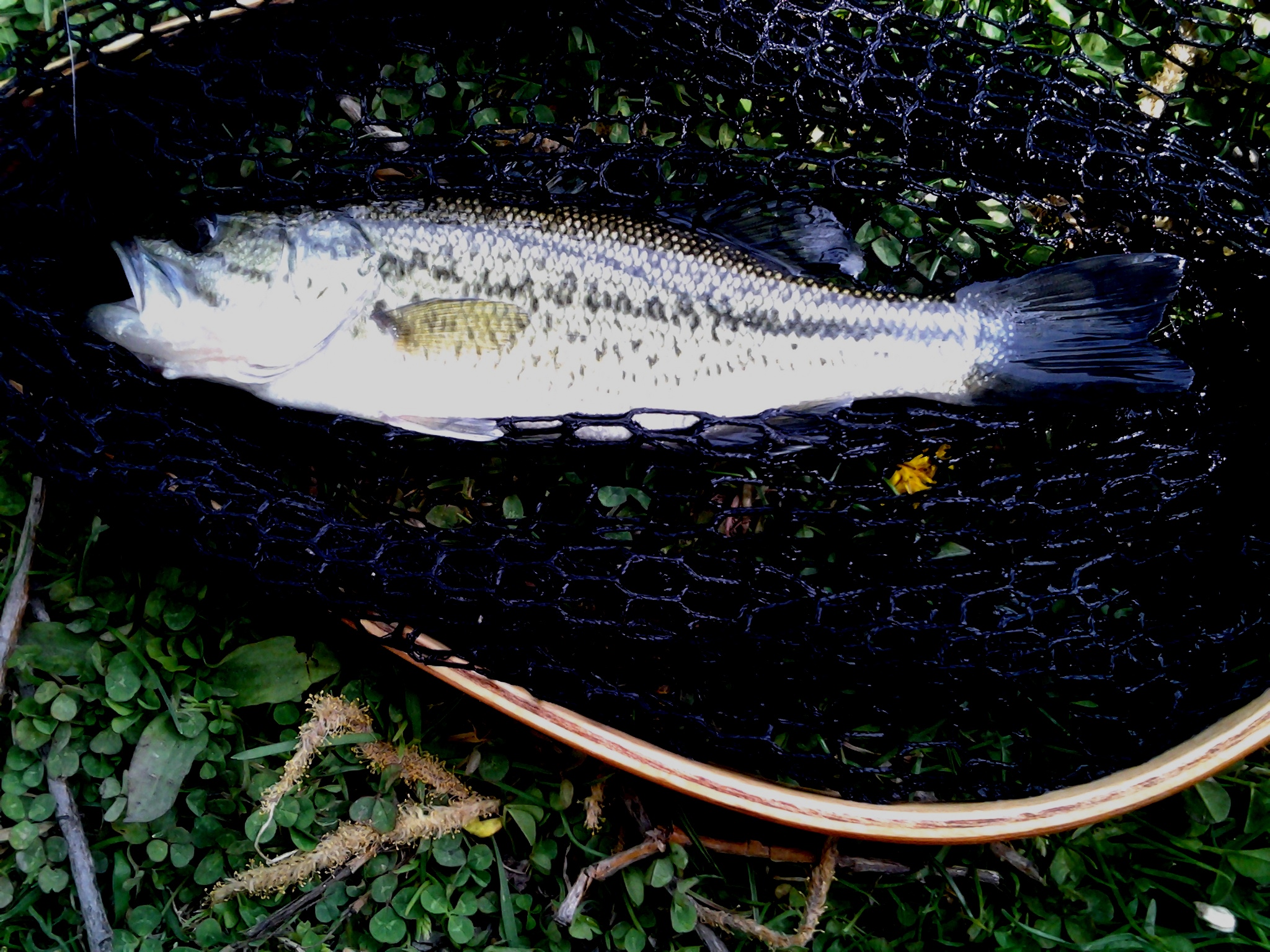
Largemouth bass, bigger pickles in the green trout class, make up the bulk of the dominant Centrarchidae in the Five Borough’s still waters. Such bass are bright, alert, and frisky, able jumpers worthy of 4x tippet.
First Bass Of 2016 (NYC Spring 2016)

First Bass of 2016
(NYC Spring 2016)


Urban Angler alum, Christopher Chang, worked a selection of poppers on a conventional 3-weight floating line and landed several respectable bass of the first size class. Such fish range two to four pounds and are breeding females. Each one caught quickly and humanely released. Action enough to satisfy a busy world traveler set to serve the Peace Corp. in Peru for the next two years.

Christopher Chang holds a bass lured by a popper. (NYC 04 2016)

Christopher Chang holds a bass lured by a popper.
(NYC 04 2016)


Ebisu’s lillian slip-knotted onto the traditional tapered line of tenkara matched with a sporting 6X tippet again continued to produce good numbers in variety as well:
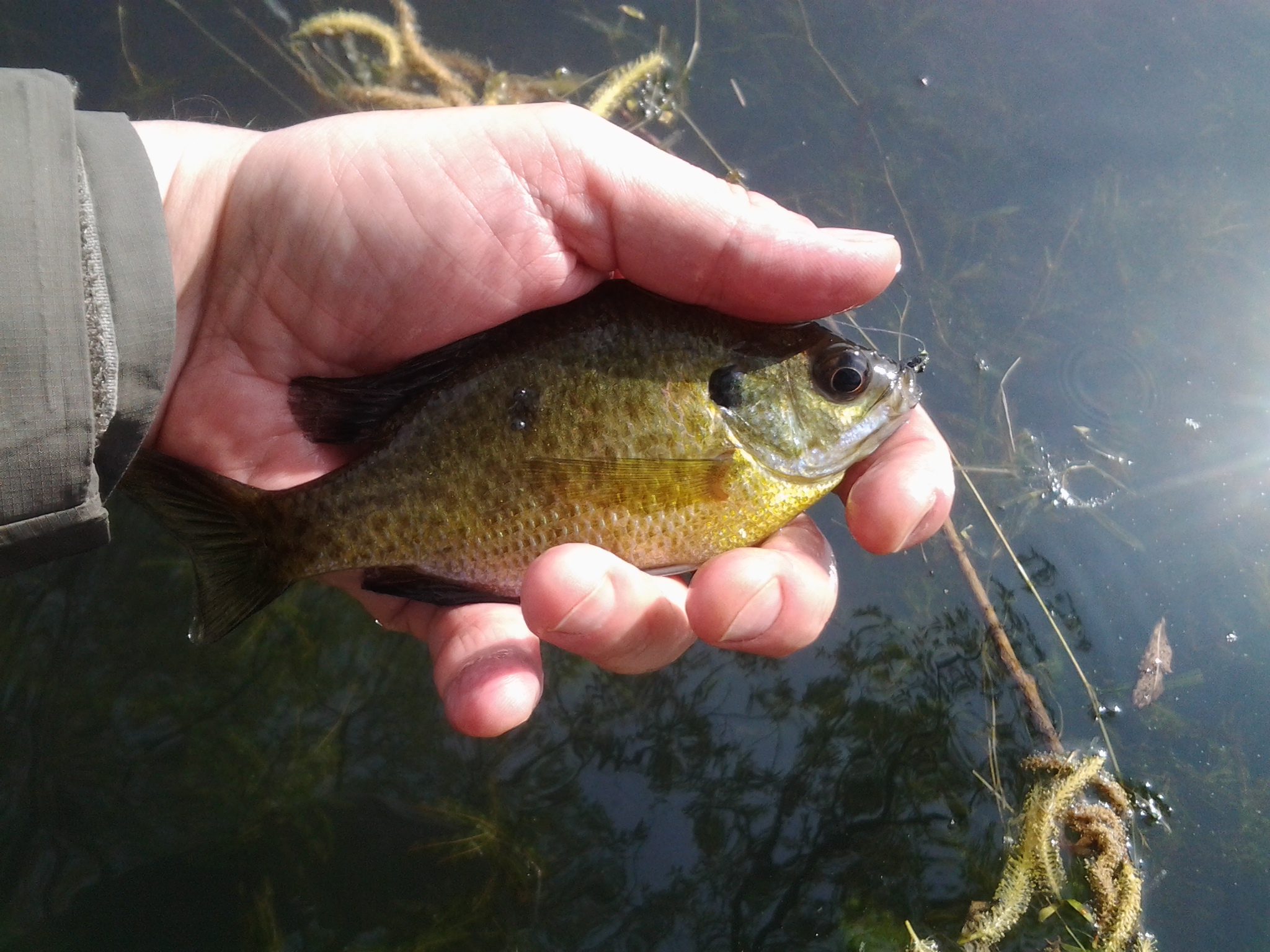
The Obligatory Bluegill (NYC Spring 2016)

The Obligatory Bluegill
(NYC Spring 2016)


The Obligatory Bluegill . . .

And,
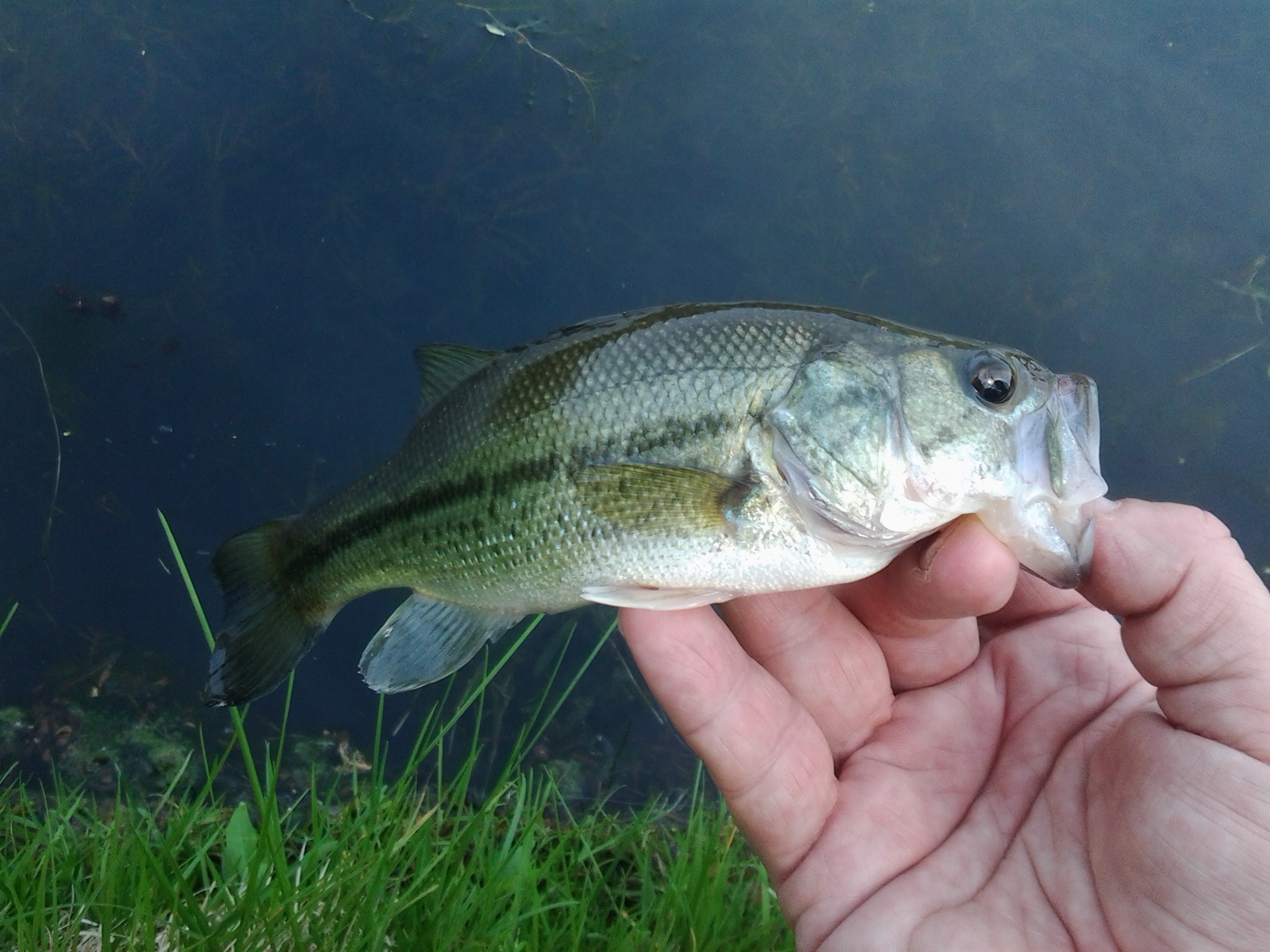
Bass Above The Weed (NYC 04 2016)

Bass Above The Weed.
(NYC 04 2016)


Second Bass of 2016 . . .


– rPs 05 12 2016
Leave a Comment

Three of One

Three of One . . .


Three Three Three 2016

One of Three: Green Guarantee! (NYC, 2016)

Tenkara = One Fly
Three of One? I can agree to that.

One pattern I may agree upon with allowance for three copies of said one. Three copies: one to fish, one as a backup if the first finds itself lost on fish or, to be most avoided, a snag. The third may be a gift for another angler met along a stream, or around the pond. That third one might also be the one to act as charmed third attached at last to a fish photographed and released humanely, else dispatched humanely, promptly, for shore lunch on or off the water.

Reasonable Compromise.

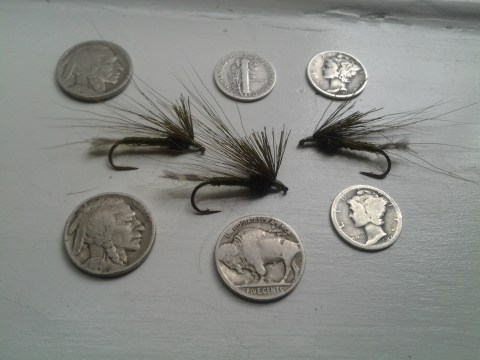
The one I carry most often remains the Green Guarantee, here displayed in trio with fun flea market finds. The American Buffalo nickel and Mercury dime circulated America in general when weighted hair streamers held simple and effective reputation. Archiving and philosophizing and tying attentive to all strata of the legacy from the vise remains complemented in parallel to the interest in the age of bronze, silver, and gold American coinage

Fly patterns and numismatics both share a small scale, a quality of materials rendered artfully within the frame of little physical space. Minor major wonder the two connect for me, this coming from the guy who penned Small Fry: The Lure of the Little.

Connected hobbies, activities: similar investments in a happy future on and off the water. The two tethered today make one happy indoors during a span of almost extreme weather; a cold rain drenches the city this day after sustained surface winds set at the speed of storm. Strange how the frigid air blew below an almost white sun above a bluebird sky filled with cloud of the purest white condensation, cloud marching as well, yet seemingly slower than the headlong gale off the Hudson River.

Actual angling must come later, sometimes.


– rPs 04 04 2016

Leave a Comment

Minted in March

Minted in March . . .


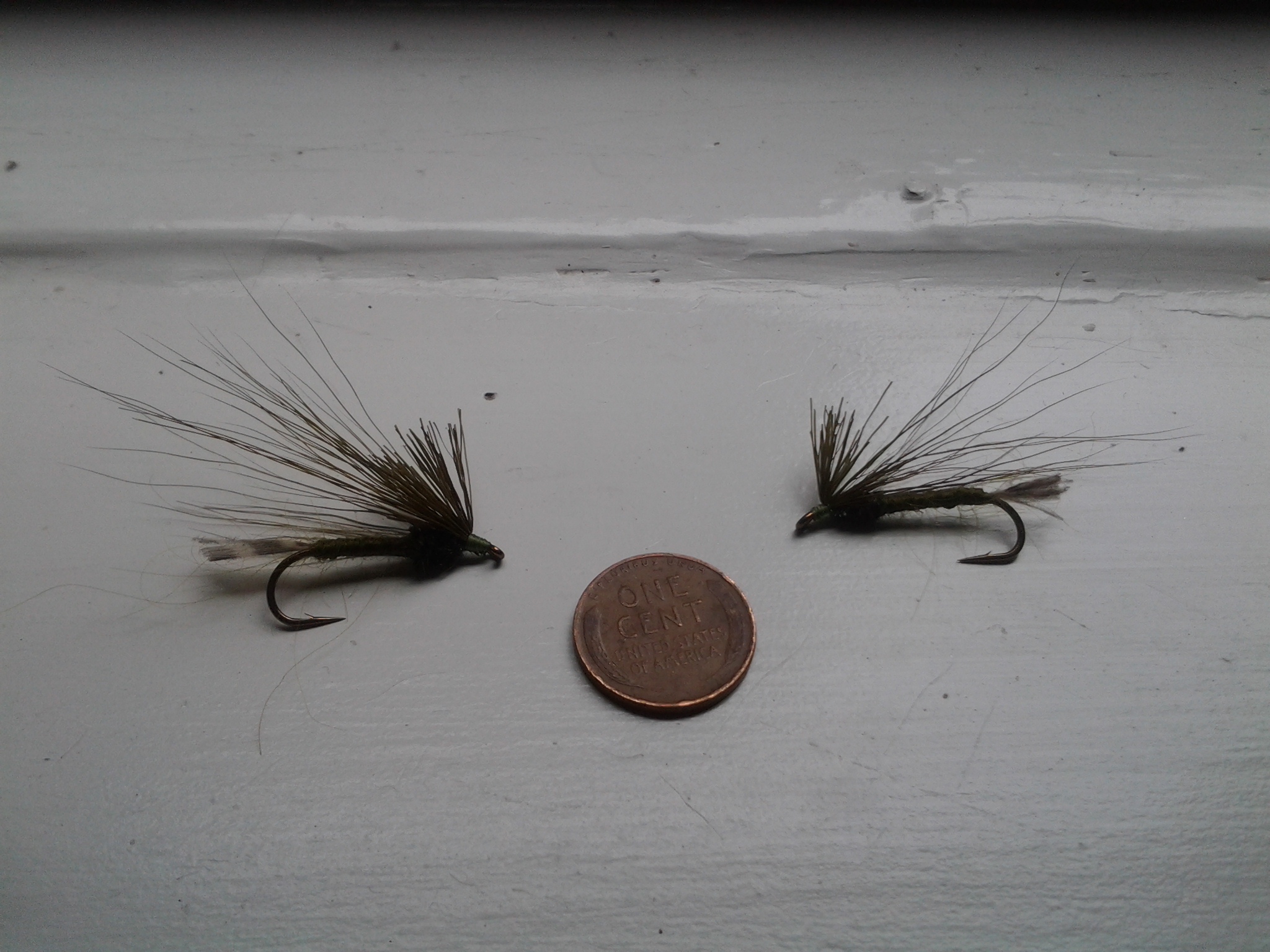
Two for a Cent (NYC 03 2016)

Two for a Cent
(NYC 03 2016)

“Two for a Cent” is an early short story by F. Scott Fitzgerald. The author describes with a mannered eloquence the ember at the end of a lit cigarette. That scene from a mellow night remains one of my favorite descriptive passages in American Literature.

My essential pattern, the “one fly” for the tenkara fishing I most often do, begins with The Green Guarantee, two of which are pictured above with a wheatie from Fitzgerald’s era. Coins and fly patterns model well together and give me a chance to combine two of my interests in a single frame. As for the pattern, its universal color and shape viewed from a fish’s underneath perspective, dressed in fur and feather activated by motion though water, attracts all of the pond’s residents at some various points in the season, including season’s start.


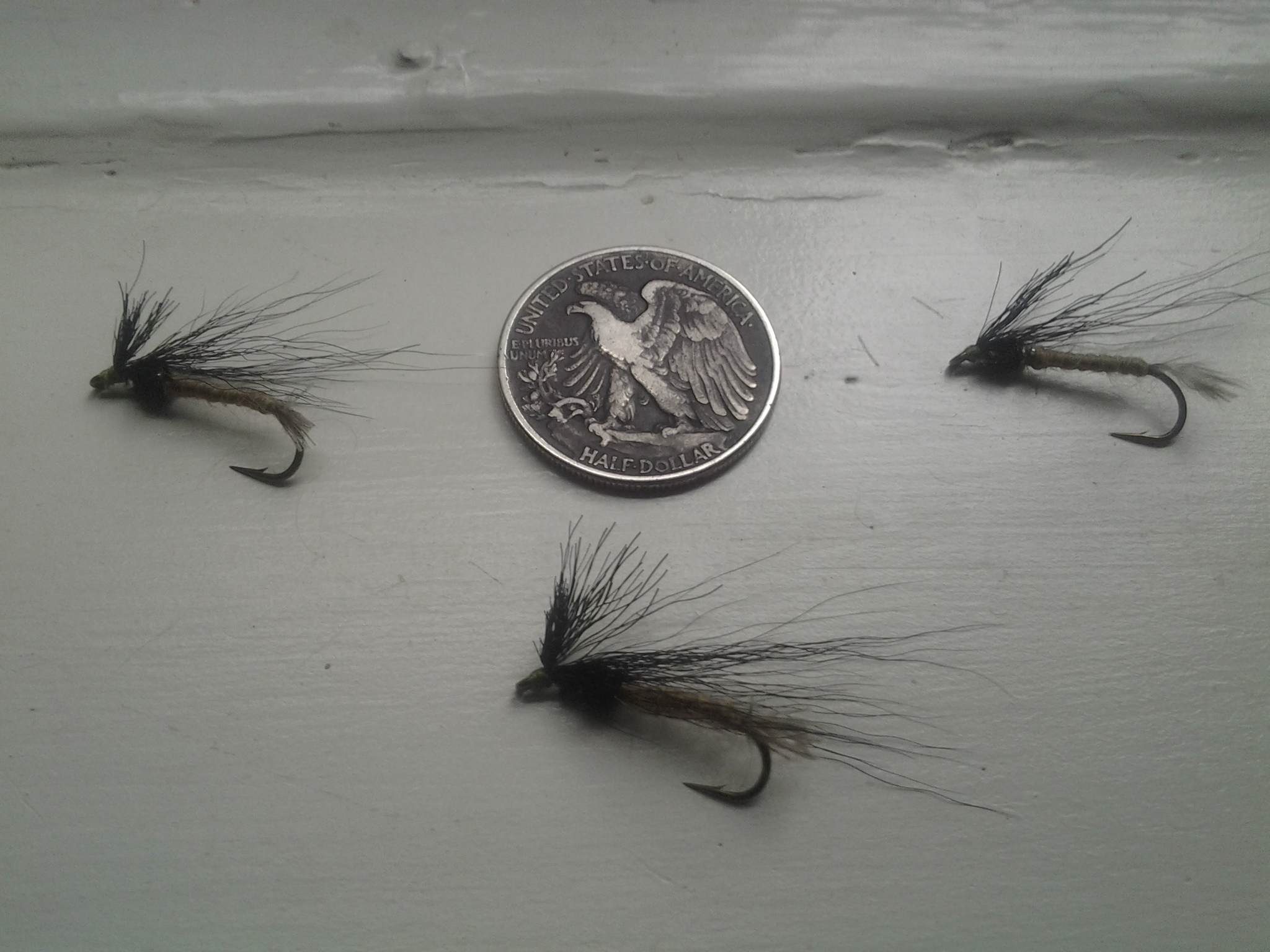
Fifty Cents for a Quarter Dozen? (03 2016)

Half Dollar for a Quarter Dozen?
(03 2016)


“Half Dollar for a Quarter Dozen” is a possible title of three Muddy Moreblack arranged with an American half dollar to scale. The Muddy Moreblack continues the use of the double consonant and offers a pun on the mirrored famous last name of an acclaimed guitarist whose band’s music I hear played on fly shop playlists all the time.

This pattern matches tan and black on a size 6 or 8 streamer hook and, being weighted, smokes under the water. The effect conveys the colors of late winter, something waking, emerging from the water bottom’s silt and leaf litter. The dobsonfly nymph, hellgrammite, crayfish, and stonefly all the Muddy Moreblack may be. The pattern worked along banks, within the sticks that dropped those bottom leaves, can produce the one earned fish of a day when sudden sun chases the fishes from more open areas.

Freshwater fishes may suspend in tough spots as a defense mechanism. The clustering of various species of Centrarchidae also brings to mind an expression of conscious social interaction. May such gatherings be a fishes’ summit to plan the following growing season? Perhaps territories within the pond’s perimeter are hashed out here with the whiskered bullhead given free reign along the bottom and the entirety patrolled by a few scattered schools of carp prone to basking just out of conventional and fly casting distance.

Carp have been nowhere to be seen during the Ides of March. Sudden sun and warmth during the winter to spring transition has pushed New York’s sunfishes down or into what dense shaded cover may exist so early in the season. Fallen trees and a nest of limber overhangs then present the long fly rod throwing a line a more complex scenario. The fishes, still hovering, appear to challenge:

“Catch us if you can!”


"Catch Us if You Can!" (NYC 03 2016)

“Catch Us if You Can!”
(NYC 03 2016)


I did.


Bluegill (NYC 03 2016)

Bluegill
(NYC 03 2016)


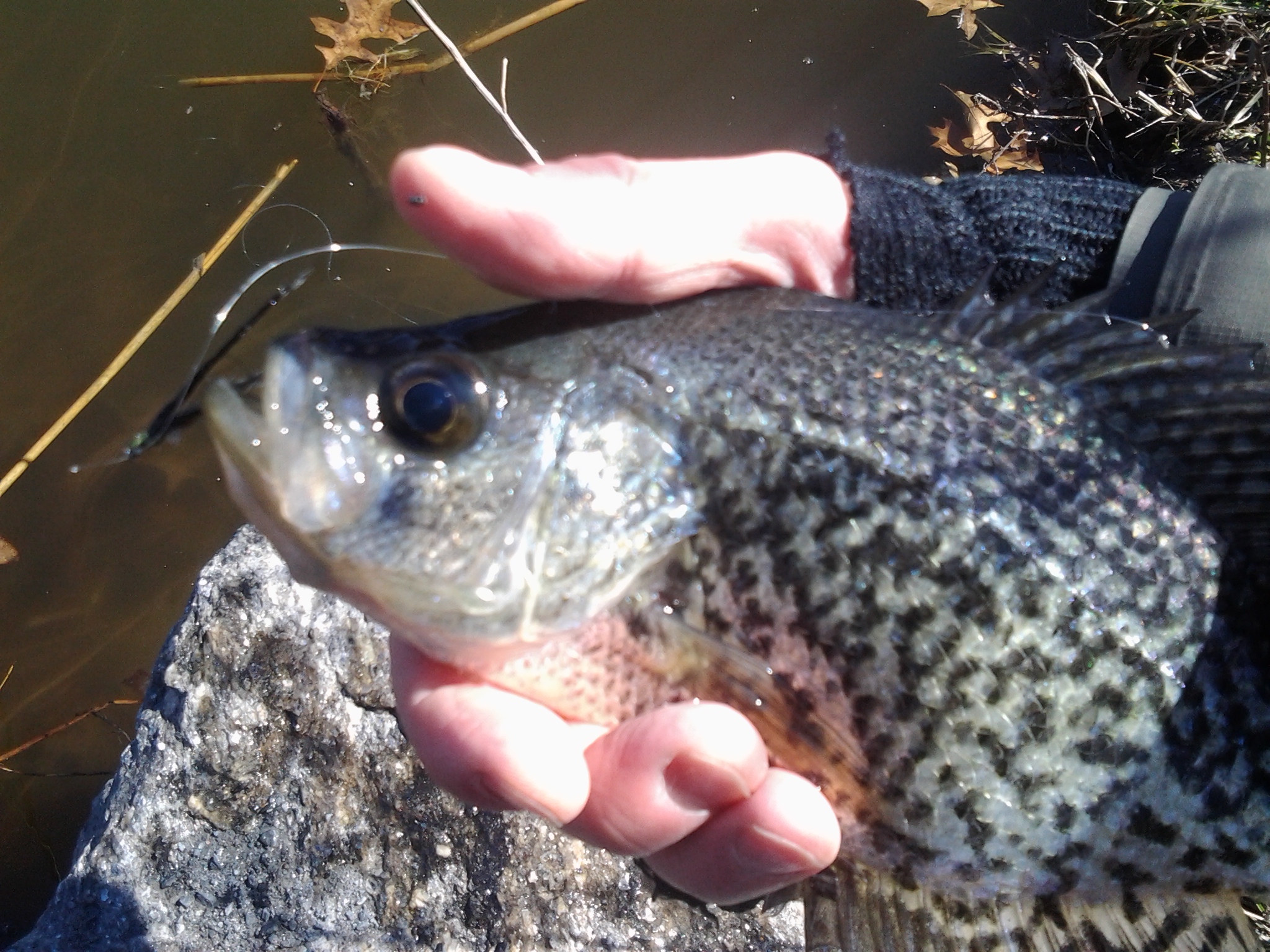
Minted in March Black Crappie (NYC 03 2016)

Black Crappie
(NYC 03 2016)


Sunfish the color of a penny nestled in the sticks. Black crappie as iridescent as a silver coin.

Minted in March: Season’s Start

– rPs 03 18 2016

Leave a Comment

Flies in February

Flies in February . . .


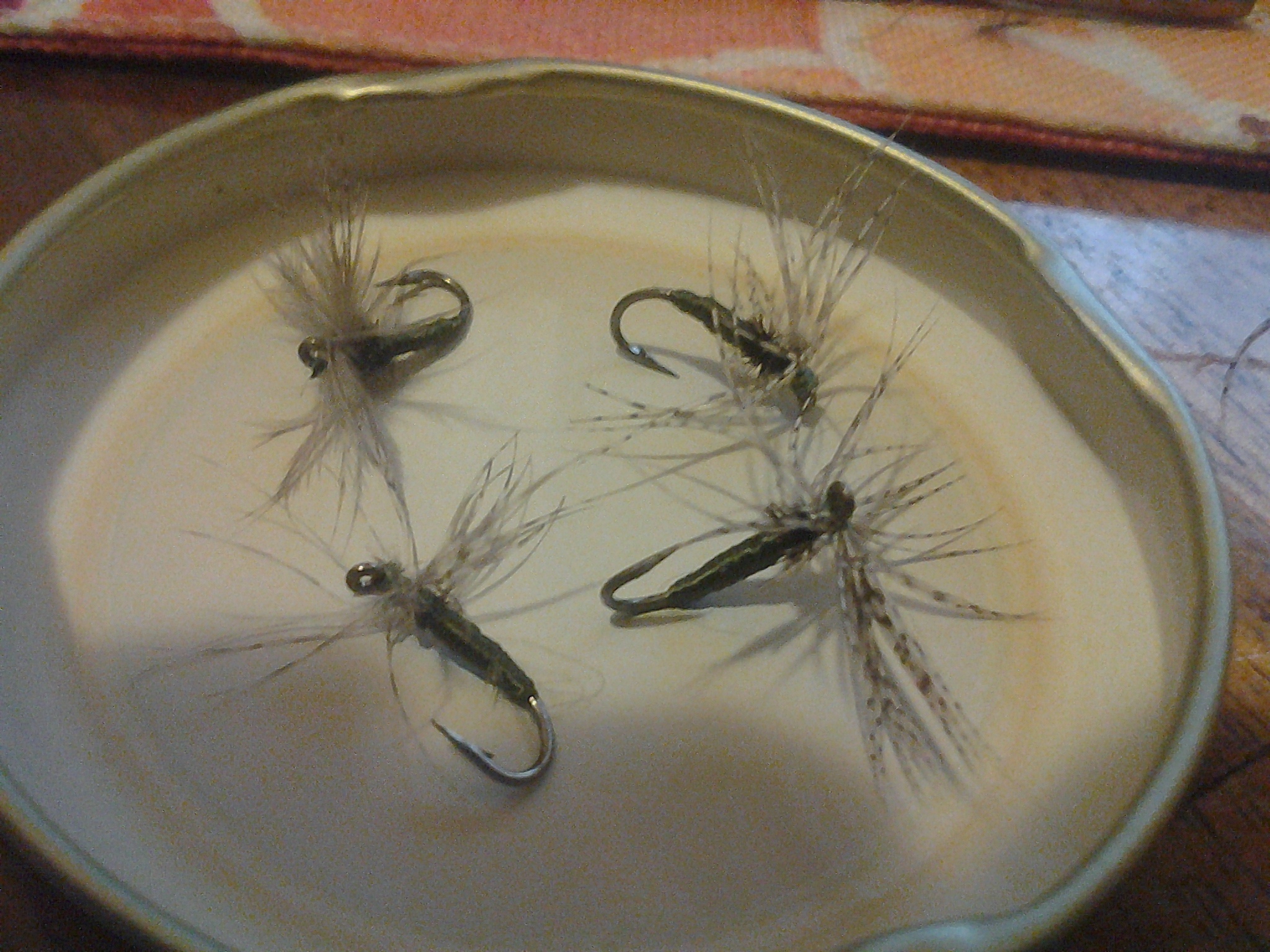
There sits on one of my windowsills a squat glass jar capped in gold. February finds this once full glass filling again.


Interests and the path spreading like branches follows evolving passion even in the face of an other’s suggestions. I do incorporate experiments and techniques from and with friends, yet I avoid the net of orthodoxy by remaining as much as a lone cat as I can.


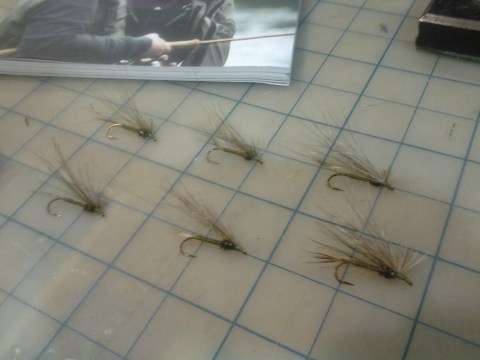
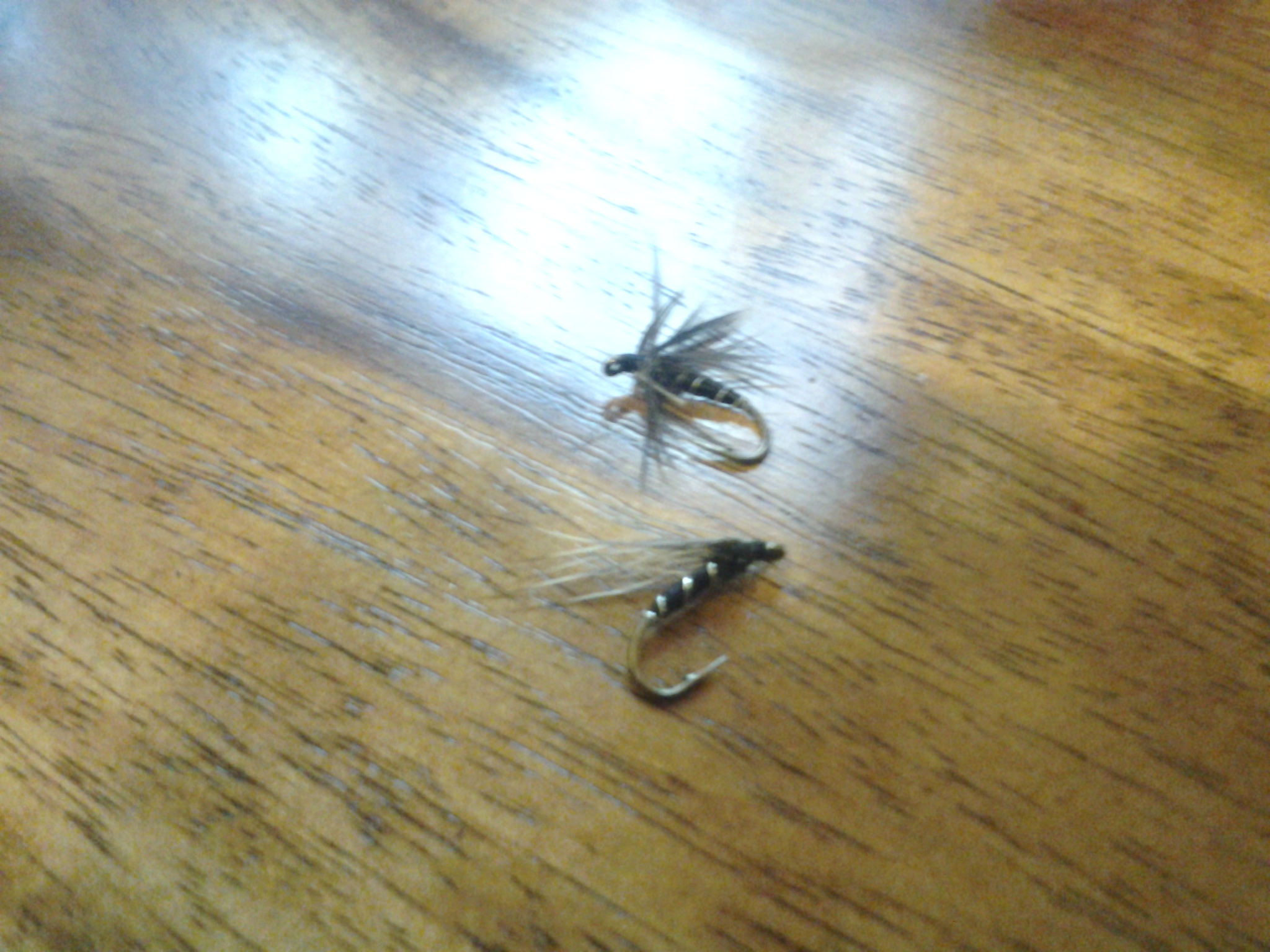
Two patterns from the vice beside the windowsill are small enough to fit a few on the cap of gold:


Partridge and Olive


Partridge and Olive Size 12 (2016)

Partridge and Olive
Size 12
(2016)


Heerl and Deer


Herl and Deer Size 12 (2016)

Herl and Deer
Size 12
(2016)


Tenkara Kebari all but for orientation of the hackle. As the remainder of the recipes fall in line with orthodox Tenkara Kebari I pause, side with majority rule in regards to the fundamental composition of each pattern, and I acknowledge there exists a kind of “Reformed Branch” of Tenkara, too. This branch I do practice with attention to balance.


Both kebari patterns fish well in my favorite waters; confidence driven by the constant elements: sparseness, natural speckled hackle, and body iridescence.


— rPs 02 05 2016

Leave a Comment

“Let Me Go”

“Let Me Go”


Home to a Swan Prospect Park Lake (12 30 2015)

Home to a Swan
Prospect Park Lake
(12 30 2015)

The news of the passing of Ian Fraser Kilmister, Lemmy, hit me as hard as his pulverizing yet melodic bass solo on “Stay Clean” – the Motörhead track that has fueled my final kick during many a road race. On the eve of New Year’s Eve, bearing the news of this loss in a year full of it, including childhood role model, Leonard Nimoy, my own friends, John Mutone and Ketan Ben Caesar, and extended family, my uncle Andrew Amici and grandmother Marie Amici, there was only one thing I could do to find peace.

British angler Dominic Garnett helped to point the way. I have just received his new book of stories, Crooked Lines, in the mail and a recent post on his blog of the same name describes “Casting into the Wind” along gray canals lined by dry, tan reeds. That angling image offered me some light.

“Let me go,” I said to myself. “Fishing.”

I decided to repeat last year’s example with a visit to Prospect Park Lake in Brooklyn. Unlike the bright and blue day I enjoyed at the close of 2014, the weather this time was gray, cold, with a hanging damp in the air. The lake sat gray and calm, the surrounding woods brown and still. The light tan of the shoreline reeds offered the only warm color to the scene, which was quiet but for the bird song of coots, geese, ducks, and gulls.

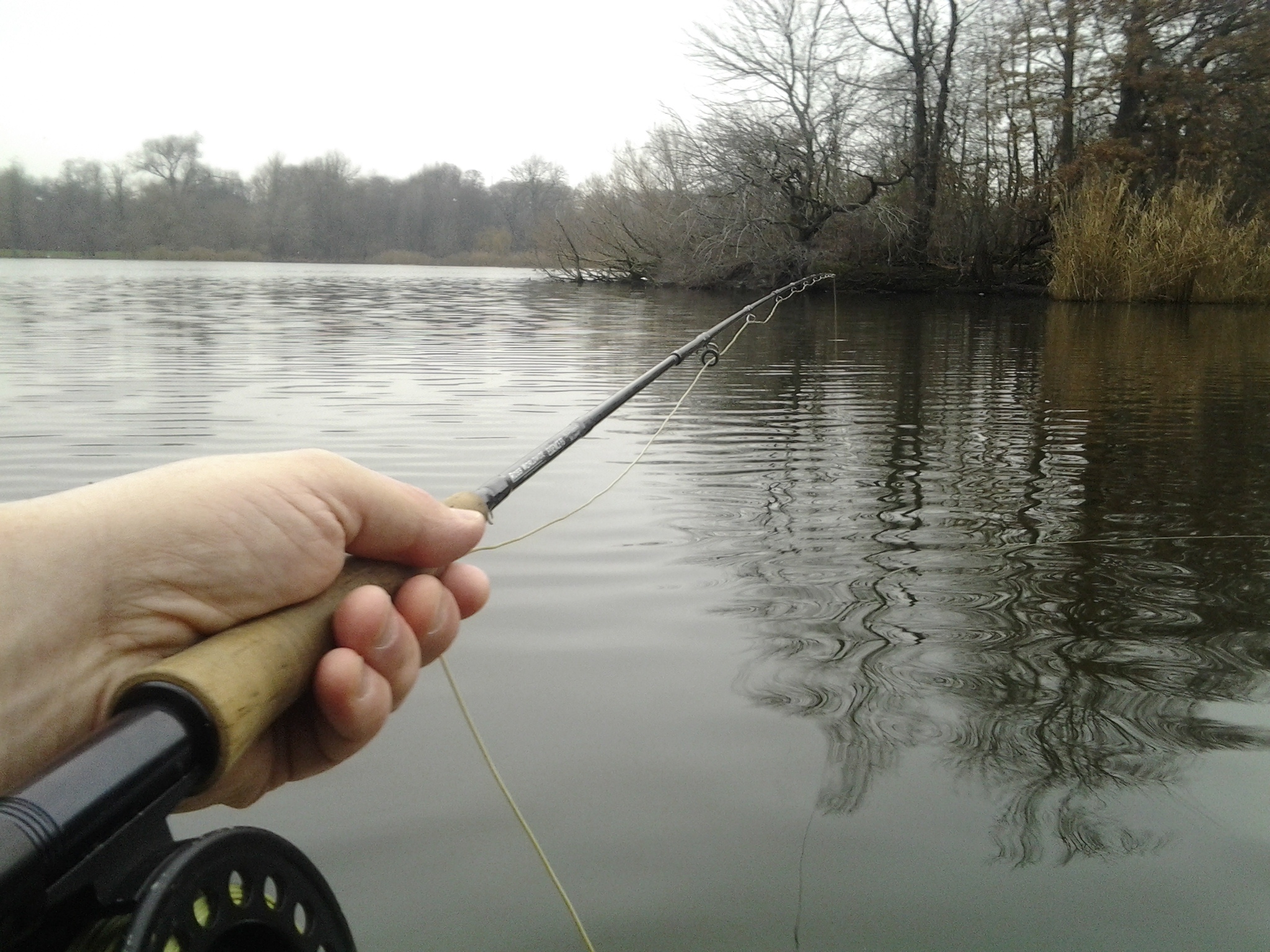
With the theme of “Letting Go” floating in mind, the decision seemed natural for me to also relax the rigidity in my fishing approach by bringing along a conventional nine-foot 5-weight matched with a floating line. The idea was to compare and contrast the equipment with my Ebisu tenkara rod with traditional furled line to learn how my casting (and hopefully, catching) may have evolved after four years spent focused on stillwater tenkara.

The lesson learned to my experience is I now cast rod and line better. I find myself entering into that easy rhythm of The Zone much more easily than before tenkara came to my attention. I fished the 5-weight in a fixed line manner, lifting line and leader off the water with very little use of the reel or stripping in of line. Slow swimming lifts were used to bring my size 8 Green Guarantee home to the bank.


Ebisu in the Winter Reeds (12 30 2015)

Ebisu in the Winter Reeds
(12 30 2015)


What's This!?! Conventional 5-weight for comparative fly fishing. (12 30 2015)

What’s This!?!
Conventional 5-weight for comparative fly fishing.
(12 30 2015)


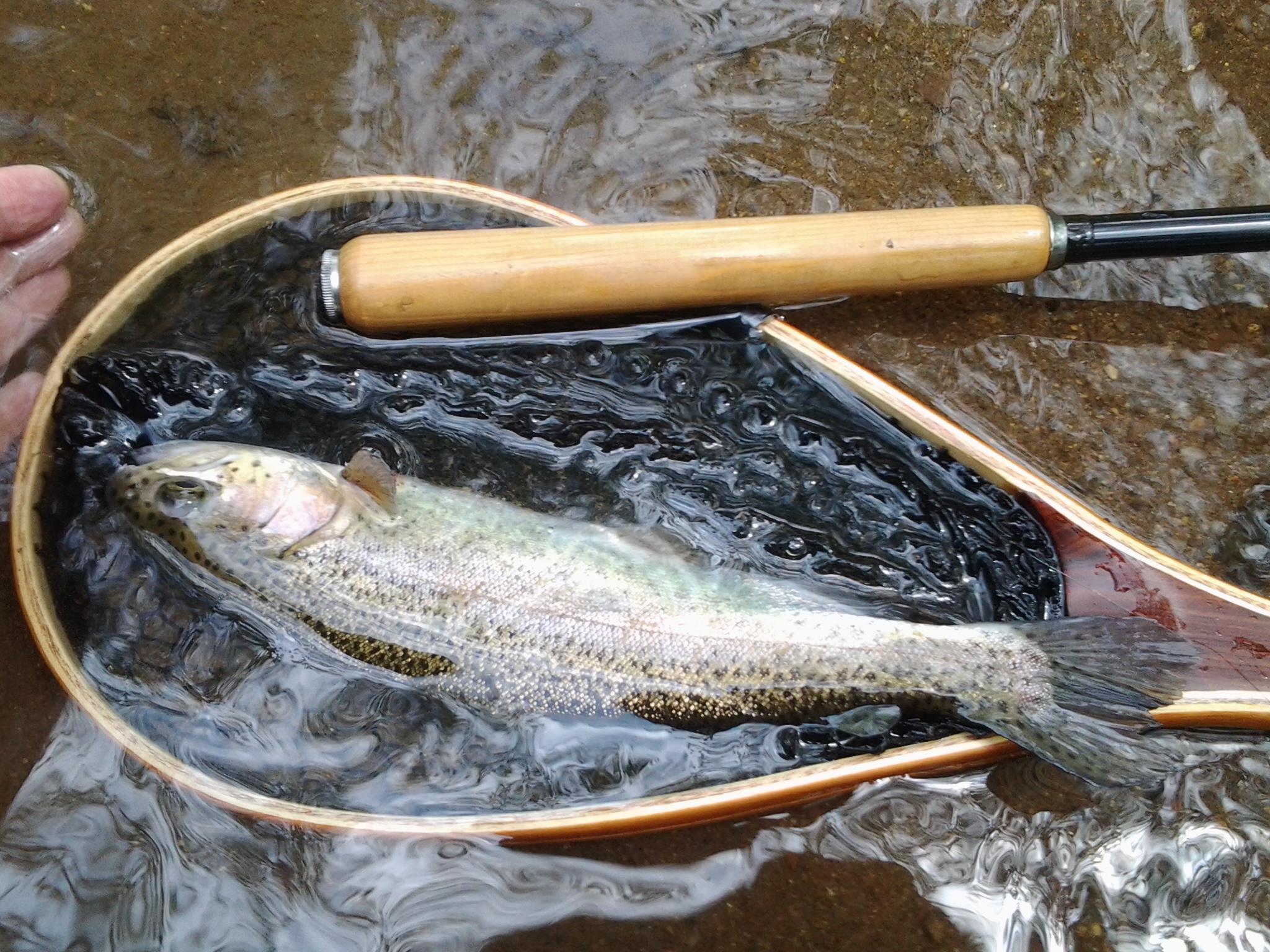
Fishing? Yes. Fish? I missed one light tug on the Ebisu. I switched to another section of the lake where I brought the 5-weight into action. Like last year, during the last hour of light, a connection was at last made.

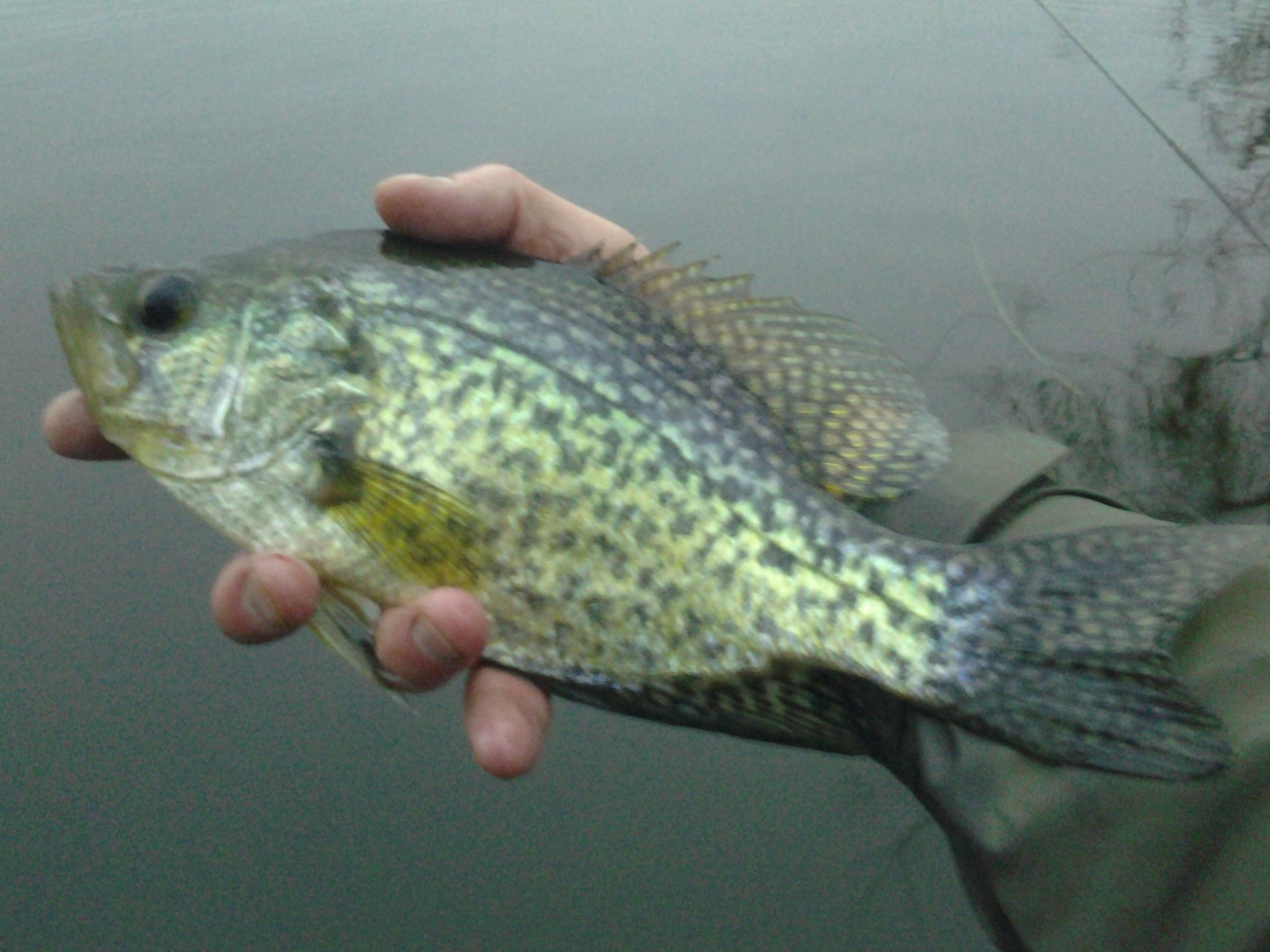
Not a perch, not like last year. This time something intercepted the fly along the far edge of some reeds where a few sunken branches also projected. Slow and solid, the taker pulled in rippled descending waves of resistance. The rod bent in a deep way as the fish, a large black crappie, rolled, splashed, and at last reached the surface and the mouth of my beaten but unbroken Brodin net.


The Best, The Last, 2015 Black Crappie (12 30 2015)

The Best, The Last, 2015
Black Crappie
(12 30 2015)


One fish, a nice one, allowed one more catch, photo, and release for 2015. Finished, the fish darted from my underwater grip. The sky had become noticeably darker. Low clouds began to roll in and my breath steamed. As I had been reminded far too many times over the course of this year, time races more than passes. “Letting Go” is necessary.


“Let me go,” I said to myself. “Home.”

– rPs 12 31 2015

Leave a Comment

One Fly for the Tenkara Holidays

One Fly for the Tenkara Holidays . . .


TTMP Clan Green Guarantee 12 2015

“Six Green Guarantee!” (NYC 12 2015)

1.

Gift giving. Among anglers the act can be a delicate wade on slippery surfaces. Some people may even take offense as far as viewing an offer as a hard press unwanted.

Gift giver I may be. The acceptance of a fly pattern example, a kebari, perhaps as a holiday present, a simple gift from a friend or acquaintance who ties is, when from me, an act and an artifact of interaction akin to a card: business, birthday, or holiday.

If the gift offered comes in duplicate, or more, fish the fly! Mix the gift pattern with your own for the classic swing or two in a flow’s current seam.

“Tenkara is One Fly Fishing” has been offered as a koan, as well as a sales absorbing orthodoxy, yet I have met masters who swing tandem soft hackles on a long furled leader with the grace of every other magician who has penned a trout treatise.

One Fly. The inquiry begs an absolute or other from every voice. Is there an answer . . . yet?

Meanwhile, fish that gift fly, or deconstruct the recipe for future fun with one fly on the water.


2.

When the good wine flows as fast as a pocket water flow, one knows many more than expected have arrived. Plenty of guests made a party for the NYC Tenkara Club in Manhattan, New York City. A table appointed well greeted the second floor guest at Orvis, 489 Fifth Avenue, New York, NY. Saddle hackles hung in rows and a white screen displayed slide show views of tenkara fisheries and fishers employed with a variety of matched tackle. Adam Klag displayed tenkara rods short and light along longer models capable of tangling with major Cyprinidae.

Respected voices filled the space with Q&A and useful demonstrations of tackle management.

“What About One Fly?”

There it was, then. The Question.

I refer to my Tenkara Fly Code first shared in May of 2012:

A Tenkara Fly Code

That is my “Fly Box Flashback” for the close of December, 2015.

Time since New York City’s tenkara public meeting has since been spent with irony tying multiple patterns. So far from One Fly has been in part inspired by this recent gathering of tenkara angling kin. If I were a cub reporter and copy editor in attendance on December 8, I would have titled my reportage:

Tenkara Takes Manhattan

. . . the i-RON-y.

– rPs 12 14 2015


Postscript: My 2015 holidays season’s tenkara gift suggestions and recommendations in random order:

Crooked Lines by Dominic Garnett

http://dgfishing.co.uk/product/crooked-lines/

Nissin Flying Dragon Carp Rod at Tenkara Bum

http://www.tenkarabum.com/nissin-flying-dragon-carp-rod.html

Simple Flies by Morgan Lyle

Tenkara Flies by Anthony Naples

http://www.tenkarabum.com/anthony-naples-tenkara-flies.html

fallons angler issue 4

http://fallonsangler.net/product/fallons-angler-issue-4/


Leave a Comment

Late Autumn Is December

Late Autumn Is December . . .


The Creek in Late Autumn 2015.

The Creek in Late Autumn 2015.


They are like memories, ghosts now, some of my friends living still in mind. I see them there when walking a floor of brown leaves over cold mud in misted woods. I see them as well along the gravel path beside a pond reflecting fluttering gold foliage beneath an international blue sky.

I go on, move on an impulse, a grip on the day for a run in the park, some park, somewhere. One time I went into the clear air, saw brown bark of trees, and a blue sky as it does remain bright at autumn’s end. Here, where the fall season is near to being spent, rests in December. The last annual living color breaks away on a breeze. Time shifts, accelerated states, dressed as the city in colors of stone and bark and cloudless sky. Wind more braced blasts through, some days, after a few drawn in mist quite still.

Fishing would present a passage of challenge as I waded along and into browning fields. Stands of trees, copses, work one’s way in patches to a bank worthy of a skater’s exercise. I followed animal’s trail in misted early light. I tracked hide and seek with a young buck of four points. My camera provided one blurred memory.

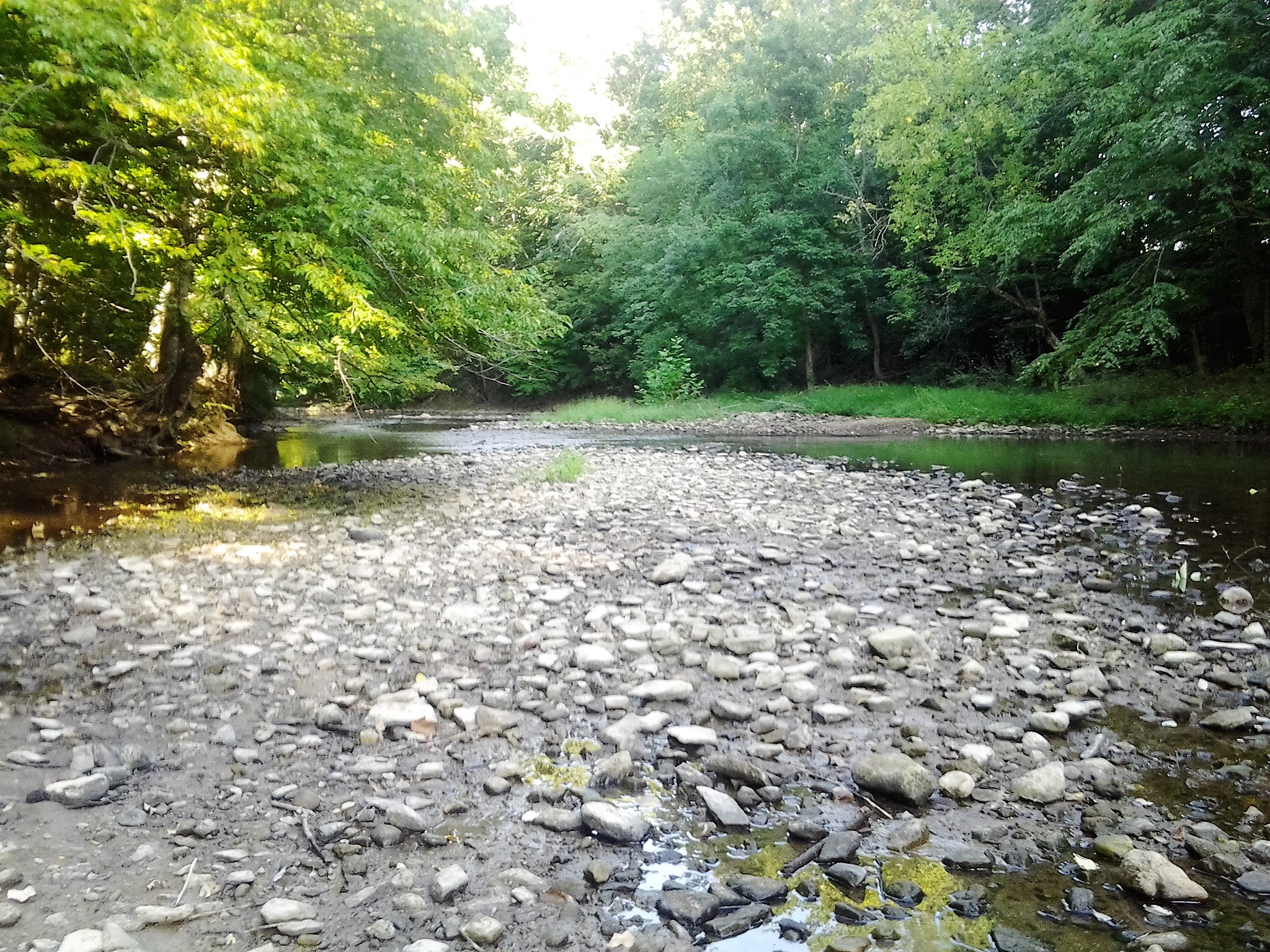
The stream banked in brown, tan. Stands of Teasel crowned at the end of their bloom offered regal spiked silhouettes drawn by rising sun. The pool stretched long and slow, a rare section of a creek running low at the base of a still hollow. I swung the Green Guarantee along the seam where drowned brown oak leaves met clean gravel and small stones. Water not too tannin, though low, far lower than in past years.

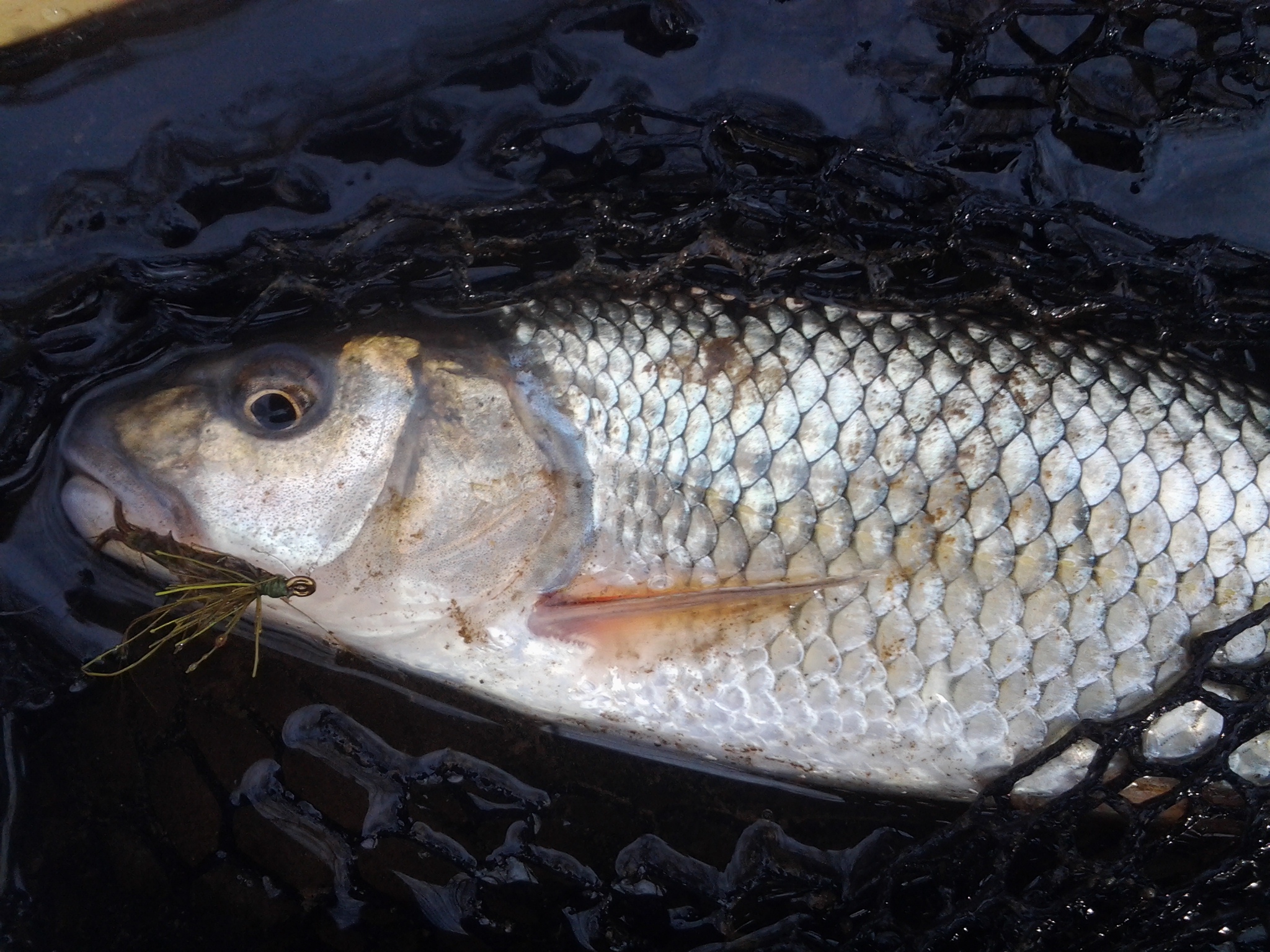
Fishing. A Fallfish struck with two shakes of the head above water. As silver as a tarpon and strong. Three runs up and down flashing copper fins and white belly. Drawn to the net, wet, for a fifteen second photo session before release.

Scales of the Fallfish reflect light as off an uncirculated silver coin. I once found a silver half dollar in the rain, on the lawn of a curb. John F Kennedy was the President pictured in bust profile. So, too, the Fallfish posed for a portrait in net in the cold flow of the creek:


Like Coinage. Green Guarantee. Late Autumn 2015

Like Coinage.
Green Guarantee.
Late Autumn 2015


Release your fish before they become jittery and you are even competitors.

The Fallfish, Semotilus corporalis, the native, authentic native fish of some American streams, the fish here before the men from the east who were subsumed by the invasive and immigrant people of the west. Another fish, the Cod, drew those same people who have become today’s Americans. The Fallfish welcomed my Green Guarantee, like money, that wonderful binding glue. We agreed, met in the middle, supported by a net. The symbolism was a lived occurrence too compelling not to share.

That’s as far as I go into politics.

Fallfish luster in the net. One learns, too, that down leaves, brown, rest like scales slippery upon a solid clay and gravel bank. Slip they make you do, like ice, but in a more creaking kind of way. The thin ice, of course, it already encrusts the layered leaves in the aged autumn cold. Stand back up, cast again.

I appreciate the utility of vibram soles in such environments.

Behold! A Fish. A photograph. One of Two. One Fallfish, the second and final of the day, fought off my Green Guarantee, weighted and swung, near the center of a long run hip high. “Bonefish set to scale!” I heard myself. “Tenkara! Fly Fishing. Green Guarantee.” Amazement continued.

— rPs 12 08 2015


Postscript: One last one for Ketan Ben Caesar. Rest In Stream. Graziare.

Leave a Comment

Better Late

Better Late . . .

Low Water: September

Low Water: September

The clay bank, high and vertical, gives way at intervals over time. Trees do follow. The other side, temporarily bridged by timber, emerges as a shallow grade of washed gravel and cobblestone. Low water, dry stones, holding sprouts of green in the shallows and cracks. Crayfish abound in the back puddles as do nymphs of caddis, mayflies, and dragonflies.

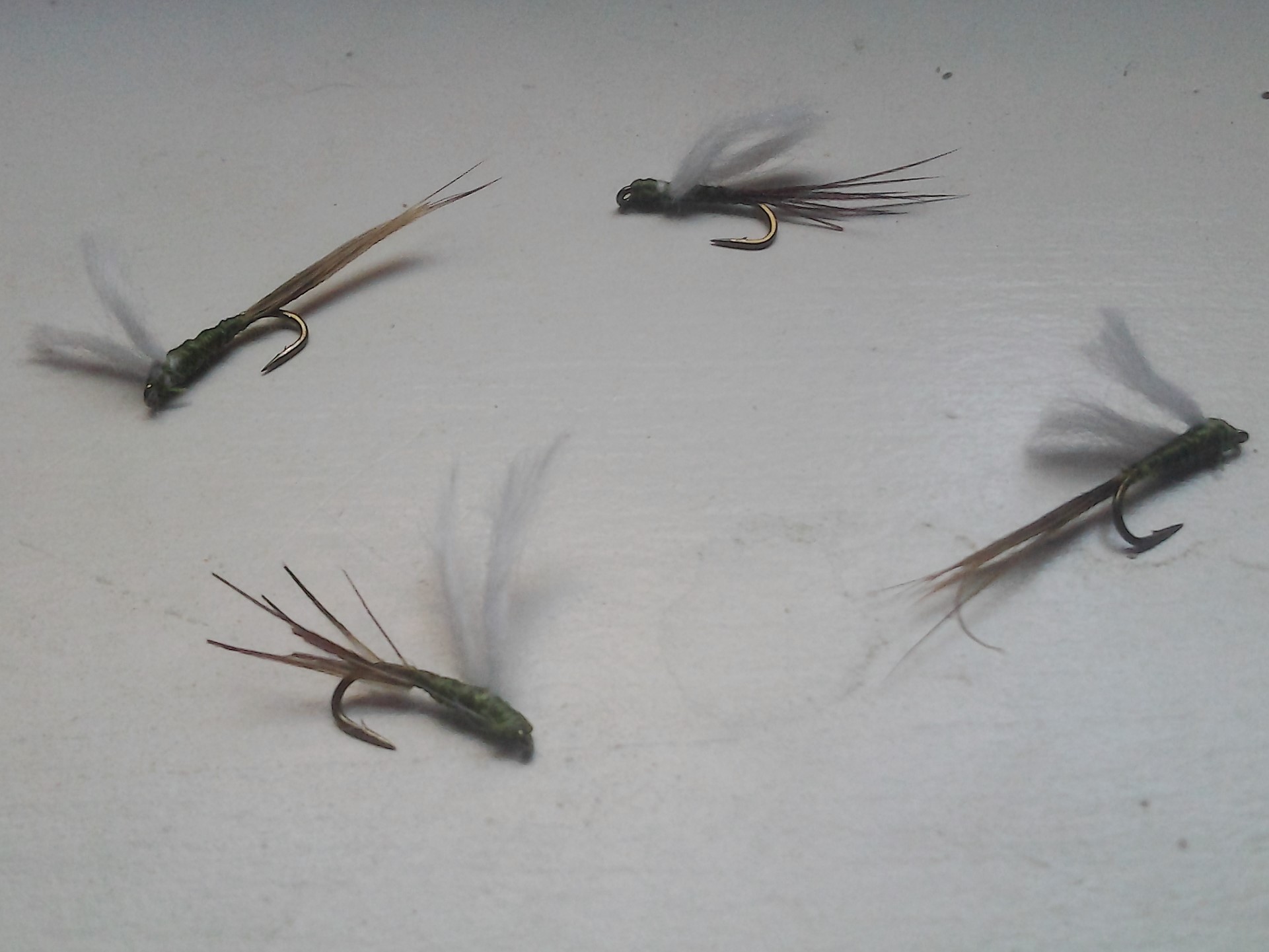
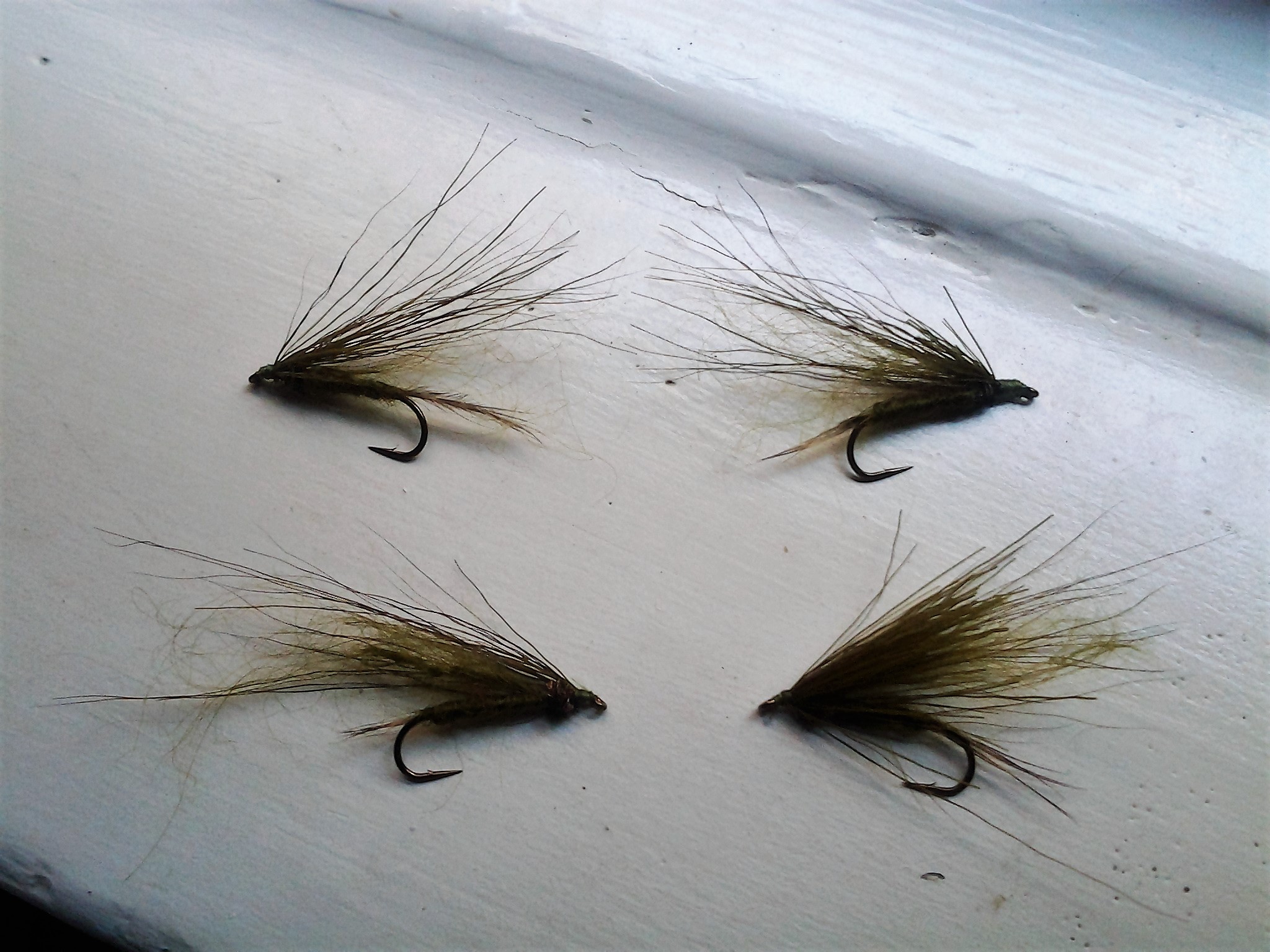
Riffles call for some kebari pale and fluffy to the casual eye. Many tenkara anglers tie and fish one fly only. September finds me most often opening the wallet or bottle for one best knotted onto 6x or 7x tippet: a primitive September Trico Spinner of black thread and rabbit on a curved hook in some size between 18 and 22. Another choice would be a size 16 or 18 dry fly hook dressed in Olive and Rabbit with or without a thorax of Peacock Herl: the September White Wing X Caddis. A streamer for slower water and meatier game goes to my standard Green Guarantee, size 6, 8, or 10. The body of Leech Yarn gives the Bucktail added motion, as this fly begs to be twitched and animated in authentic tenkara fashion.

September Trico Spinner

September Trico

September White Wing X Caddis

September White Wing X Caddis

Green Guarantee

Green Guarantee

My target, the quarry, this time became the fallfish, Semotilus corporalis, the grayling of the Mid-Atlantic states. Ones of size, like a fish I just encountered along a freestone creek over Labor Day Weekend, gives dry fly fishing an ultimate experience. The fish, strong, attractive, over a foot in length, sipped in a size 18 September Trico, one tied in a Manhattan flat.

“The grayling of the Mid-Atlantic states.”

The other fish of late summer, the Smallmouth Bass, Micropterus dolomieu, made its presence known to me on the very next cast. This one fell for a Green Guarantee tied on after sighting a smallmouth bass twice the size of the one in net.

Smallmouth Bass: September

Smallmouth Bass: September

More fallfish and smallmouth followed into a still evening that grew at a quicker pace than in July. A few deer showed off white tail and flushed. The green canopy held a dark gray where rays of sun once streamed. By the bank, the spot where I chose to cross for home, came first a pause for a large snapping turtle. Slow, dark and cragged, a small dinosaur, basically, cruised down the steam’s middle lane until the turn for a tree fallen and half submerged.

Turtle, home.

For me, above the opposite bank, began the walk down a gravel road toward town.

Angler, prepared to say: “Better late . . .”

– rPs 09 15 2015

Comments (2)

The Girth Hitch

The Girth Hitch . . .


When Is A Knot Not? 07 2015

When Is A Knot Not?
(07 2015)


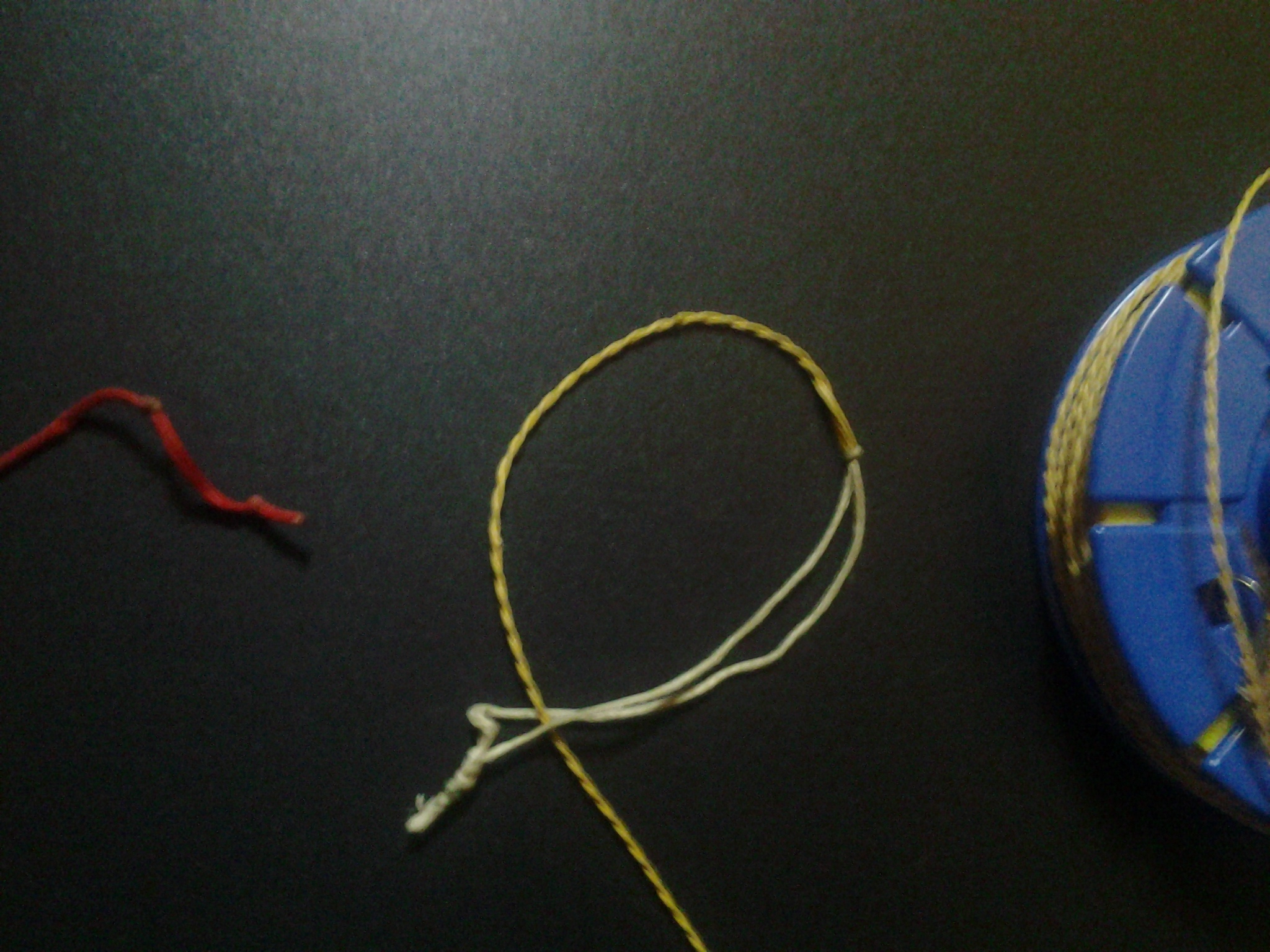
When is a knot not? The knot of and in itself, an infinite loop object, that meets the immovable object. The Lillian end, the knotted silk tip of a tenkara rod, offers its utility of simplicity to the loop as one meets the other in an essential equally blended architecture.

The Girth Hitch; this one gives traditional tapered line, with its silken loop and double helix weave, an impressive connection to a tenkara rod’s tip. The head yank of the trout and the pounce of the bass all require secure connection: The Girth Hitch.


***

“The Girth Hitch Gives Hedge. “

I pointed to the glass countertop, passed an open hand over the open tube with its cap set to the side, the rod, and the rod’s tip plug set aside on the unknotted sock. Father and Son, their eyes followed my hand like two in study of a wily card trick magician. “The tenkara rod held in this travel tube makes a great academic introduction to flycasting types and rod action as it relates to the artificial fly.”

Father and son were entertained. The flybox was clipped closed.

“Tether the three together. Rod, Line, Fly: The Angler Knots, my pun on tethered astronauts. Your main option here out may well be the line. I am on the level when I say I’m happy to see you have started with traditional tapered.”

Father asked for more, suggested as his son hugged a stuffed toy snook. “The black line looks like one on a largemouth bass.”

We knew local pond water offered plenty of largemouth bass and sunfish. “Have fun. Use the pattern your son insisted upon. Yours, right?”

The son hugged snook and raised up his free thumb. Thumbs up.

Several hours later the father emailed a photo: youngster, smiling, tenkara rod perpendicular, line tight to a grip holding up a planed hand of barred brass and blue. “Tenkara Bluegill.”

The Girth Hitch (07 2015)

The Girth Hitch
(07 2015)


“Small Fry” . . .

– rPs 07 29 2015

Postscript: Small Fry: The Lure of the Little

The Whitefish Press

http://www.whitefishpress.com/bookdetail.asp?book=87

Amazon


Leave a Comment

Trout 3, Ebisu 1

Trout 3, Ebisu 1 . . .


Eastern PA Trout Stream (05 2015)

Eastern PA Trout Stream
(05 2015)


Streams that for whatever reason hold a sparse number of trout, perhaps two or three per mile, can make even a stocked trout fishery a challenge tenkara can handle.

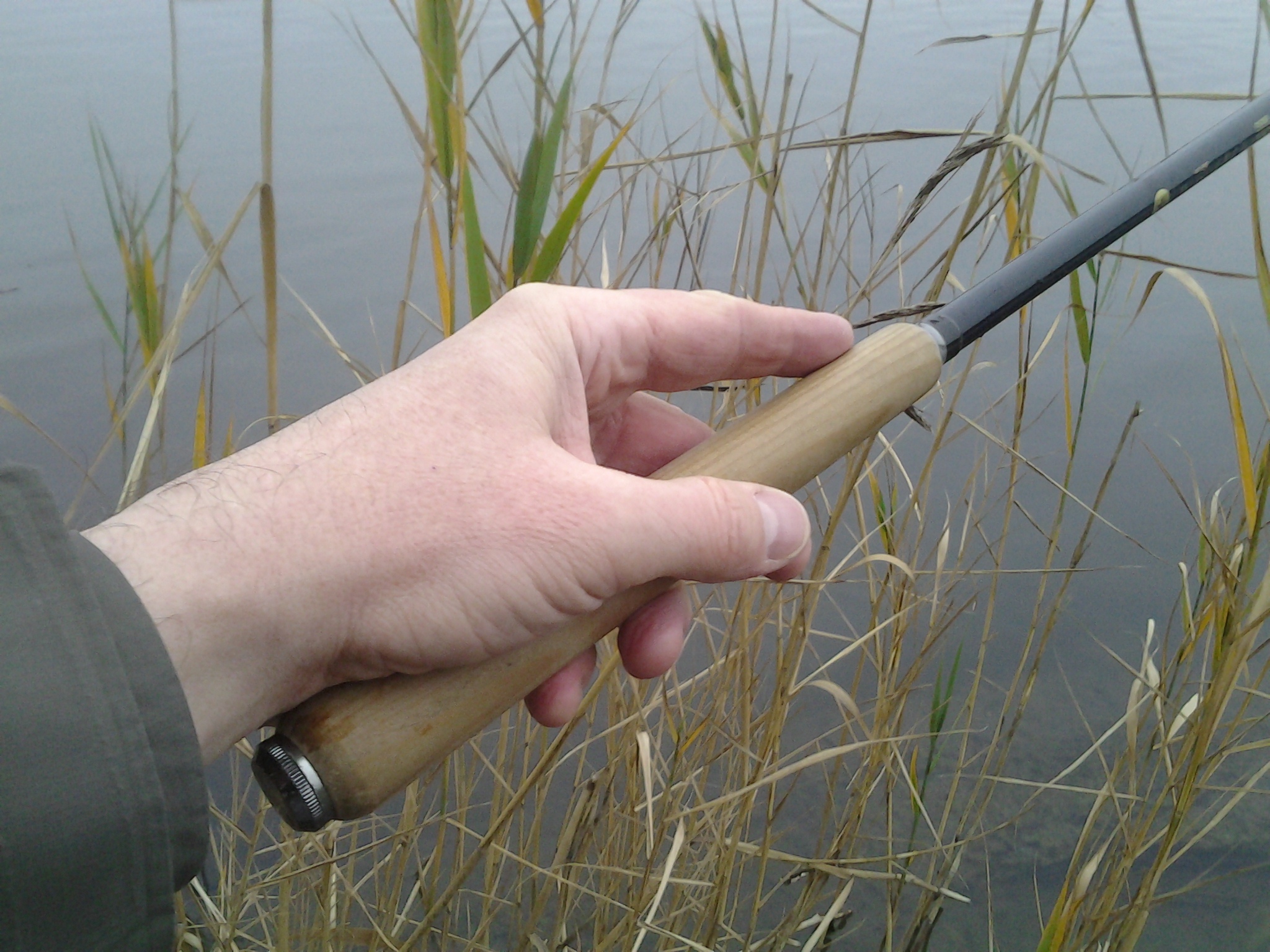
Handle of pine: the Ebisu this time out. The 12-foot rod’s more limber 5/5 flex allowed tighter casts within side channels the width of city sidewalks. Runs walled by spring green, everything from tenacious native saplings to the shallow-rooted immigrant Japanese Knotweed.


Side Channel Drift (05 2015)

Side Channel Drift
(05 2015)


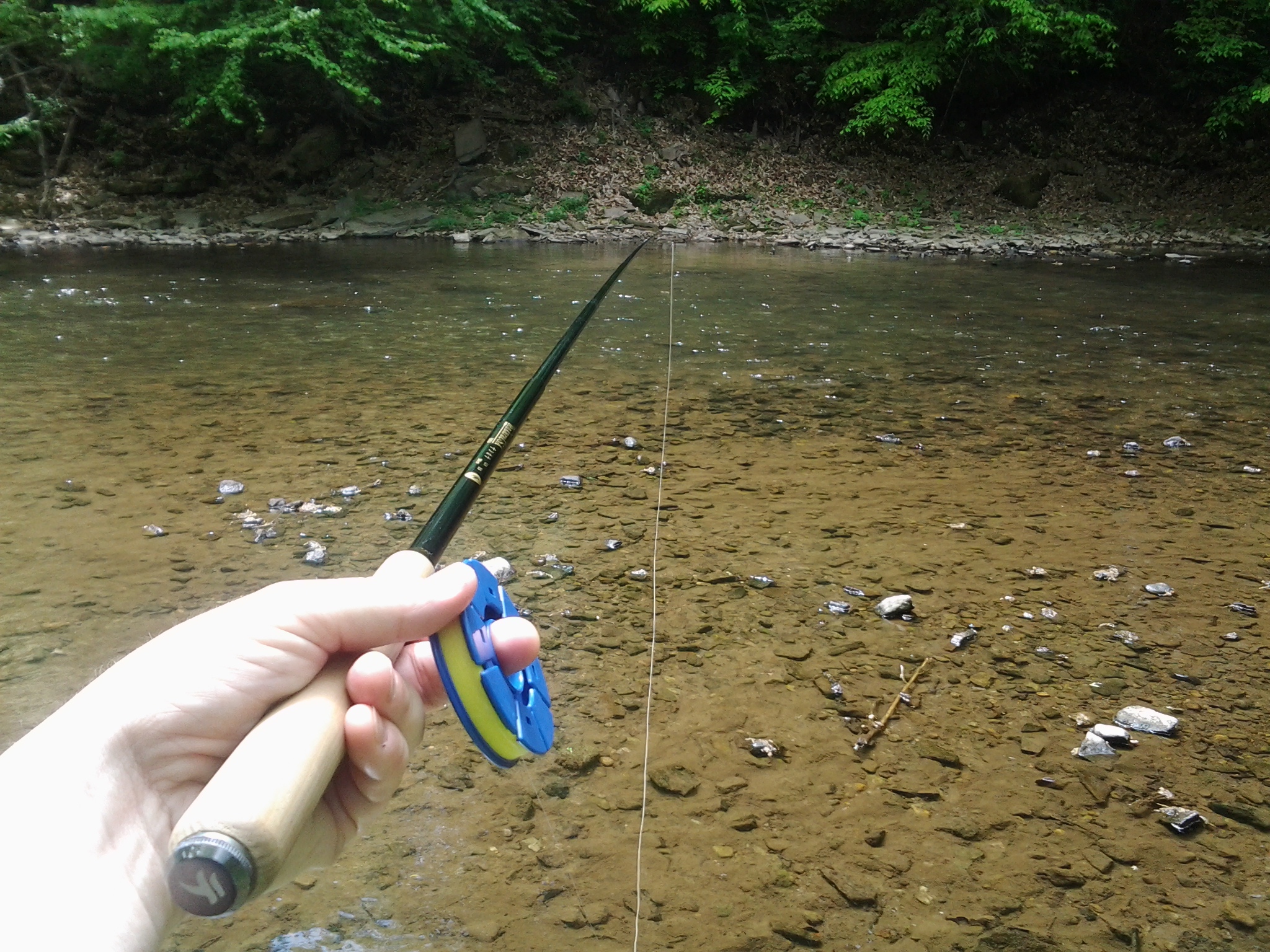
The traditional tapered line with six feet of 6X tippet landed soft hackles and nymphs with stealth along promising seams. The pine handle gives the Ebisu the feel of a baseball bat tapering to a 1-weight graphite tipped with a matching fly line.


Pointing In The Trout's Direction: Ebisu, Line Holder, Traditional Tapered Line (05 2015)

Pointing In The Trout’s Direction:
Ebisu, Line Holder, Traditional Tapered Line
(05 2015)


The Philadelphia Phillies, hosting the New York Mets and Pittsburgh Pirates, in that order, brought me to Philadelphia for a few days. Valley Creek, French Creek, and Pickering Creek were nearby. The Wissahickon, The Schuylkill, and The Pennypack were within range. Waters borne on the pages of Philadelphia on the Fly and Small Fry: The Lure of the Little.

What mattered more than destination this time was the full fishing experience with all of its supporting details. Spring fishing offers riparian zones flush with wildflowers and songbirds and streams, some marginal at other times of the year, now with trout, holdovers, survivors from the weeks following the opener.

Reports of “little black stoneflies” were replaced by the actual witness to a few scattered rising Hendricksons approximated by a size 14. Forage of the moment took many, more meaty, forms: tiny black tadpoles, parent frogs, crayfish, and earthworms all were sighted in and along several streams. The flows were solid, clear, and warmer than expected given the long winter that had encased the Northeast in snow for three months.

My India Hen and Herl and Silver Ribbed Deer Hair and Black soft hackles in size 12 fit just as well a hatchling tadpole. They were that small; the squiggling creature’s head and tail resembled a comma.


The Ronnie Cash: Soft Hackles Dressed In Black (05 2015)

The Ronnie Cash:
Soft Hackles Dressed In Black
(05 2015)


Both patterns worked.

Trout, the simple fins to face direct encounter, were few. Again, these were scattered survivors of the opener. Natural forage was on their menu. Artificial colors and sweeteners had been by now learned to be avoided. Imitation, a general for the surveyed stream forage, called for some personal combination of thread, feather, perhaps fur and various glitter of some material, the blacker, the better.

Tussles on the Ebisu were strong, yet static, a kind of slow motion take that saw trout drop the fly three out of four times along two wades of a mile and back.

One rainbow in the net serves posterity enough. One rainbow a caudal fin short of a foot. The fish landed, and all the fish lost, were appreciated in light of the effort involved to lure their strikes.


Rainbow Trout (05 2015)

Rainbow Trout
(05 2015)


Insights on fly pattern awareness, as well as sightings of Baltimore orioles in full song and flight, wildflowers like the Mayapple, wild Mustards in abundance, plus a single Jack-in the-Pulpit, made a satisfying spring weekend of baseball and fly fishing that ended: Trout 3, Ebisu 1.

– rPs 05 13-14 2015

Leave a Comment

« Newer Posts · Older Posts »
Design a site like this with WordPress.com
Get started