Posts Tagged New York City

Novel Tenkara

Novel Tenkara . . .

Hudson River Sunset 11 2014

Hudson River Sunset
11 2014

Tenkara infuses writing with rhythm. The result can be, sometimes, a longer form for pure soulful entertainment:

8.

. . . He heard a crow, birds seen as conspicuous black spots adorning the cooler bare branched times. The call from above, the coal black guest from the nest perched attentive on the center point of the house’s gabled third floor. Bird in interaction rocked up and down a few times and spoke again.

“Smart-ass bird! Are you cheering me on, or laughing at me?”

“Caw-Caw-Caw,” the crow replied.

*** *** ***

. . . He took out his frustration by reeling in as hard as he could without knotting up the line. Such little private protests were all he would muster. He was too timid to show anger. Petey was a valuable shield against bullies. Let Petey lead; they shared other fun.

Once, without Petey, he missed school bus and had to wait for PAT Transit to take him down the long inclined face of the hill. A kid his age but bigger, cloaked in a long, untucked white shirt, appeared from behind a parked van:

“Hey! Catch this!”

Football flew forth in his direction. Young Robert, stalled in thought, cringed a bit and stubbed his left index finger in fending off the hammer ball.

“I’m a basketball player,” he yelled in his defense, which he followed with the first and only passable spiral pass of his life. The other kid caught his ball.

All was cool until a Saturday afternoon, when on his way to Center Arcade, he found himself sweating at the same bus top. This time he heard first the sound of a hard ball bouncing on pavement. A pause followed the kid’s appearance from behind another, different van:

“Hey, Basketball Player.”

Rubber burned. Young Robert ran, thus beginning his secured future as a cross country player.

Hudson River Sunset 11 2014 (photo by Maryann Amici)

Hudson River Sunset
11 2014
(photo by Maryann Amici)

– rPs 11 24 2012

Postscript: (excerpts from Little Hills: a novel by ron P. swegman)

Leave a Comment

Football Helmets and Fall Fishes

Football Helmets and Fall Fishes . . .

The Reach of Tenkara (photo taken 09 2014)

The Reach of Tenkara
(photo taken 09 2014)

The night game of summer has moved on to new rules played in the daylight. Rain may pass through, and the reopening of the sky brings good time to go outside and fish. When the dark does descend, quickly and almost cold, home calls as the nostalgia door opens to college year memories or past seasons, some of national championship caliber.

Part of my own continued education in life experience has been set amidst a geography where home waters caress manes of watercress. There trout abound. Other neighbors on the stream, offered perhaps a polite wave from a fly fishing undergraduate, have included names of Harvey, Humphreys, and Meck and a Gordon, too, among many others; my constant sense of the eastern provincial in America stays connected, centered on a Pennsylvania county as well as five boroughs of New York City.

Neighbors of the urban angle abound also and some distant shores have been or shall be explored alone and together with even more others. Before such diversions, the sharpened focus on a single bass, any bass, remains first in line.

Largemouth Bass (photo taken 09 16 2014)

Largemouth Bass
(photo taken 09 16 2014)

Bass season is again back in session.

Temperatures drop to fifties and sixties Fahrenheit. Sunlight remains bright, often unfiltered, but days of rippled gray skies do pass. Rain remains brief unless it’s a hurricane trailing through for four to five days. Ponds again begin to clear and darken. A frosting of bright duckweed foots cattails and pickerel weed. Slow presentation with a long horizontal reach, a natural fishing problem for tenkara to tackle and bring to quick resolve, can take a kebari to the bass level (a multifaceted pun too compelling not to intend).

The largemouth and smallmouth bass alike, after striking your pattern in a singular fashion near the water column’s bottom, bring fast reactions to the top. This athleticism has had a portion of its antecedence come from the fish’s own daily hunting. Black and blue damselflies, measured in inches, still pass time in the air. Nymphs that resemble such varieties in various stages of development swim and crawl throughout a still water. Bluegill fry swim in small schools, too. Bass can be lured when these larger naturals are mimicked by an equal kebari tied to a generous tippet matched with a Level Line or a Traditional Tapered.

A largemouth, hooked on such a kebari of size 8 or 10, may jump three times and roll on each leap skyward. Size varies by location. Any fish that is perhaps best sized to a September zucchini may be noteworthy to big fish fans.

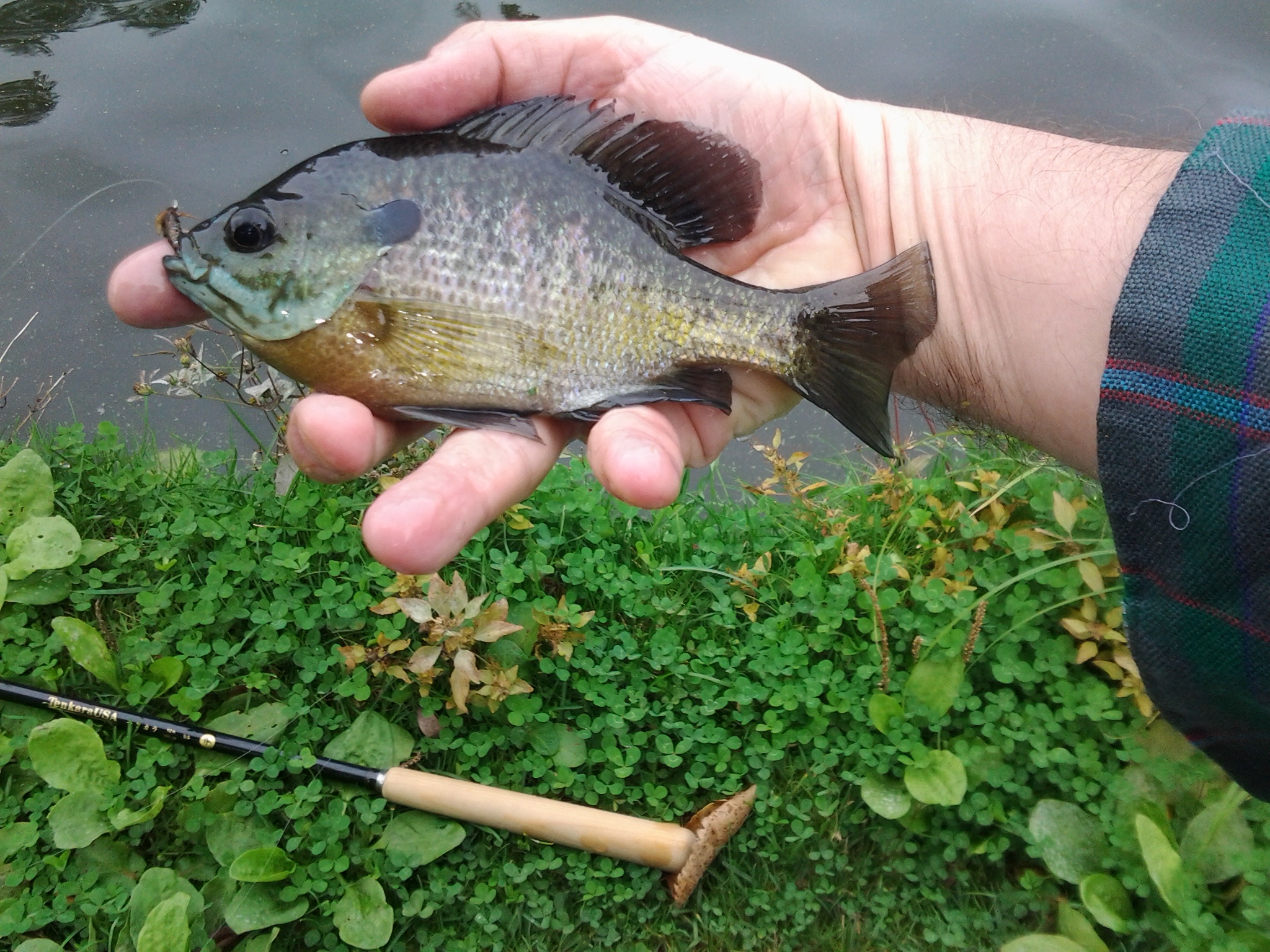
Smaller fish – dill pickle bass and slab bluegill – still insist on being counted. Vigorous takes by a quarter pound fish inhales the pattern deep in the mouth, doubles the perceived strength of pull during breaking sprints, which brings added utility to the longer tippet with its greater capability for stretch.

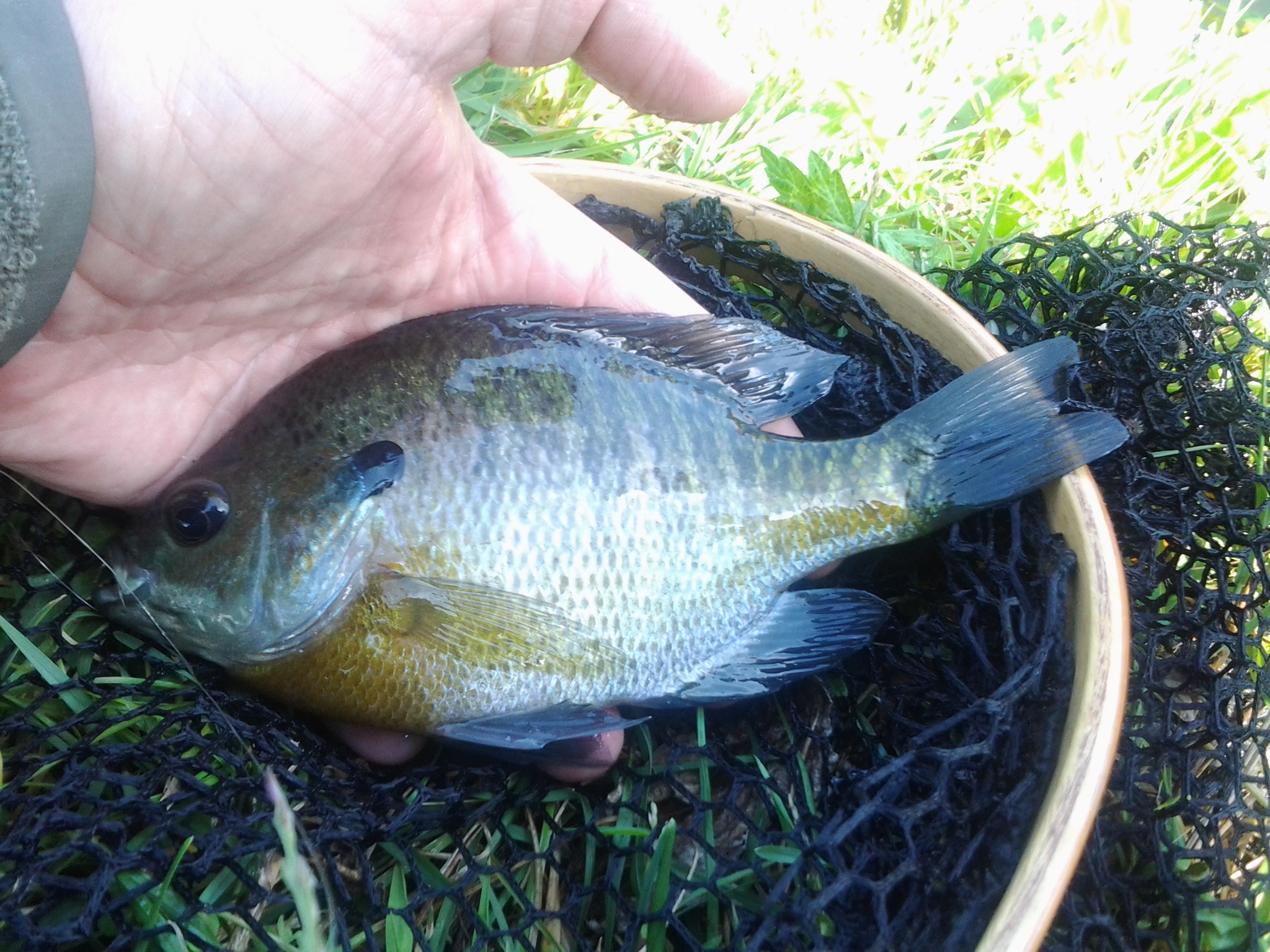
Be mindful to bring clamps with a few inches of reach. To release a bluegill hooked so deeply, first fold the fish’s spiny dorsal fin down with the inside of your wet fingers, grip the fly with the teeth of the clamp, twist as far as necessary as a slight downward push on the pattern is made. This most often dislodges the hook with minimal penetration of the fish’s interior. Most small fish will thrust voluntarily from hands placed low over the water and depart with a resounding and reassuring splash.

A net facilitates the unhooking of an autumn bright bluegill. (photo taken 09 16 2014)

A net facilitates the unhooking of an autumn bright bluegill.
(photo taken 09 16 2014)

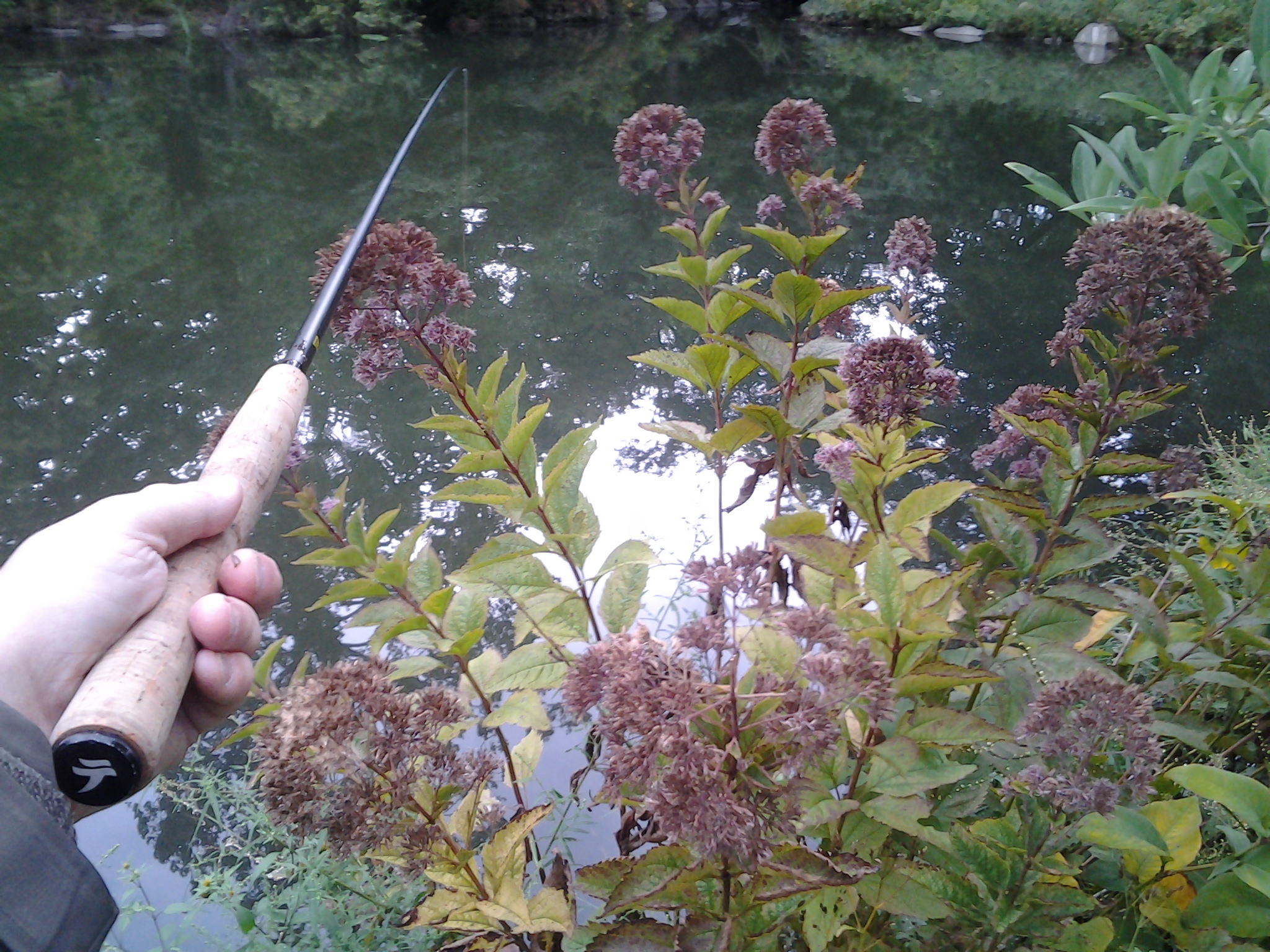
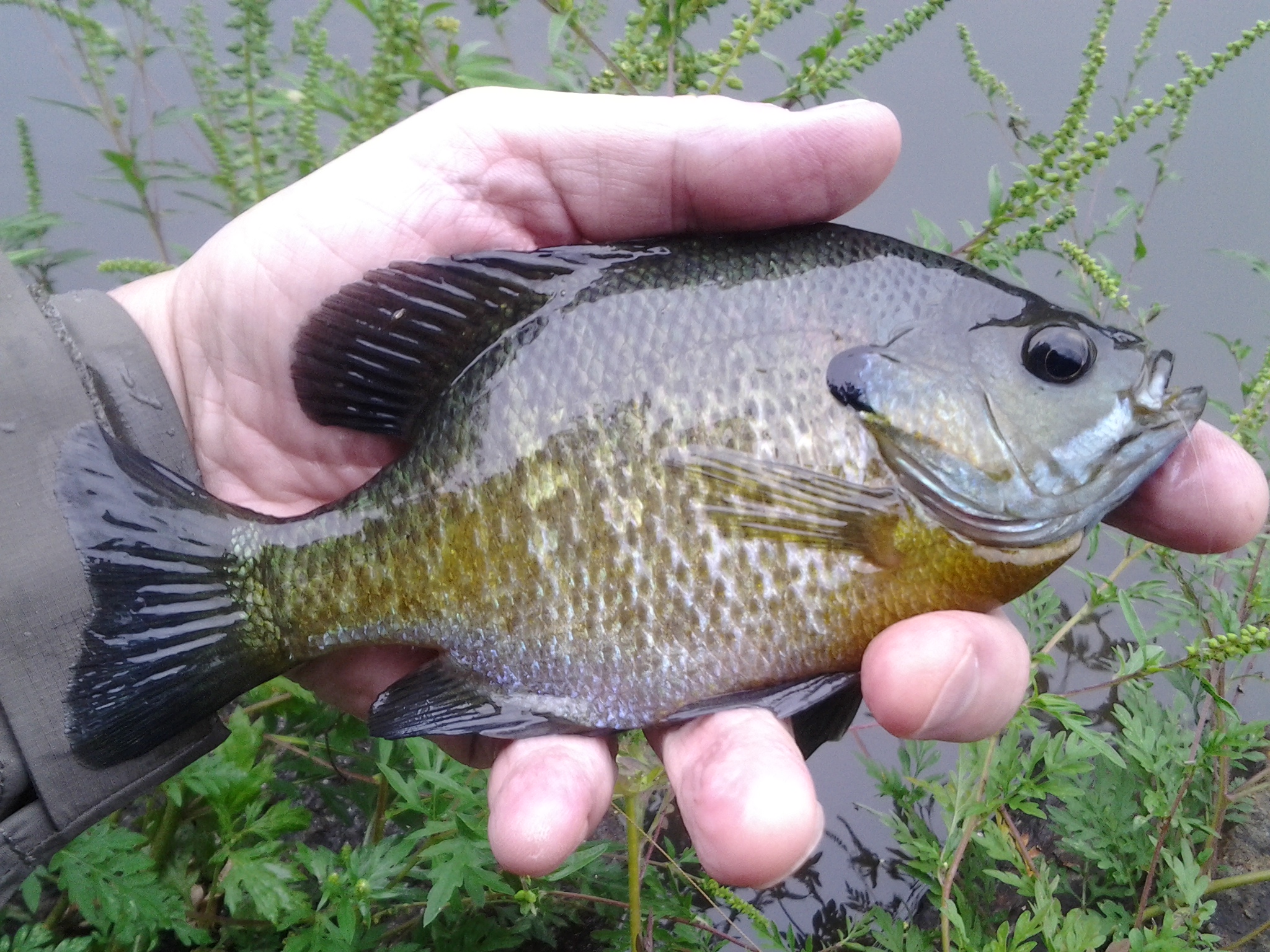
Orange Jewelweed and pale purple clusters of New York Ironweed border many New York stillwaters by late September. The green of leaves has acquired a more yellow cast. Some bluegills exhibit similar rusted or buttered bellies below strong barred sides. The bass remain silvered and green with a distinct black lateral band. Colored patterns all that would fit on a football helmet with ease.

The Football Helmet Bass (photo taken 09 2014)

The Football Helmet Bass
(photo taken 09 2014)

– rps 09 24 2014

Postscript: Read more about the damselfly and dragonfly at Backyard and Beyond here: http://matthewwills.com/2013/08/07/lilypad-forktail/

And here: http://matthewwills.com/2013/05/31/dragonfly-pond-watch/

Comments (1)

Tenkara Any, Any

Tenkara Any, Any . . .

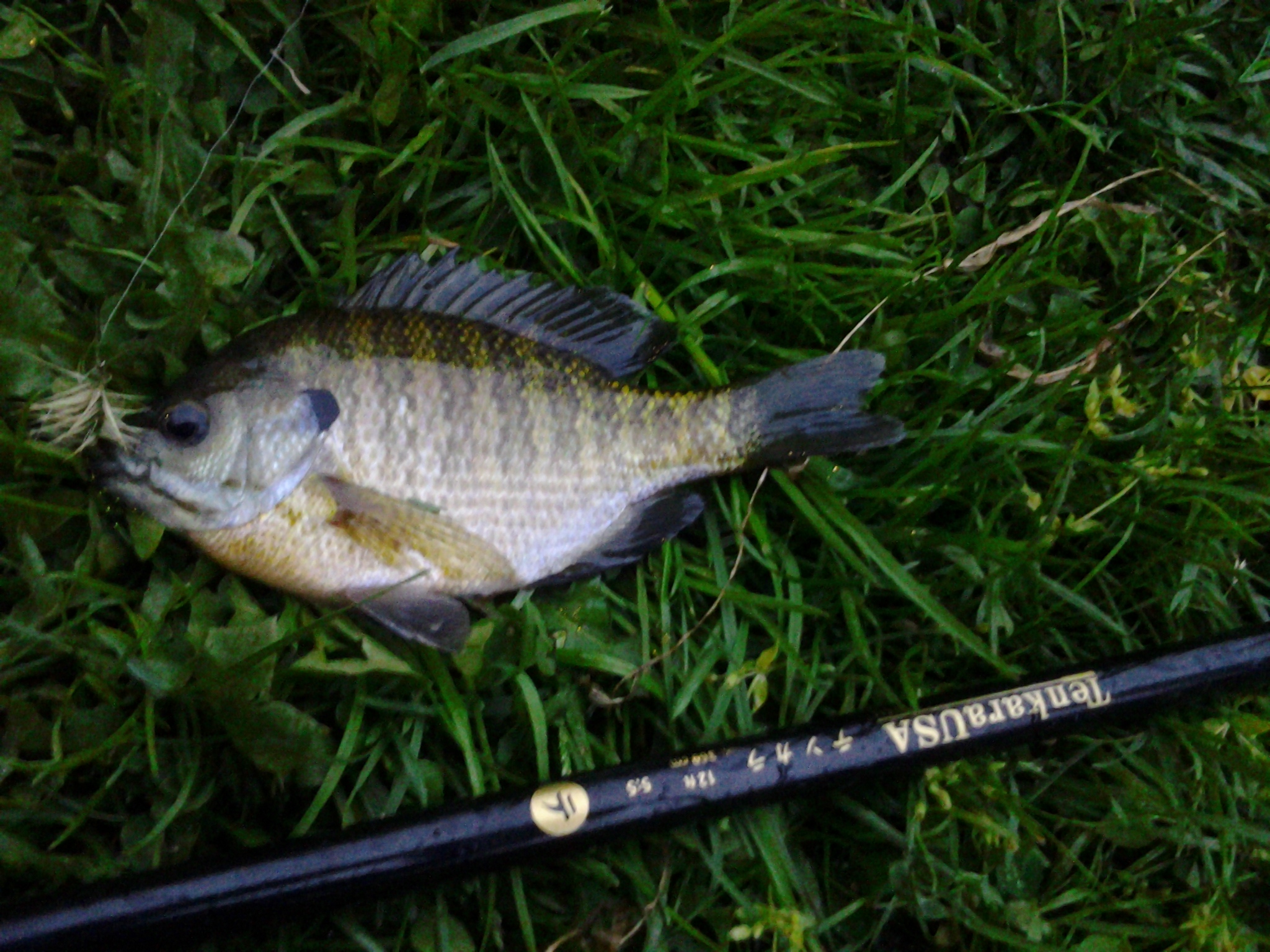
August in NYC 1:  Bluegill Male (photo taken 08 2014)

August in NYC 1:
Bluegill Male
(photo taken 08 2014)

My ultimate life raft kit shall henceforth include always a tenkara rod, kebari, and the tackle pictured in “On the Water, On Line” weeks earlier. Saltwater casts from an inflated raft will lure lifesaving sashimi sustenance. Extended alpine accident withdrawal may be sustained by mountain trout or swamp panfish. Universal tool is tenkara.

During the good times, the catch remains best when made a repeatable encounter.

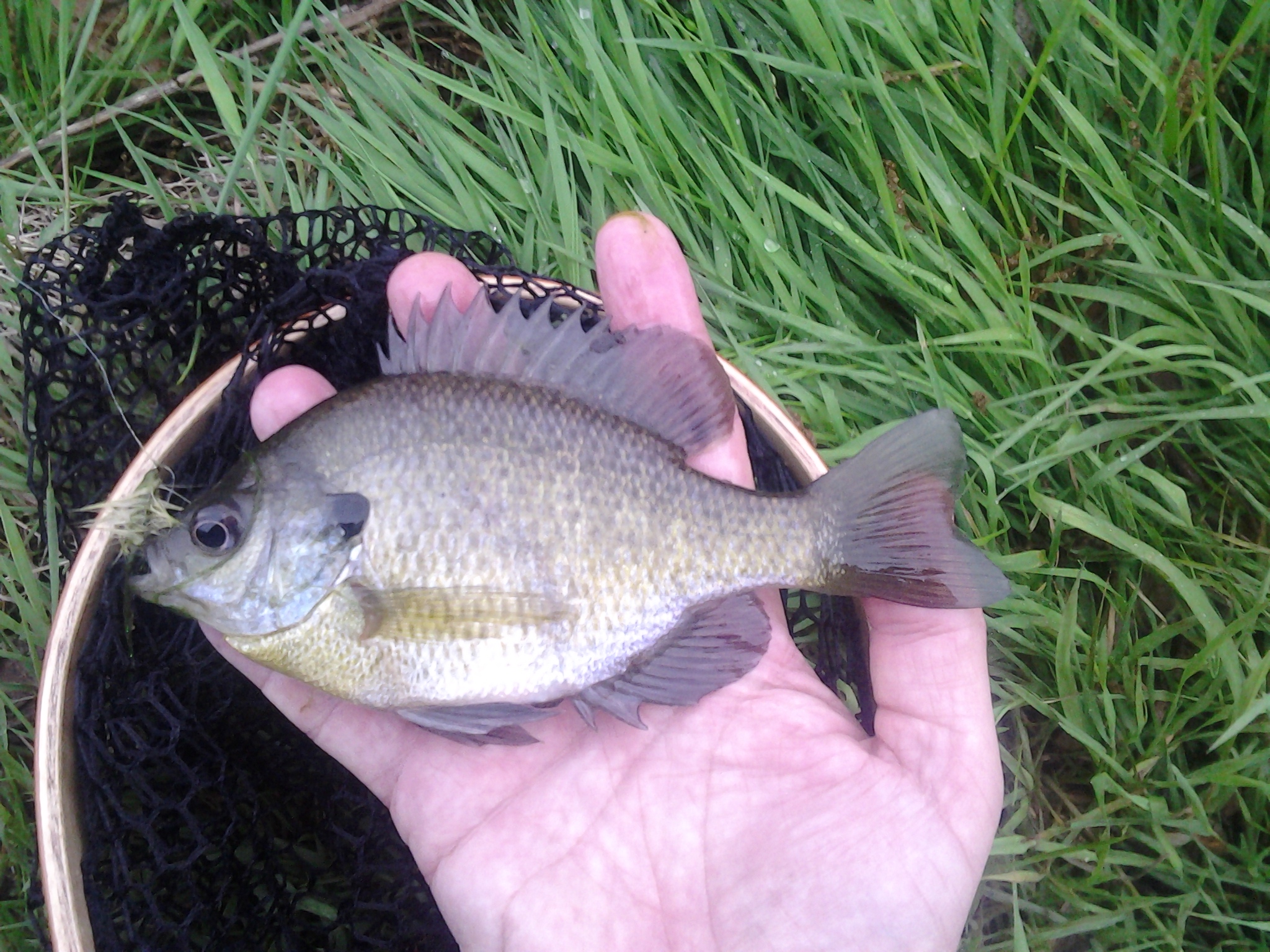
August in NYC 2: Bluegill Female (photo taken 08 2014)

August in NYC 2:
Bluegill Female
(photo taken 08 2014)

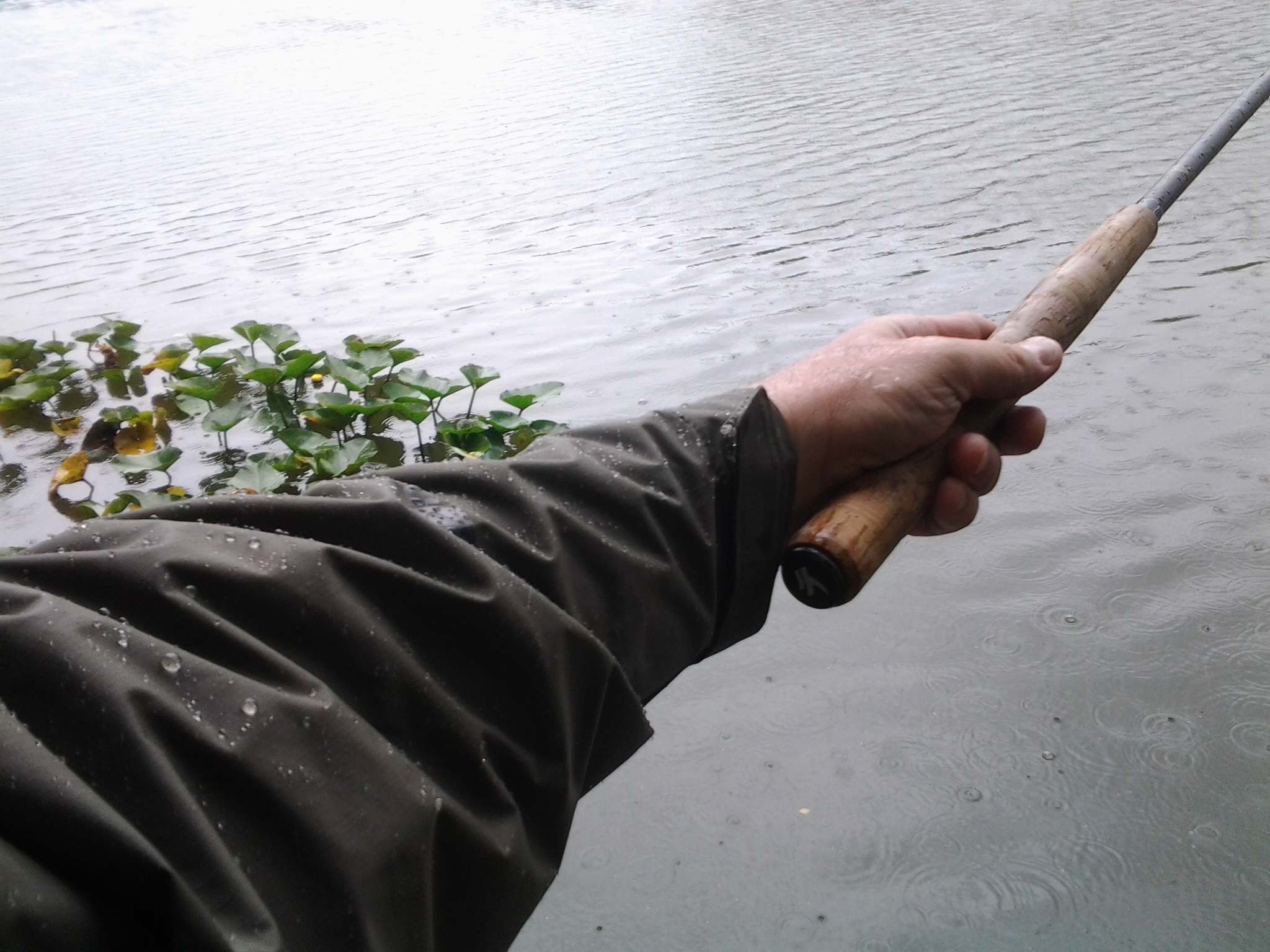
Rain may fall. Good. Fishing better then is my usual state of play when best embraced by a wading jacket.

Padded Rain

Padded Rain

Tenkara Any . . . Time, Any . . . Where.

Yamame at Rest

Yamame at Rest

As for the necessary Kebari, that is one field, universal . . . in scale, in choice.

Any ideas?

– rPs 08 27 2014

Comments (1)

The Salt on the Level

The Salt on the Level . . .

Hudson River High Tide (photo taken 07 2014)

Hudson River High Tide
(photo taken 07 2014)

The Salt. I have been trying, toying in earnest, to infuse my tenkara with diversity through variety in waters flowing and still, freshwater and . . . salt.

The Salt; Saltwater: Some older classics of the printed literature hold titles such as “Dock Fish” in which a sense of history can be linked to the facet of the sport perhaps best named saltwater panfishing. During this second decade of the 21st Century, add the urban angle in Manhattan, USA, and that offers two fishes of note: black sea bass (Centropristris striata) and bluefish (Pomatomus saltatrix), in particular the yearlings known regionally as “snappers” (pronounced “snappas”).

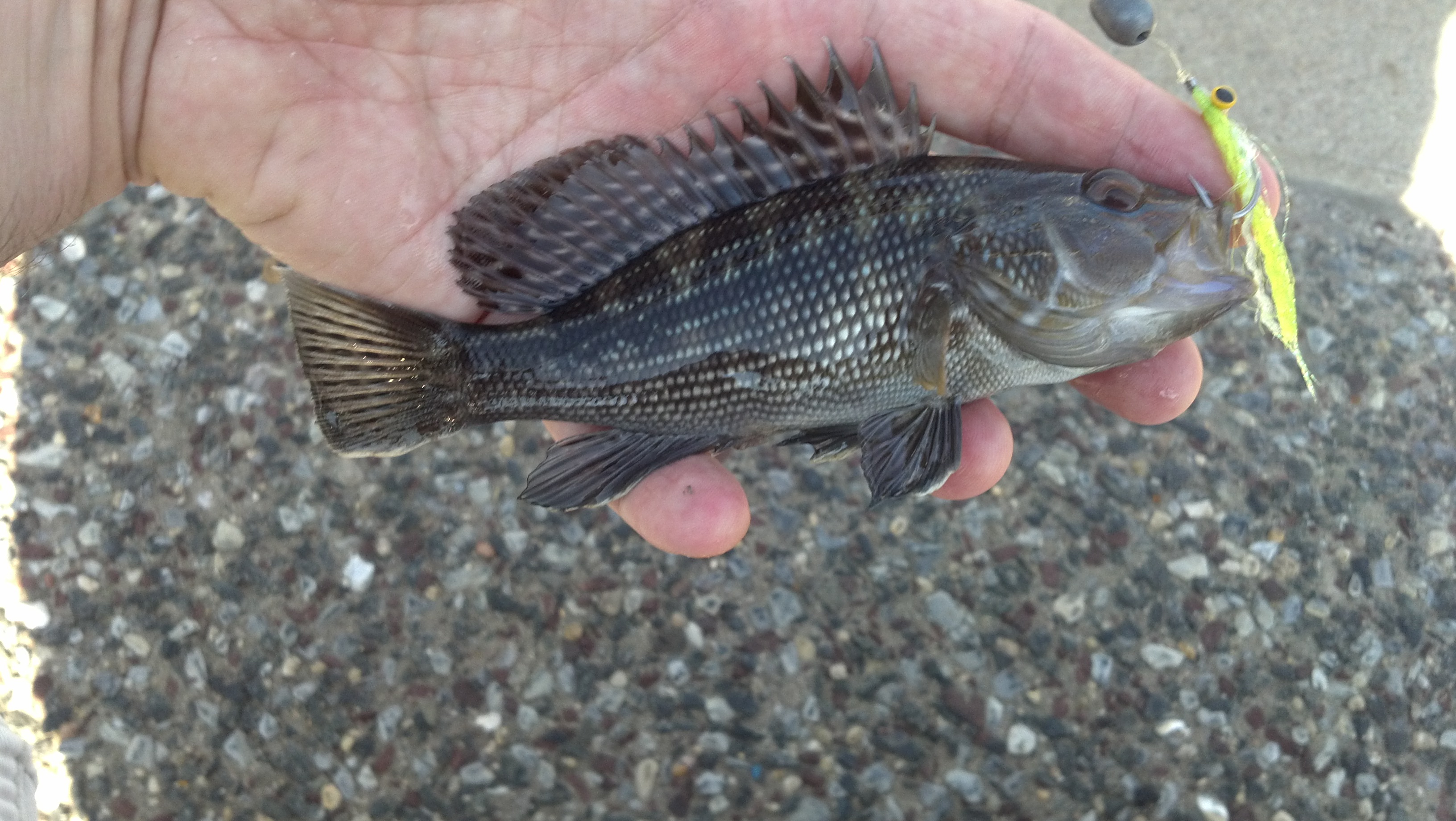
The Black Sea Bass

Black Sea Bass (photo taken 07)

Black Sea Bass (photo taken 07)

The black sea bass (those I have lost and caught and released) on the tenkara rod have coerced me to believe this is a saltwater sporting equivalent to the green sunfish found in freshwater streams. Previously I extolled on the green sunfish. The black sea bass is just as worthy.

The black sea bass is by classification a grouper, a smaller one, hardier to cold temperatures, a member of the family more well-known by its southern relations that range in color, pattern, and in size up to a 70s fly Volkswagen beetle.

The black sea bass exhibits broad shoulders, a flank thickness like the green sunfish, dressed in pearled black scales that hold an iridescence that glows bright blue around and along the lateral line. Vermiculation of a similar color resembles that of the green sunfish. The size encountered off my Manhattan dock(s) range from six to twelve inches. Only the very few largest are potentially one in the hermaphroditic phase, an interesting fact of this fish, which sets in at around specimens of ten inches or longer, in weight reaching eight to ten pounds.

Fish take a fly firmly and quiver shake in resistance. Bright weighted streamers, a chartreuse variety of Cllouser, can be cast, sunk, twitched on a line twelve feet in length supplemented by a leader of similar length tipped by the fly. Such a pattern on a swing with slow pulses of the wrist will take fish during one or two parts of a tide, often on incoming, but not always. One certainty, speed up the presentation of the fly to be intercepted by another hard hitter.

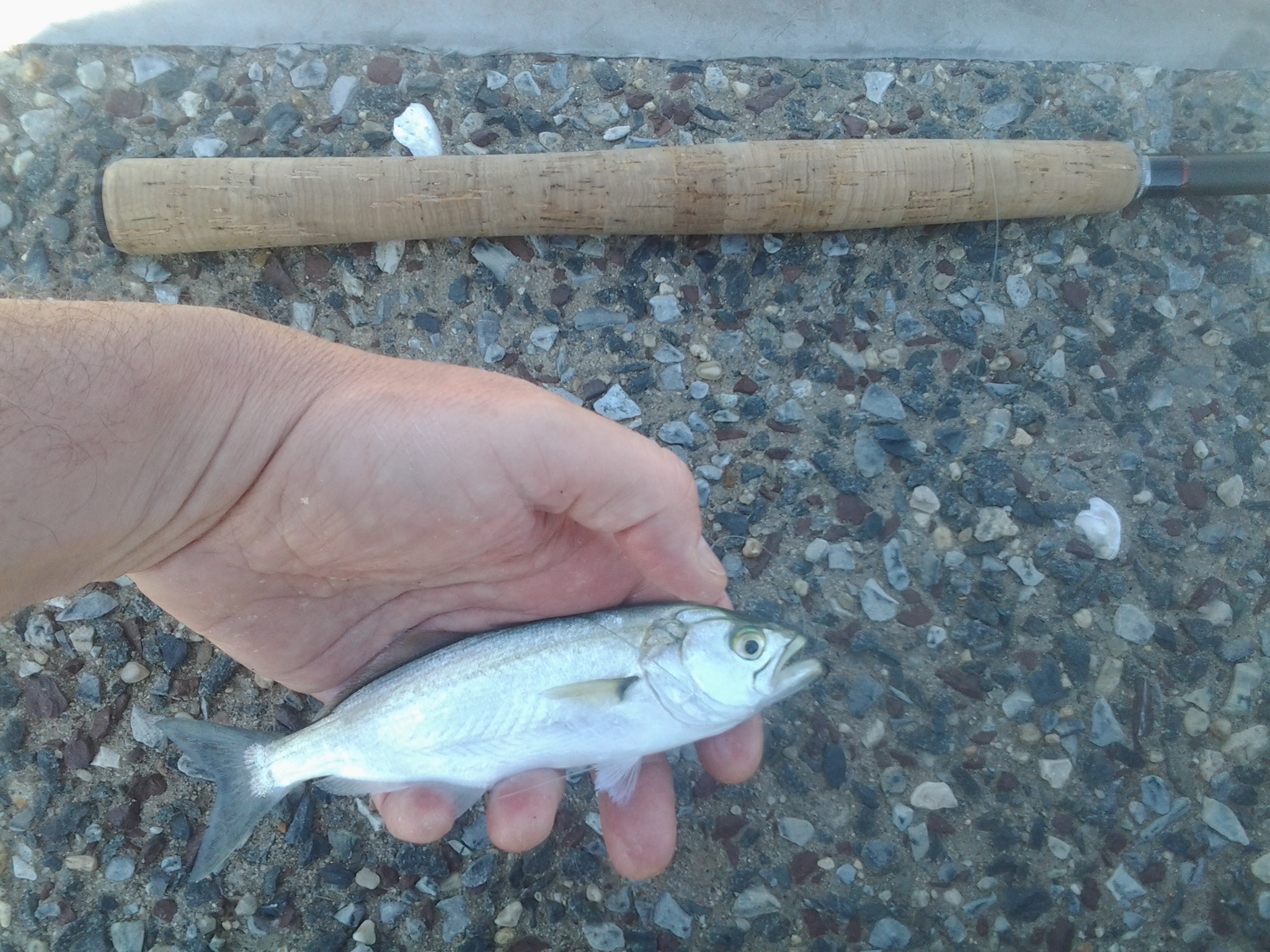
The Bluefish

First Fish! (photo taken 07 2014)

First Fish!
(photo taken 07 2014)

Closer to the surface cruise little toy soldier pods of juvenile bluefish chasing fry and rainbait schools. The schools of bluefish cutting baitfish like class come in and go out on quick waves that rarely last longer than two caught fish. Several hours of fishing will provide one half dozen waves of two minute bites on most occasions.

There also are changing skies to contemplate and inquisitive tourists, in between, plus a smorgasbord of aviation and ship sightseeing.

Fly patterns remain consistent with those best for the black sea bass. Simple half-and-half Clouser patterns tied for skinny water. Cinderworm patterns are normally ignored, although any dartible streamer of white can do. Sizes 6 through 8 are small enough for the tight-lipped bite of both fishes.

Hooks require a line. Level Line, not traditional tapered, is advised to be used. The Salt. I attach twelve feet to a small swivel and add a straight leader of monofilament in 5 or 6 lb. test. I want the leader to be breakable in case I hook into a piling of wood; an admittedly occasional hazard.

Hudson River Low Tide (photo taken 07 2014)

Hudson River Low Tide
(photo taken 07 2014)

Close fishing to the docks works best when peak tides and solunar tables meet. Check predictions on the website Tides4Fishing and study saltwater access nearest you. Tenkara may work on croakers and bergalls and many other fishes of The Salt that can fit into a pan if you force them, by hook.

Panfish, or Handfish? (photo taken 07 2014)

Panfish, or Handfish?
(photo taken 07 2014)

– rPs 07 25 2014

Postscript: Tides4Fishing http://www.tides4fishing.com/

Leave a Comment

Gray and Green

Gray and Green . . .

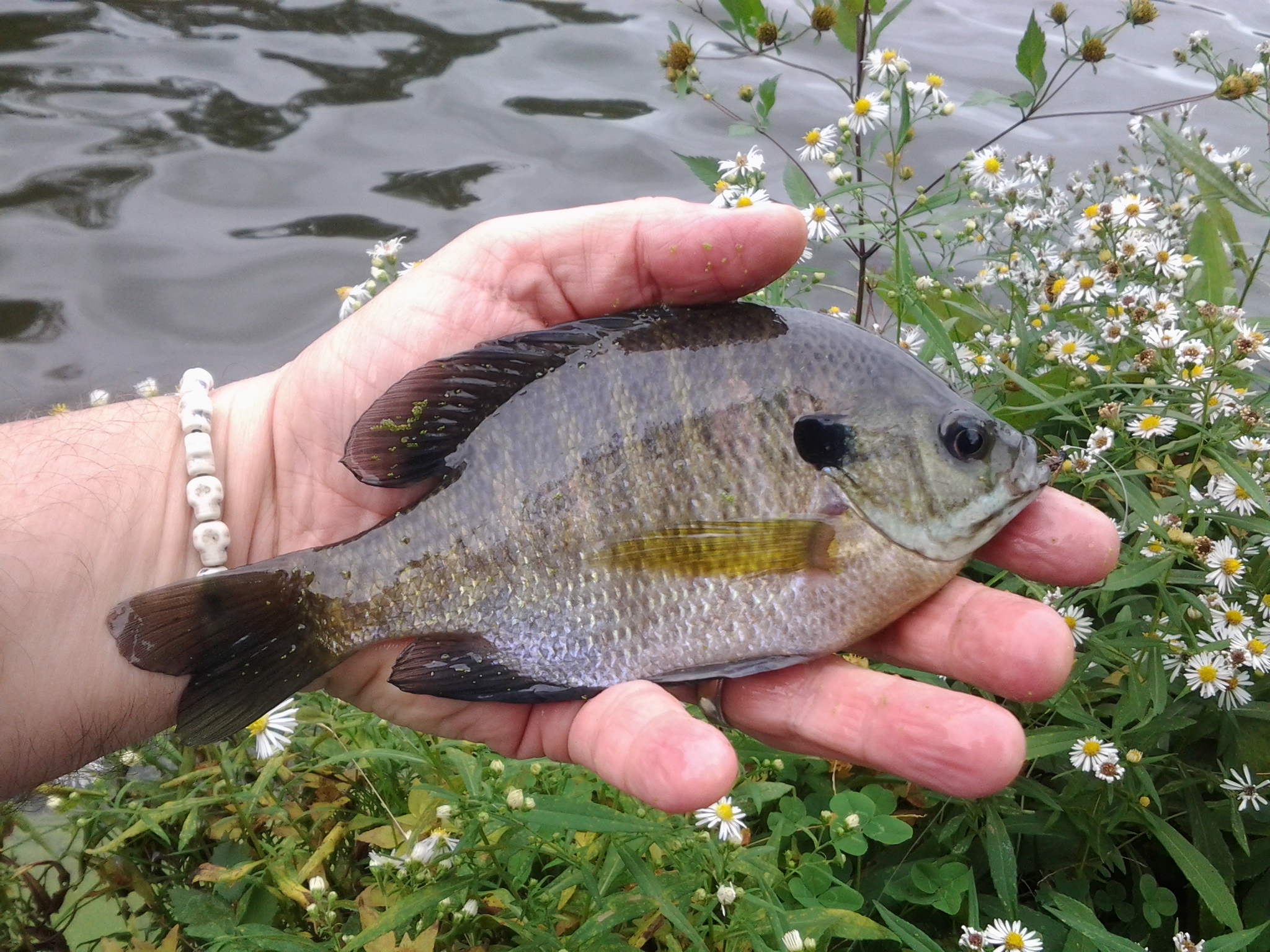
Bluegill and Ebisu (photo taken 05 15 2014)

Bluegill and Ebisu (photo taken 05 15 2014)

Weather patterns vary by season and region. One consistent to spring in New York, New Jersey, Connecticut, and Pennsylvania is a stretch of about three weeks between late April and the middle of May. I call these the gray and green days when the trees bear pastel leaves and flowers under an overcast gray sky that gives forth a fine mist or scattered light showers. This is a time dominated by water, cool temperatures, clean air, and the palpable smell of earth.

Ponds become stage center for a community of living things during these salad green days. Cattails, phragmites, and pickerel grasses have reached halfway to maturity and stand about knee high. The yellow flag has not yet begun to bloom, although the dandelions on the surrounding lawns now blend golden blooms with pale gray spheres of seed. Wakes in the shallows could be a turtle surfacing for a breath, or bluegills and bass sprinting below, preparing to construct beds for spawning.

The overriding dampness will normally keep most people engaged in indoor activities. The angler, however, and this angler for certain, becomes compelled to go forth and fish as often as possible.

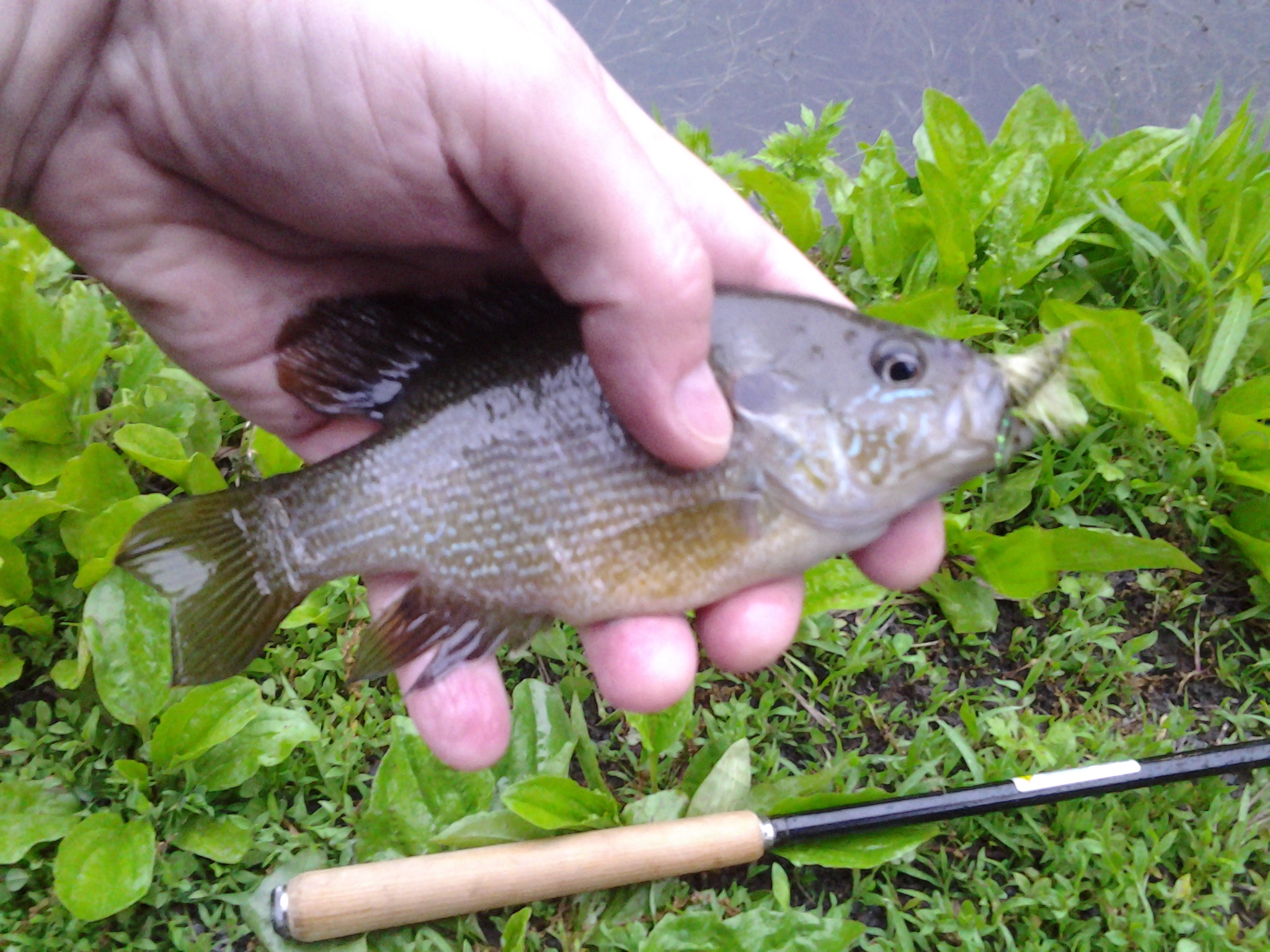
Tenkara equipment provides an ideal tool here and now. Between the edge of the flooded grass and the mats of pondweed starting to form at pond center often resides a strip of open water varying between five and thirty feet in width. Here fish can even be seen for sight casting chances at times. The long telescoping tenkara rod easily reaches over the shoreline vegetation and the limber nature of the pole allows accurate fly placement along the near and far edges of the plants where aggressive panfish and cruising bass swim in abundance.

Tenkara fishing along a pond edge. (photo taken 05 08 2014)

Tenkara fishing along a pond edge. (photo taken 05 08 2014)

Evenings tend to produce the best fishing. The stillness that often settles after the day allows for more accurate casting and also the opportunity for topwater action using dry fly patterns (Deer and Elk Hair Caddis) and panfish poppers (Foam Gurglers and Rubber Leg Spiders) . Two recent visits to my local waters have produced some good catches, including:

Bluegill

(photo taken 05 15 2014)

(photo taken 05 15 2014)

Green Sunfish

(photo taken 05 15 2014)

(photo taken 05 15 2014)

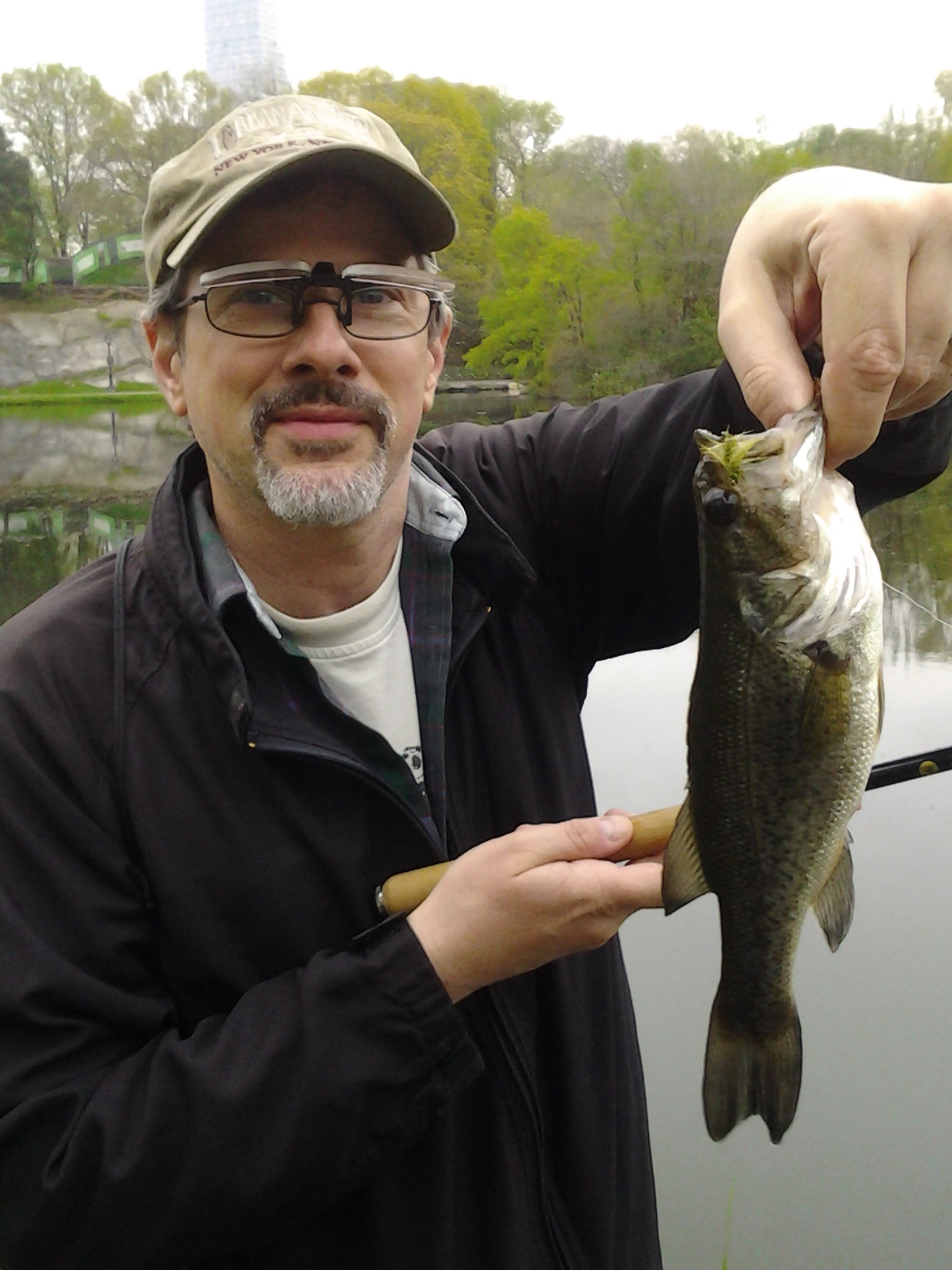
Largemouth Bass

(photo taken by Tony Panasiti 05 08 2014)

(photo taken by Tony Panasiti 05 08 2014)

The gray and green days have about another week or two left in them before brighter, warmer weather arrives. Go forth and fish if you have the time.

– rPs 05 16 2014

Leave a Comment

April Light

April Light . . .

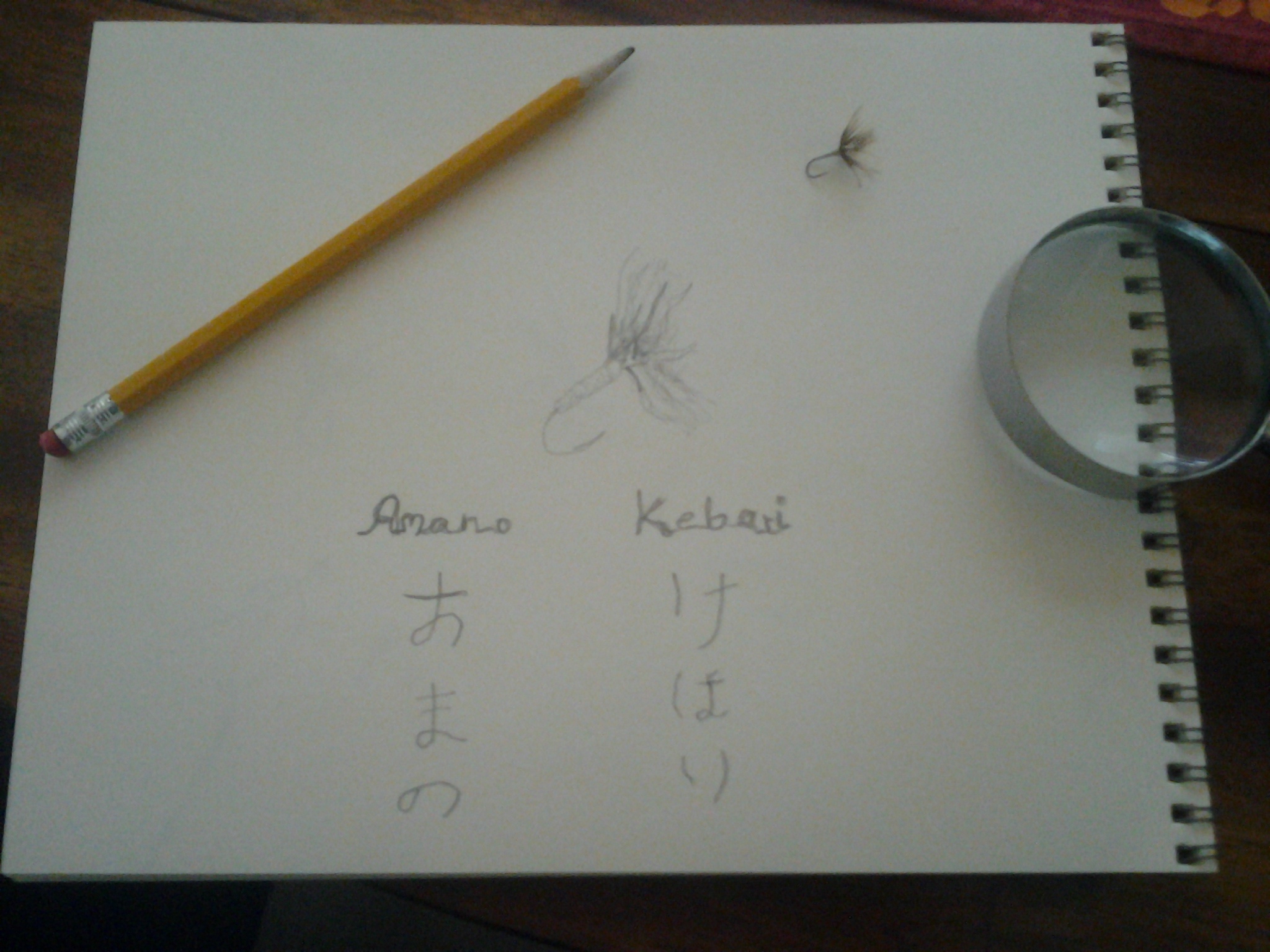
A Portrait-in-progress of an Amano Kebari (photo taken 04 28 2014)

A Portrait-in-progree of an Amano Kebari
(photo taken 04 28 2014)

May in Manhattan may start as predicted; beginning with cool rain.

The eye finds light labor and mind thinks how to work out images in contrast in two dimensions. This time the one color wrought shades gray: the gray that some years gives May as much abundant green as there is on this day of April light.

Clear, bright, today refracted sun sets the pencil in motion with an Amano Kebari portrait in repose on paper.

Just sketchin’ . . .

– rPs 04 28 2014

Comments (1)

The Luck of “The Spring”

The Luck of “The Spring” . . .

Harlem Meer Still White. (photo taken 03 13 2014)

Harlem Meer Still White. (photo taken 03 13 2014)

I made myself meet the water a few days before this St. Patrick’s Day. I caught and released one fish.

There was a sky full of helicopters, a loose chain of ambulances at emergency, and deep rumbling rolling in from the Northeast. Air, not natural, had burst from the seams and taken down a piece of Manhattan.

My day off: fishing as this was occurring. An awareness of balance, rather than a feel of guilt, charged my exploration of “The Spring” in Winter. Harlem Meer, I would learn later, was a solid white floor surround by the yellow brown fields of March. Lucky Me: I chose first a greener ground of jade where “The Spring” offered water along one of three shorelines, most of the best spread out behind a bankside fence I chose lawfully not to cross.

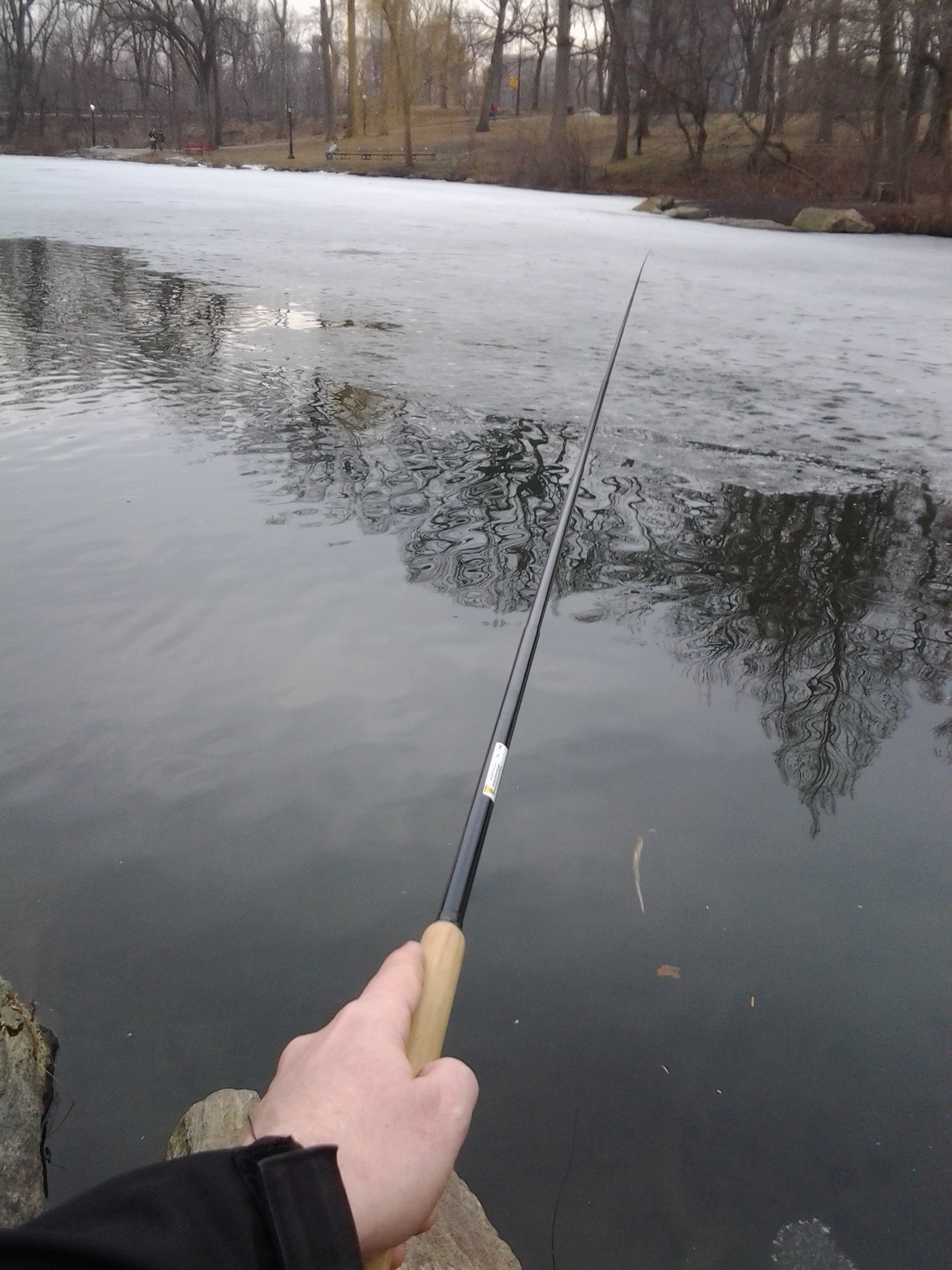
Hemmed within seventy-five feet of width, fifteen feet of breadth, and a depth measuring less than a rod’s length, I fished a Deer Hair, Peacock Herl, and Thread nymph of my own design. Plenty of cool casting onto the ice opened up to me on a 3.5 Level Line. Thin ice is like an immense, monolithic lily pad. Audible slides along the ice with a tug off to the depths make for a great presentation when successful. What works at an even higher level across the fishing spectrum is the same matched with a larger pattern: next an Olive Deer Hair and Floss Bucktail tied in a manner akin to a Mickey Finn, or with a sparse beard like my Green Guarantee, first described on The Global FlyFisher in 2008.

Tenkara on thin ice. (photo taken 03 13 2014)

Tenkara on thin ice. (photo taken 03 13 2014)

Four extended periods of disaster noise sounded in the distance as I began to fish. The rumbles reminded my mind’s ear of the Baghdad air war thunder shown (and heard) on television during both Gulf War I and Gulf War II. The news through the fog of dust and information settled on eight dead, many injured and displaced. A gas leak? Investigation on site has not yet been engaged in full because of debris. There has been that much material mixed with potential survivors, so great care has been taken.

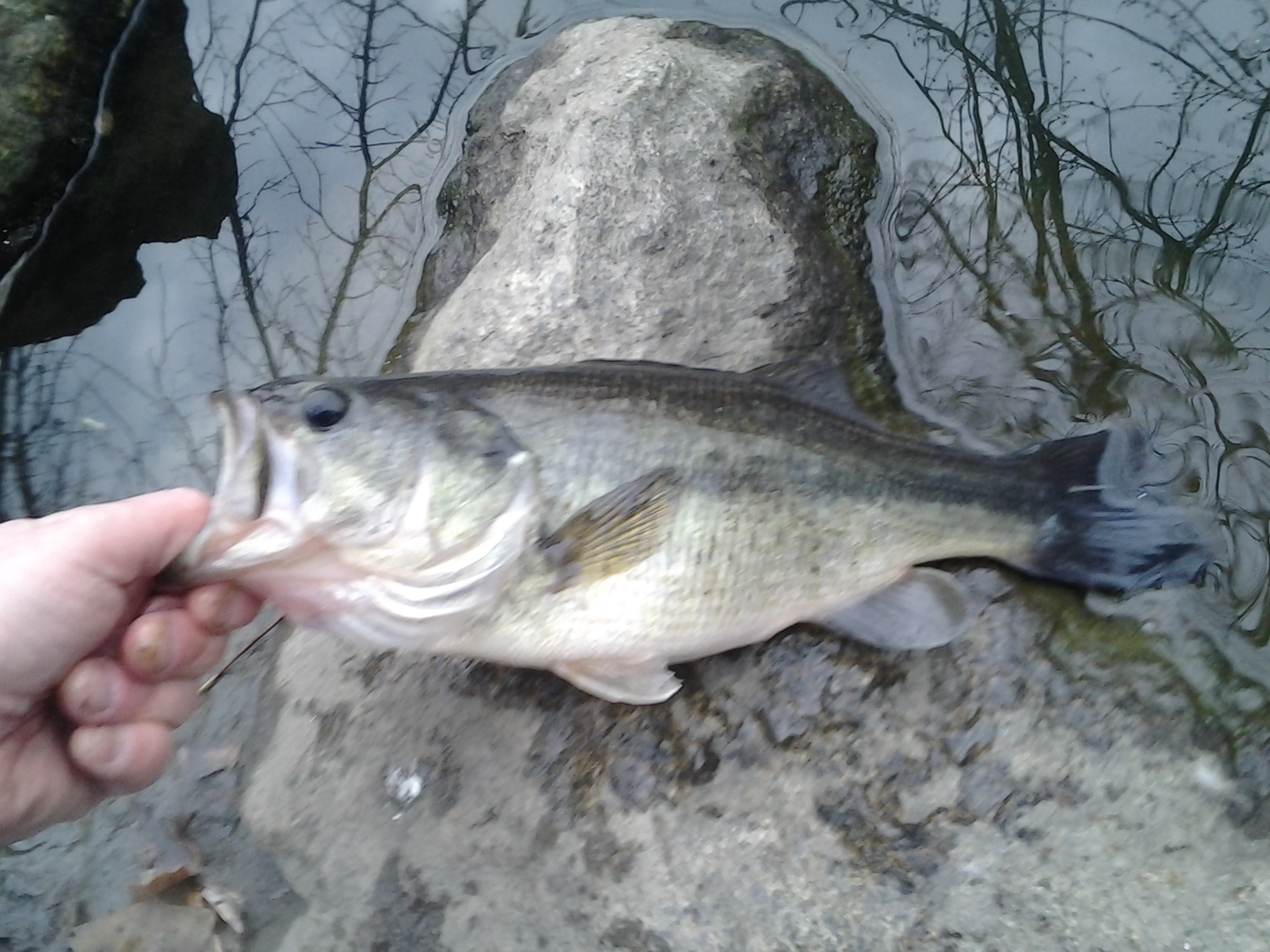
On the top of the hour of one, a better blast sounded on my side. Luck struck. A sudden take a foot below the ice edge began to move. No winter sluggish fish was this; I saw twice in profile a thick bass with a purpose. The silhouette was a rounded female rather than a thin pickle of a male. I feared my tippet might fray as three runs under the ice audibly shaved my line against the blade on the water’s top.

My Ebisu tenkara rod’s entire 5/5 flex was on arch display. I gripped the pine handle as if it were a solid body guitar. Grip locked in, I was able to lead the bass around a fallow pickerel weed garden to shore.

Blurry? Cold, wet hand and big, fast bass! (photo taken 03 13 2014)

Blurry? Cold, wet hand and big, fast bass! (photo taken 03 13 2014)

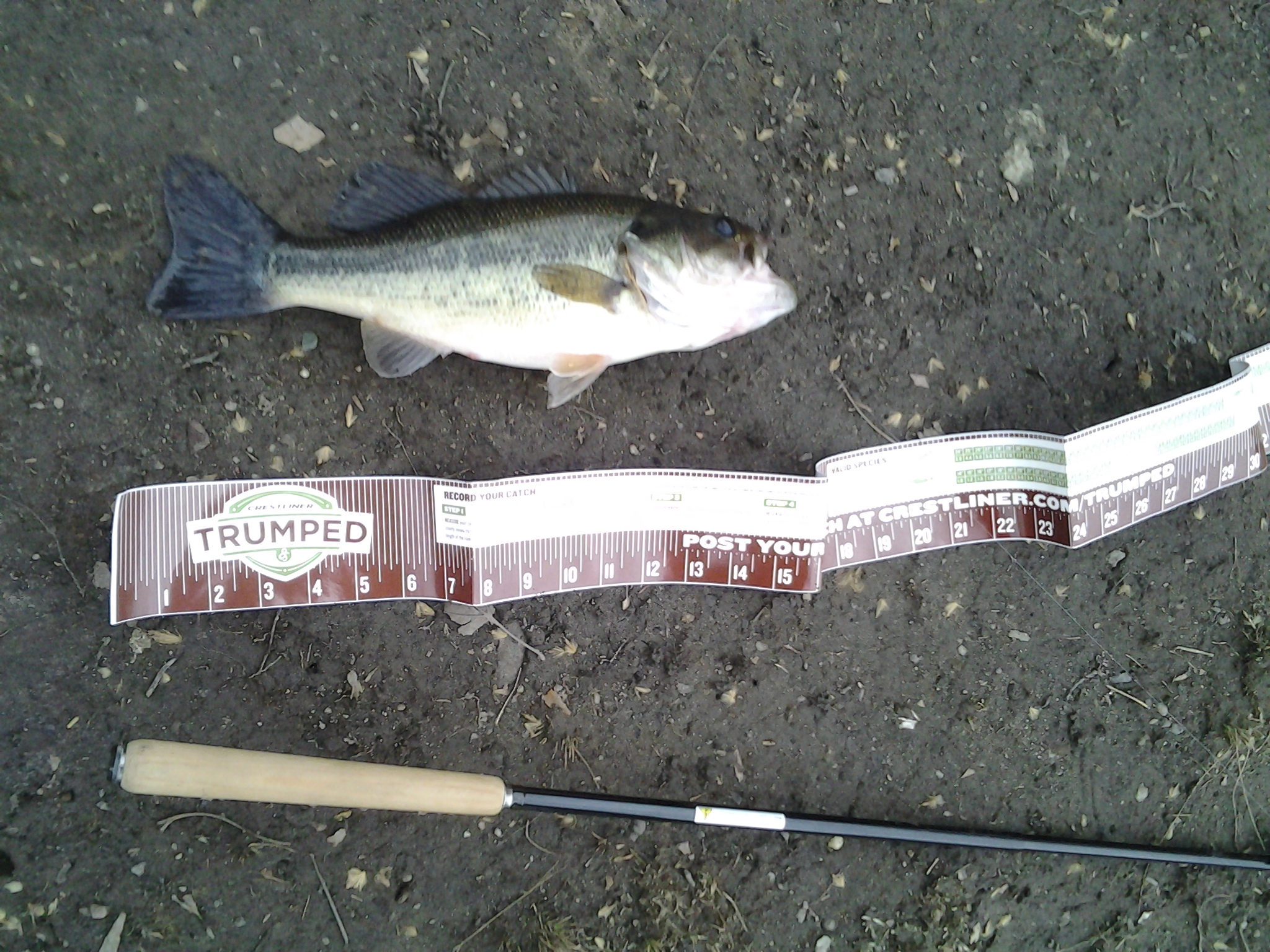
I rarely lay fish on any surface for a photo except sometimes wet grass on rainy days. Skies overcast, air still, the fish remained calm and stretched as most largemouth bass will as it endured a bragging shot on packed damp soil beside my laminated ruler and Tenkara USA Ebisu. Best Honest Estimate: 15 inches, 2 plus pounds, female largemouth bass.
Tenkara can (sometimes) tackle big bass. (photo taken 03 13 2014)

Tenkara can (sometimes) tackle big bass. (photo taken 03 13 2014)

The Luck of “The Spring” . . . an ironic reward, when still in winter.

* *** * *** * ***

Angle 360

Doves dived
The depths of damp spring air.

The lake,
Biifurcated between water and ice,

Reflected,
Bare branches and brick towers.

In park,
Central to the whole reality,

One bass
Followed the ledge, following,

Up above,
Something crawling, scraping.

In went it,
Down into the wet water.

When tugged,
Wink, the line squared the circle:

The One and The Other
Spirited by connection.

.
* *** * *** * ***

My First Fish of 2014

– rPs 03 17 2014

Postscript: Read about the Green Guarantee at The Global FlyFisher by following this link:

http://globalflyfisher.com/writings/small-fry/pic.php?id=4614

Leave a Comment

Hielo Grueso

Hielo Grueso . . .

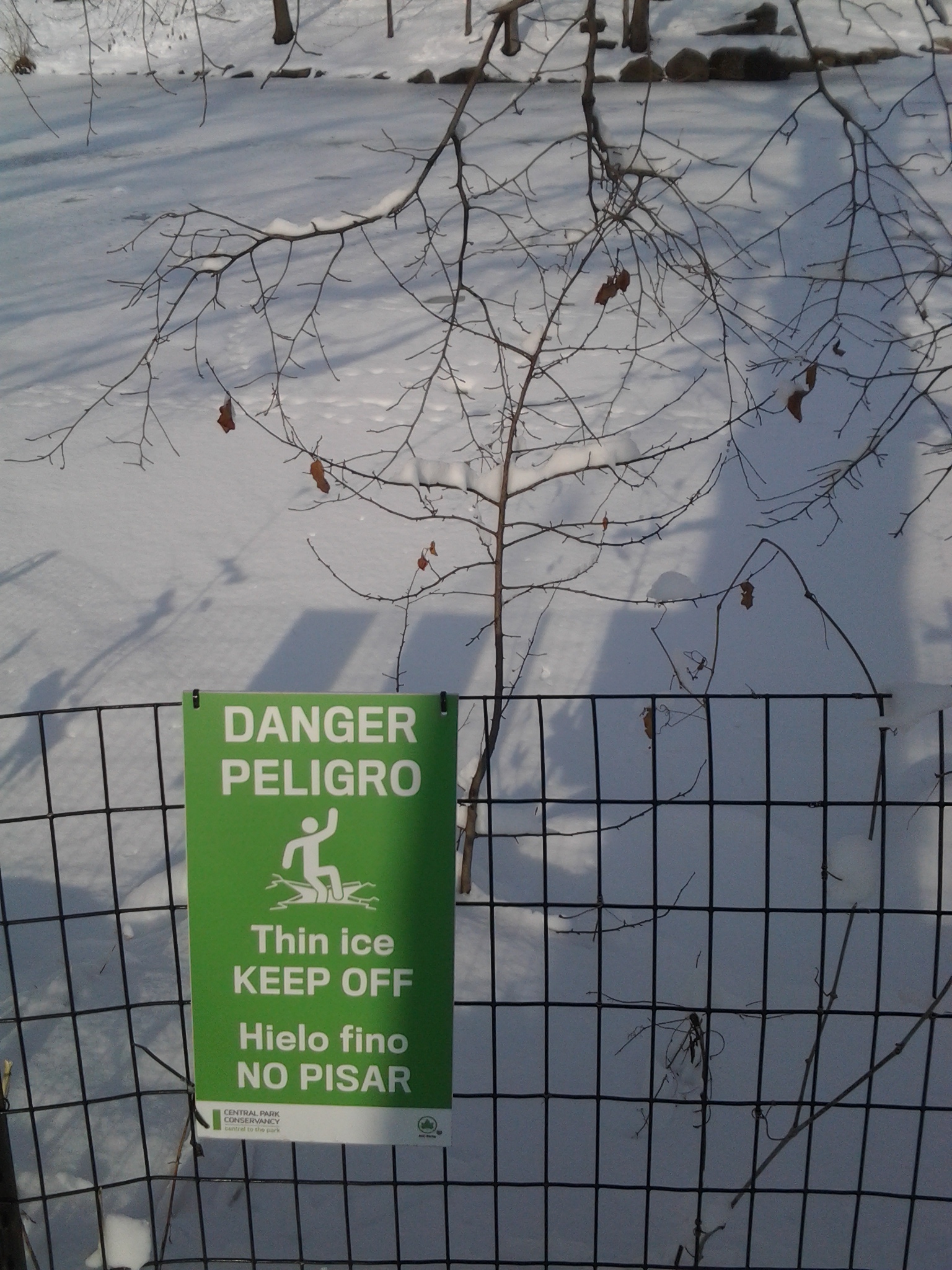
Hielo Fino! (photo taken 02 2014)

Hielo Fino! (photo taken 02 2014)

The sign beside this Central Park pond read “Thin Ice” – Hielo Fino en español – and that was on Super Bowl Sunday, the one warm, as in fifty-degree, day during the entire month of February. The NFL did dodge a bullet and scored a great success in the New York metro area. For other sports fans, such as those who fly fish with tenkara equipment, this month has been not so much a disappointment as an extended test is patience.

But wait! Yes, wait, indeed: more snow is predicted over the first days of March, which shall be arriving like a lion.

That sign should now read “Thick Ice” – Hielo Grueso!

Hielo Grueso! (photo taken 02 2014)

Hielo Grueso! (photo taken 02 2014)

– rPs 02 28 2014

Leave a Comment

One More

One More . . .

Tenkara is an excellent way to connect with bluegill in October. (photo taken 10 09 2013)

Tenkara is an excellent way to connect with bluegill in October. (photo taken 10 09 2013)

When the leaves are just about to turn and the asters are flush with their tiny daisy faces, there appears one more window of decent bluegill and largemouth bass fishing before the inconsistent angling of the cold months arrives. Ponds are pretty places at this time and the fish remain within the fixed range of tenkara equipment.

My fly shop coworker, Jesse Valentin, wanted to squeeze in one more outing this month before some necessary dental work. I happily accompanied him . . . to Harlem Meer. There I employed my technique of a large nymph, fished slowly and steadily, in and around the pond’s deeper areas. A size 10 Zug Bug brought two nice fish quickly to hand; I noted a slow lift, rather than twitches, teased these fish into striking.

Bluegill with Asters. (photo taken 10 09 2013)

Bluegill with Asters. (photo taken 10 09 2013)

A chilly wind from the northwest began to pick up as the sky turned gray after noon. Satisfied with the bluegill, I decided to experiment in my quest for a bass. I used a dropper loop to attach a size 6 Olive Flats Fly, a weighted pattern designed for bonefish and permit, yet its greenish tones and split tail make an excellent crayfish imitation.

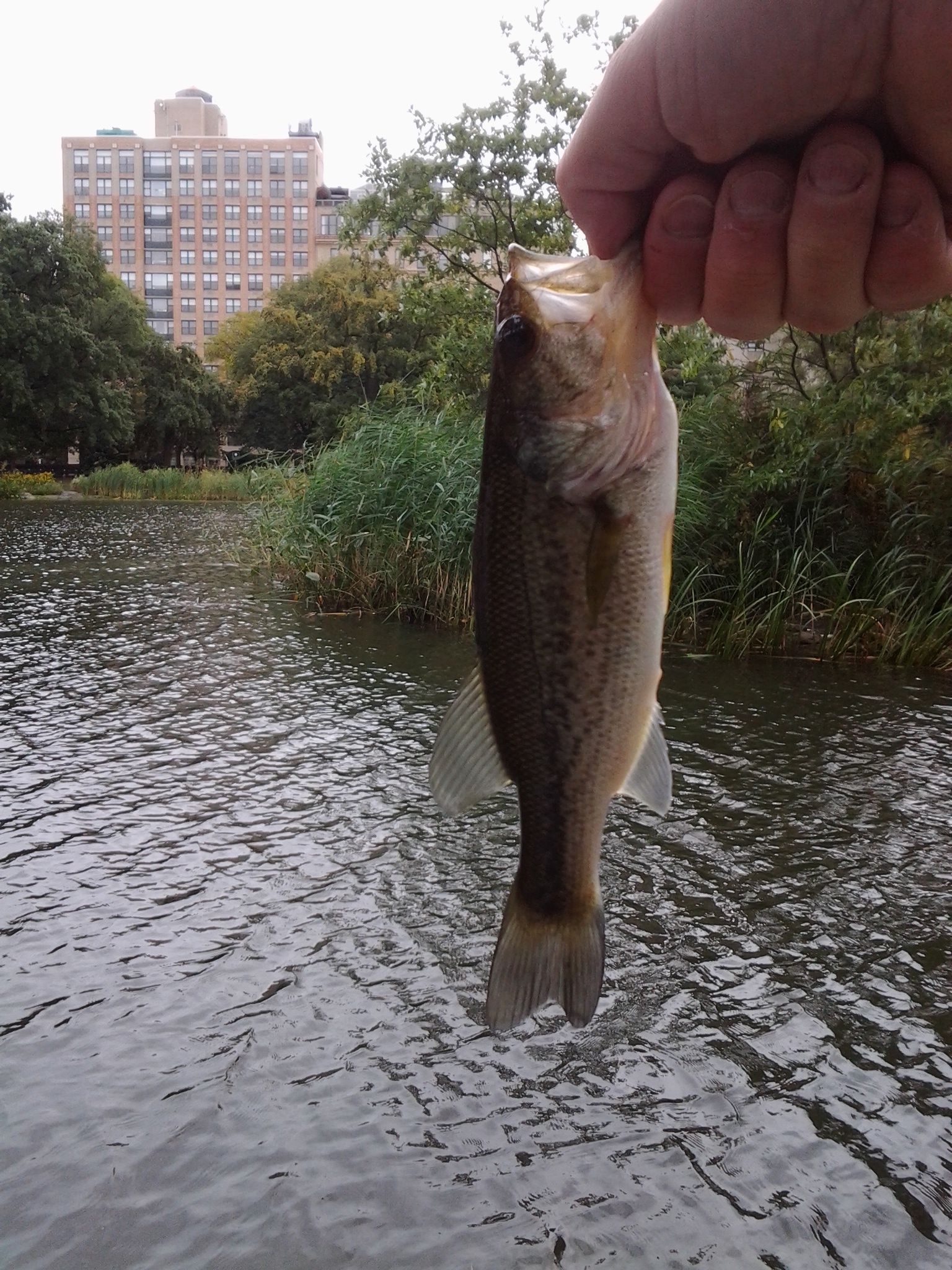
The extended length of my Ebisu model allowed me to precisely work the fly along the base of some reeds going brown where a flash of bright green connected with me. Three jumps later, a modest largemouth bass allowed itself to be brought ashore for an authentic urban angling photograph: a bucolic pond with a brick highrise standing in the background.

Bright Bass, Big City. (photo taken 10 09 2013)

Bright Bass, Big City. (photo taken 10 09 2013)

Jesse, for his part, caught a bass and a black crappie with one of the jigs from his own vise, so we both headed home happy, knowing we had seized the opportunity for one more easy, fish-filled day. The gray and brown months, the time when methodical angling in uncomfortable weather produces sporadic catches, arrives with holiday season, which begins today on Halloween . . .

Boo!

– rPs 10 31 2013

Leave a Comment

Back in Hand

Back in Hand . . .

My Ebisu back where he belongs. (photo taken 04 29 2013)

My Ebisu back where he belongs. (photo taken 04 29 2013)

When a fishing tool is used hard, often, or both, some snafu has to be expected at some point. So it occured to me with my Tenkara USA Ebisu, although the problem did not involve wear or breakage – I somehow lost a segment and the handle screw cap in the field.

An email to Daniel Galhardo received a quick reply and a solution; send the rod to the repair center in Belgrade, MT. I found a Scotch mailing tube that fit the TUSA rod tube perfectly and mailed the package on April 19.

Today, ten (10!) days later – Ebisu is back in my grip! This has been, hands down, the best customer service I have yet experienced with any company.

Thank you, Daniel, John, and Tenkara USA!

– rPs 04 29 2013

Leave a Comment

« Newer Posts · Older Posts »
Design a site like this with WordPress.com
Get started