Posts Tagged New York City

Little Pond, Large Bass

Little Pond, Large Bass . . .

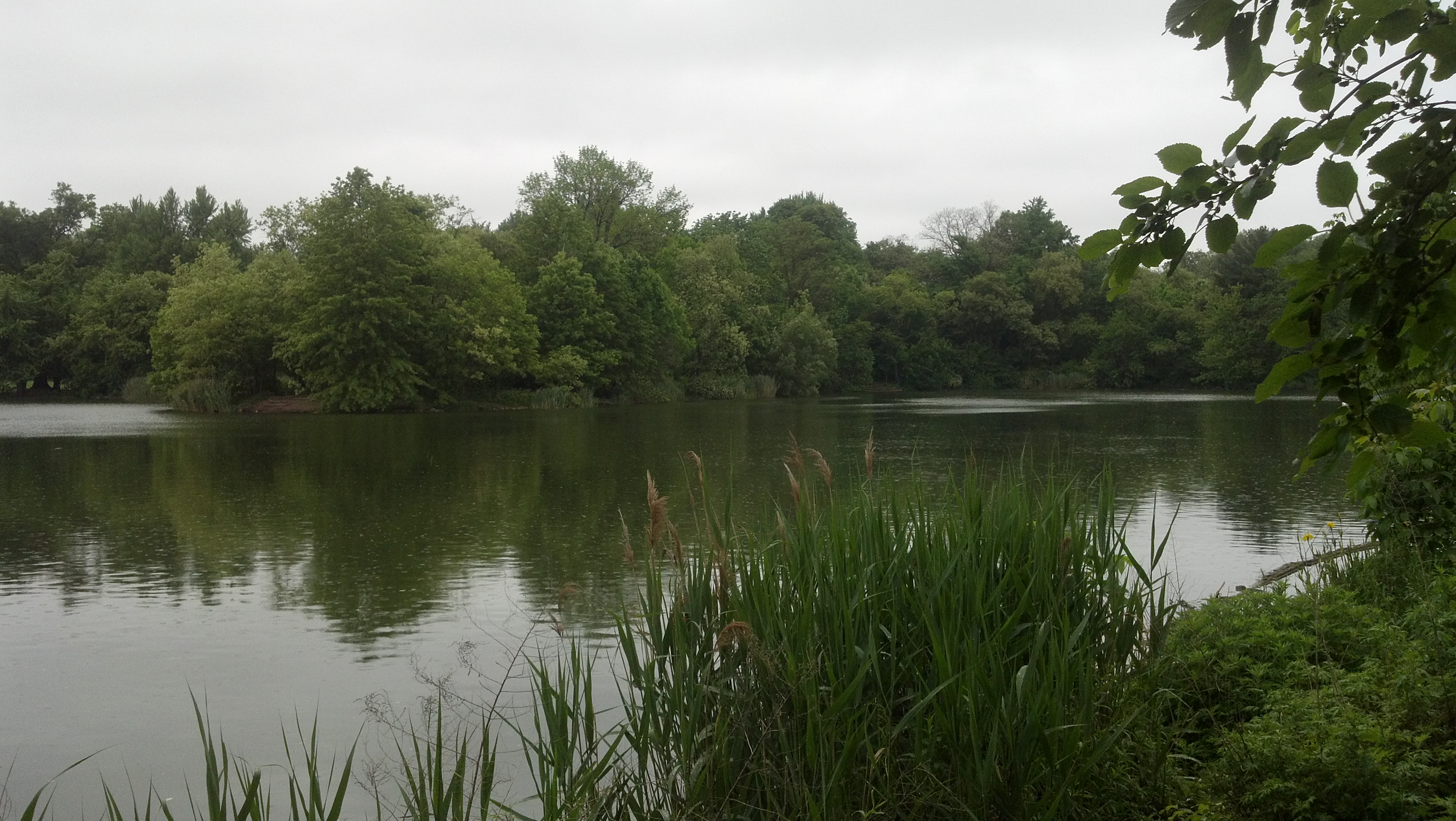
An inviting autumn scene in the Croton Watershed. (photo taken 10 24 2012)

Small ponds hold deep potential for tenkara anglers on the hunt for large bass, especially in autumn when resident sunfish head for deeper water. With the sunnies bedding down for the colder months, and out of the feeding area, a gray fall day can offer the most focused largemouth bass fishing of the year. A long, limber, tenkara rod can be used to work the shoreline, along the weedline dropoff, where mature bass tend to cruise the dark water in search of a few last bites.

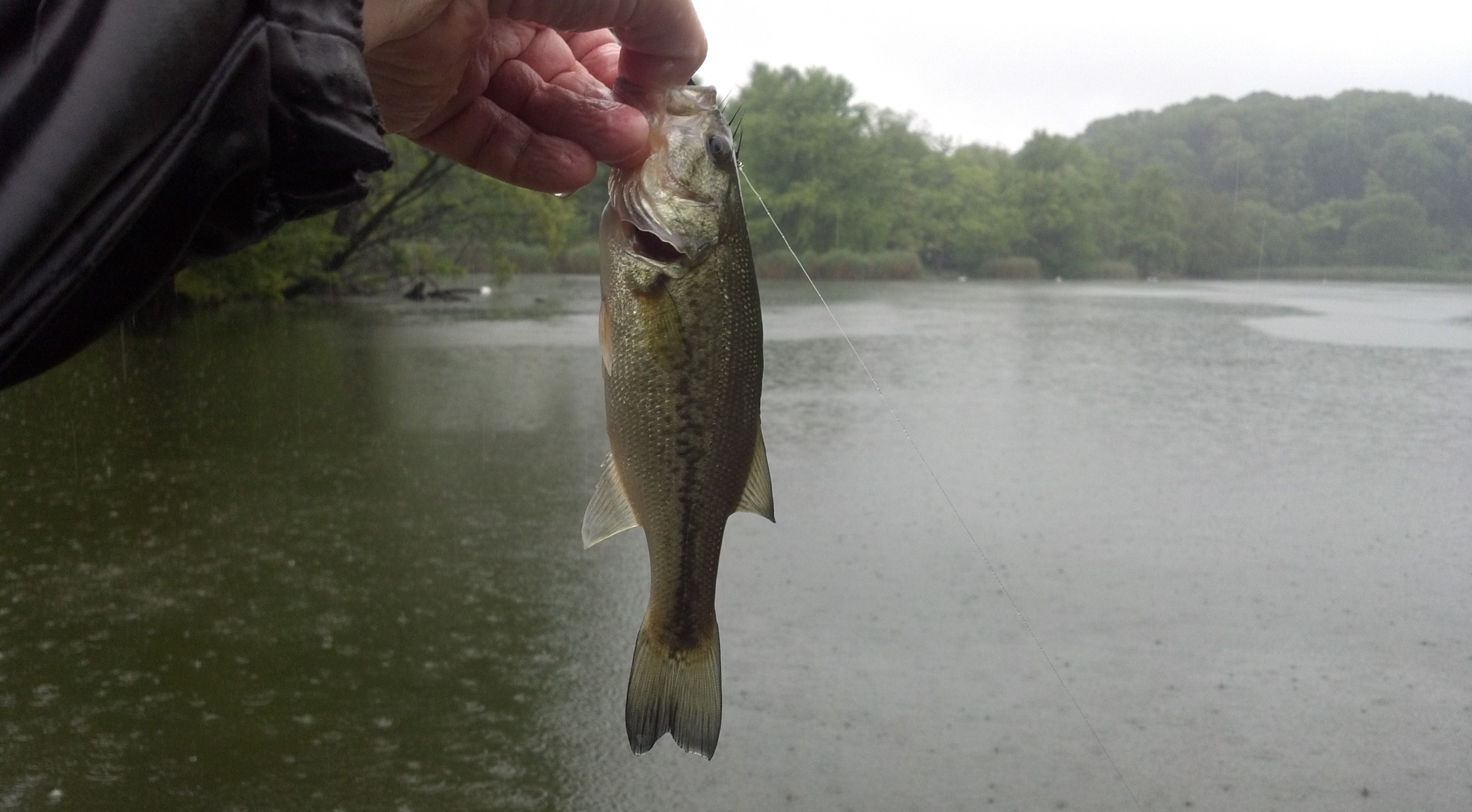
A green Matuka, fished slowly so its feather and fur could undulate in the microcurrents, proved this to be true during an October outing around a little country pond somewhere within the Croton Watershed in Westchester County . . .

Maryann Amici holds one of several largemouth bass we caught from a tiny pond in Westchester County north of New York City. (photo taken 10 24 2012)

Perhaps a foot of water lay above the submerged weeds of this pond. There are many openings in and amongst this type of plant growth where largemouth bass will hide, waiting to ambush a baitfish, crayfish, or nymph. Throughout this season the fixed length of the tenkara level line has allowed me to cast more accurately into this environment because I am working with, rather than against, the physical limitations of the tenkara tackle. I feel like I am shooting a narrow arrow rather than casting a wide net. The happy result is greater consistency in placing the fly over the target – and the fish – a situation that increases the number of direct encounters and, on a good day like this day, solid hookups with large bass.

– rPs 10 31 2012

Leave a Comment

Tenkara in the Dark

Tenkara in the Dark . . .

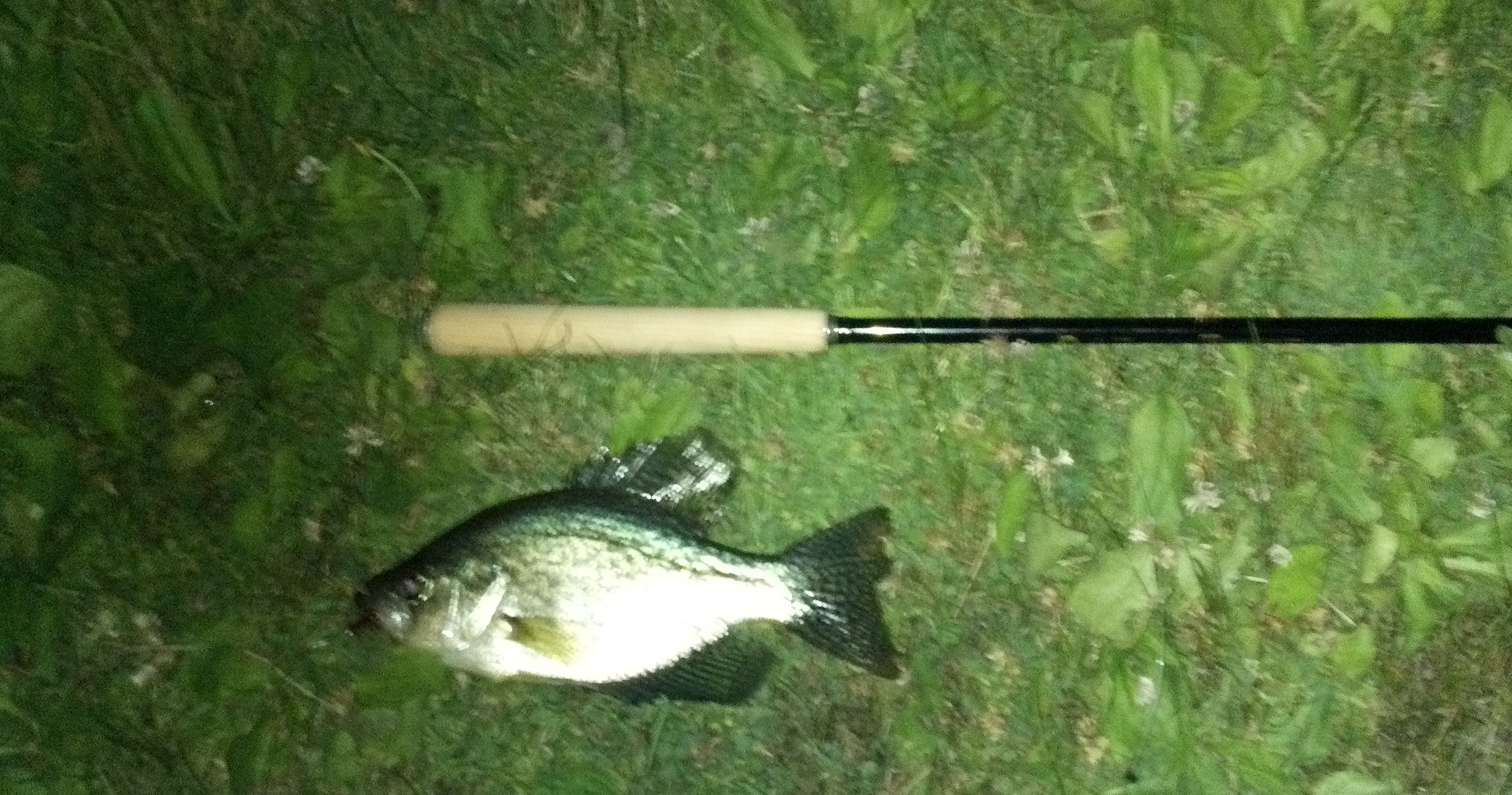
A Crappie Photo: This blurry view simultaneously reveals the author’s tenkara angling skill and flash photography limitations. (photo taken 06 28 2012)

Summer has arrived and with the season comes heat, humidity, and an angler’s need to modify both the technique and time of the fishing in order to optimize the sport’s chief objective: outdoor action.

I usually fish alone, and during the day, but my most recent tenkara trip was an after-work group outing of urban anglers. Tony, Edwin, Jesse, and I, as well as a couple of other friends in the observer role, spread out around the west side of Harlem Meer at dusk in search of a refreshing breeze interspersed with bluegills, largemouth bass, and black crappies.

The slanted evening light spilled over the towers and tree tops alike as I worked a Deer Hair and White soft hackle along the pond’s weed edges. A few bluegills fell for the fly, enough to keep me busy. When I did pause to look up and around me, I was surprised to see another angler, not of my party, also fishing with a long rod. As our trajectories brought us closer and closer together, I took notice of an interesting detail. Something was missing . . . his reel! Yes, I encountered my first tenkara stranger outside of cyberspace. He carried two rods with him so, after introducing ourselves, we took a few minutes to speak the praises of the streamlined simplicity tenkara has given to our city fishing.

Meanwhile, the sun set and conditions changed: the bass remained elusive; the bluegills vanished for the most part. My three compadres had by this time clustered along a favorite strip of shoreline near the southwestern end of the Meer; a spot known for large nighttime bass. Their presence soaked up a majority of the spot’s bank space, so I walked farther east to where a small island forms a channel about thirty feet in width. I was now out of sight, without a light. Night was falling quickly, so before I lost all of the available light, I tied on a small (size 12) Brown Woolly Bugger with a bead head.

A black-crowned night heron and a foraging raccoon joined me by the water as I began to cast into the darkened depths of the Meer. By this time only anglers remained. The joggers and dog walkers had gone back to their air-conditioned indoors.

The pattern’s bead head changed everything. On my first cast I felt a light jiggling take that soon revealed the full extent of the Ebisu model’s flexible 5:5 action. I raised the rod perpendicular to the pond, which coaxed the fish to the surface. The headshaking commenced as well as an impressive spiraling dance. The limber tip registered all of its variations. This back and forth ballet lasted for over a minute before I had control enough to lift a silvery foot-long black crappie onto the bank.

The real challenge (as opposed to the reel challenge) occurred when I attempted to photograph the fish. The most daunting aspect of night fishing, for me, falls under the documentation department. I have a fairly good eye for composition, but my mastery of lighting remains to be seen in the exact sense of the word. The absence of sun, the resulting use of flash, left me with a well-composed, yet blurry, portrait of a big crappie resting parallel to the Ebisu on the damp grass. At least the scale of the fish was documented.

This trip was a group effort, as I mentioned, and that comradery soon proved its worth. Tony was the first to stop by to see why I had disappeared behind the island. The blurry image of the crappie, and another solid jiggling hit right before his eyes, answered him better than any loquacious verbal explanation. He switched to a bead head as well. Soon all four of us were back together, sometimes pulling in a quartet of crappies simultaneously. The action was so good that each one of us was satisfied to pause occasionally to take a snapshot or two . . .

Not as big a black crappie, but a much better picture. (photo taken by Tony Panasiti on 06 28 2012)

. . . Thanks, Tony!

– rPs 07 02 2012

Comments (5)

PROSPECTing

PROSPECTing . . .

Welcome to Brooklyn . . . really! (photo taken 05 15 2012)

The exploration of a pond can be a lot of fun when the body of water has a shoreline full of narrows and declivities where fish can cruise, hide, and challenge one’s casting. I like to approach this kind of deconstructed angling with a variation of prospecting as described by its most eloquent contemporary proponent, John Gierach. He devotes an entire chapter to “Prospecting” in his first published angling book, Fly Fishing the High Country; a minor classic that I seem to read at least once a year. While Gierach refers more broadly to the search for and exploration of new wilderness waters, his process can be applied, using maps and the soles of one’s shoes, to the microcosm of a single pond’s perimeter.

One of the best, perhaps the best, of New York City’s warm water destinations is the lake situated near the southern end of Prospect Park. Designed by Olmsted and Vaux, the same team who created Central Park, Prospect’s lake appears rougher around the edges, shaded by mature trees, with ample waterfowl and fishing opportunities for those willing to drag their gear onto the subway.

One of the potential drawbacks of urban angling is the logistics of carrying fishing equipment to and from the water. Tenkara has, for me, eliminated this concern. Before I left my West Village home to catch the Q train to Brooklyn, I first grabbed a reclosable sandwich bag and filled it with my assembled gear: fly box, spool of level line and tippet, and my two personal extra essentials, forceps for more humane hook release and a microtrash container.

PROSPECTing tenkara gear. (photo taken 05 15 2012)

Weighed down with almost a half pound of fishing gear, I ventured out into a gray morning. The rush hour commute was made easy and even more importantly, unobtrusive, by the single little bag of gear nestled in the right front pocket of my cargo shorts. No stares or questions from the other commuters. I was just another man on the train. Dressed down, yes, but just a man. And I even had a free hand to hold a to-go cup of coffee.

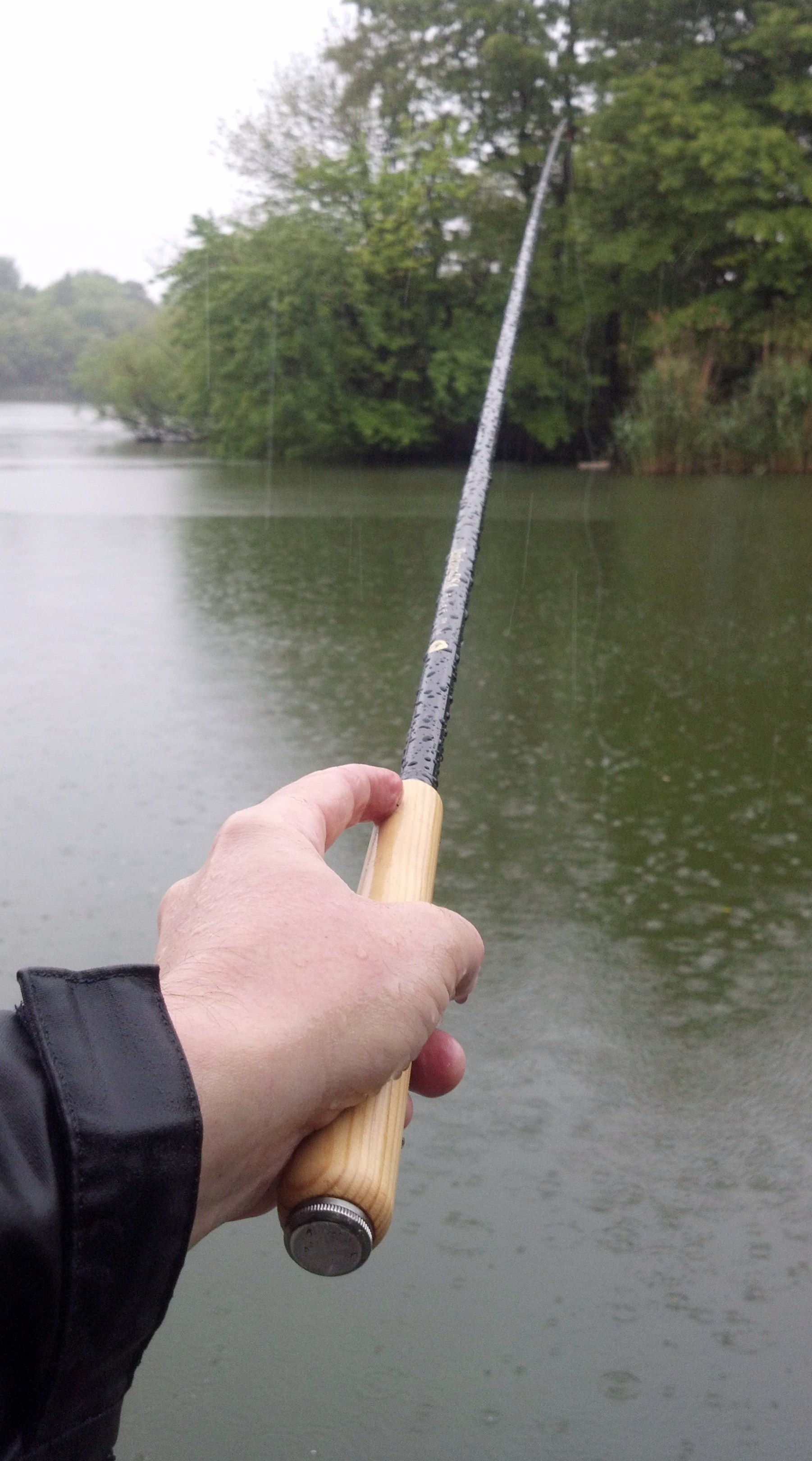
The morning mist had turned heavier and steadier in the outer borough. The scene inside the park, still in view of Parkside and Ocean Avenues, consisted of a giant rinsed salad. There was a steady breeze to give it all rustle and the jade surface of the lake a little ripple. Best of all for me, given my purpose, was no one else in sight. The real advantage of city fishing during inclement weather is the removal of the unwanted wildcard: individuals and crowds who use the park for purposes other than angling. When the lakeside is devoid of children playing, mothers calling, and old duffers drinking, the fish are much less spooked and casting is far less stressful. I don’t have to watch my back for “stick ’em up!” or potentially litigious passersby who could get hooked by a backcast.

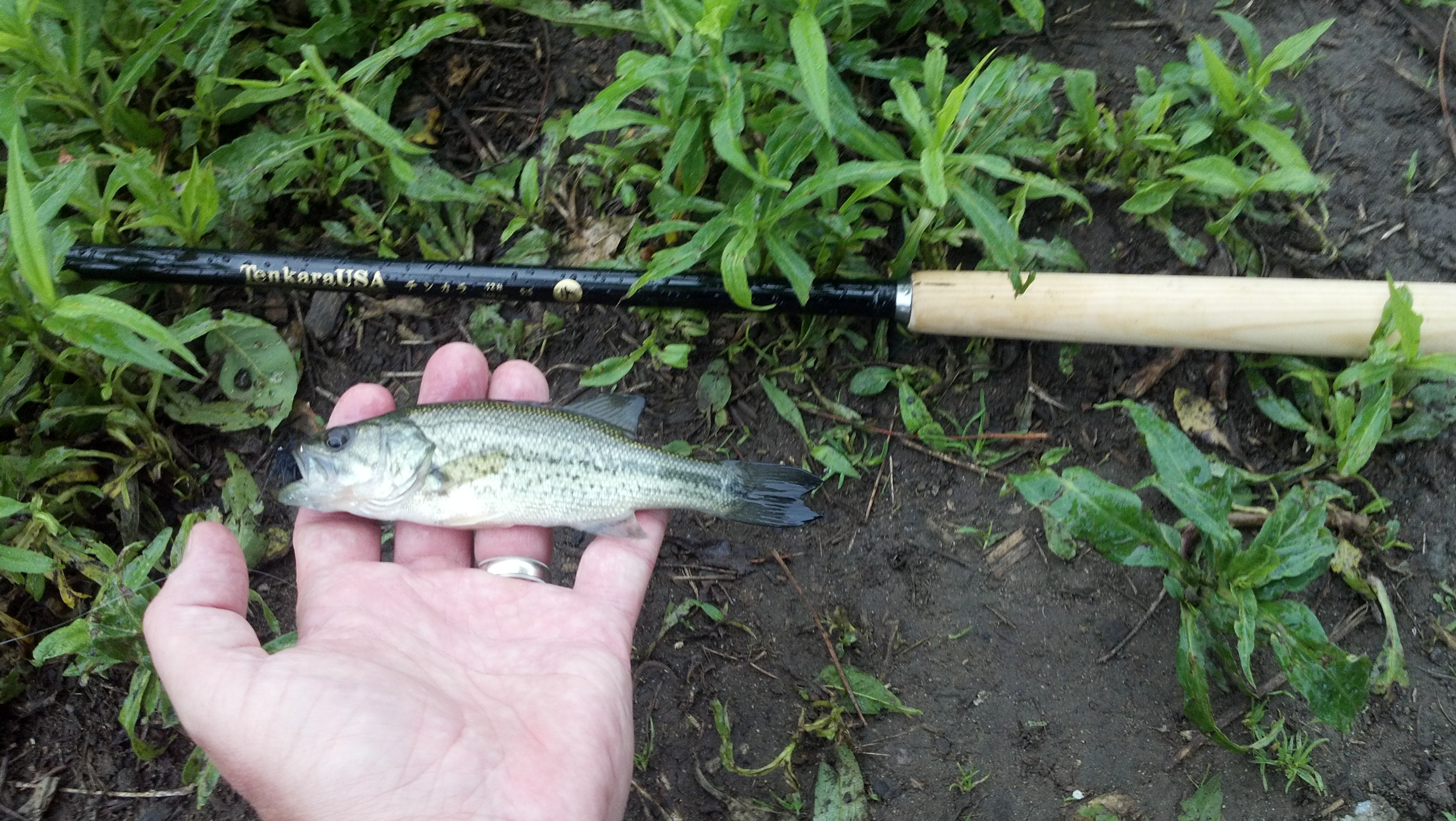
I kneeled on a lush hummock, knotted on a size 10 Black Woolly Bugger, which was to be my one and only tenkara code streamer for the day. The pattern’s size and silhouette fit my estimation of what would look best from a fish’s point of view, considering the overcast white sky. A largemouth bass concurred after a few casts. Tiny, yet feisty, my first Brooklyn fish caught on tenkara took its cue from my most recent book; it was a small fry.

That’s one small fry for a tenkara angler. (photo taken 05 15 2012)

The fishing, and catching, continued from that encounter. The prospecting approach had me probing little coves, casting along the edges of cattails, and bending below overhanging branches. Tenkara, specifically the level line, allowed me to achieve these feats of fishing with much more accuracy and gentility than a 5-weight matched with floating fly line could.

Working a Woolly Bugger in the rain. (photo taken 05 15 2012)

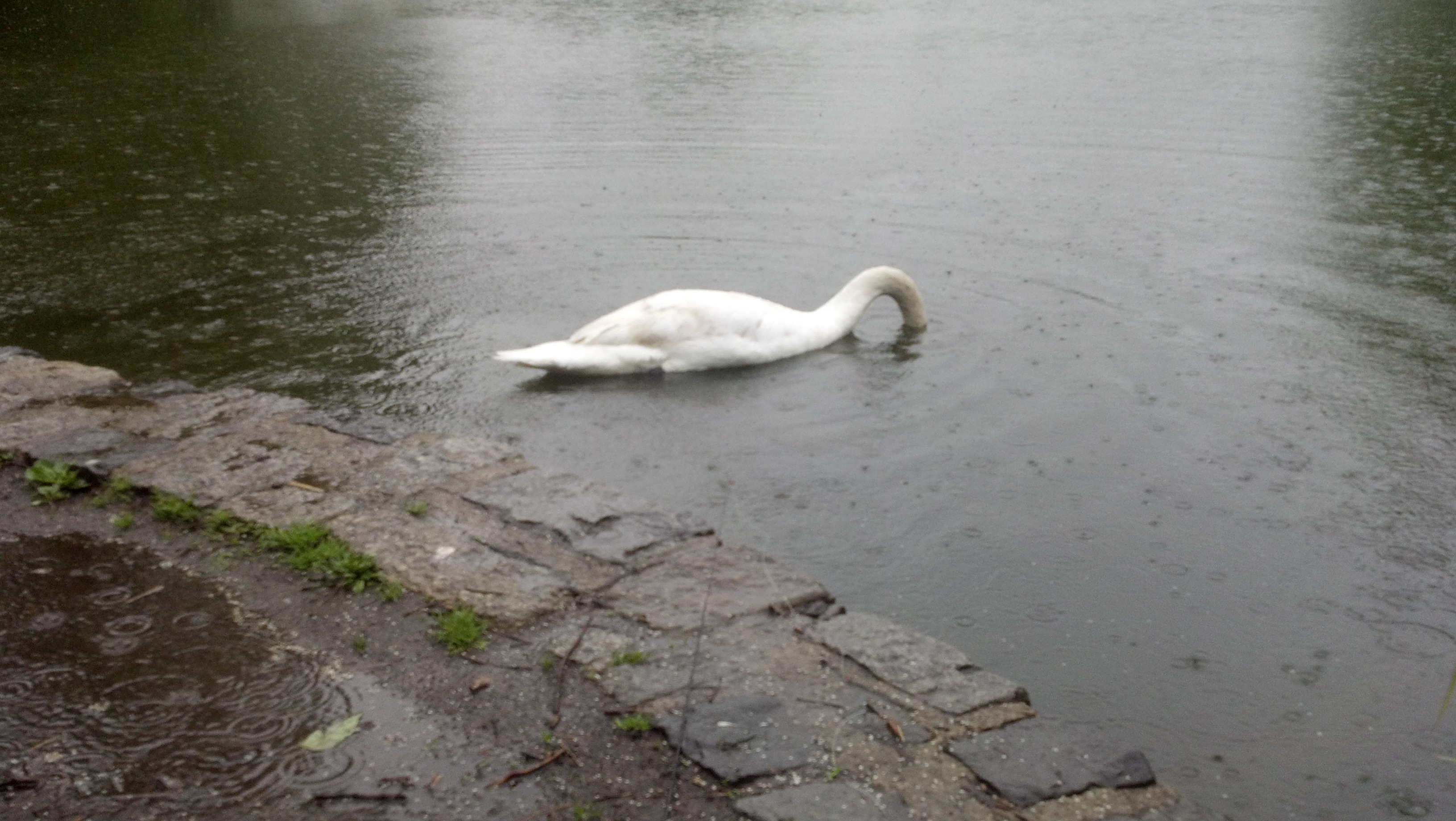
There was also much to hear and see on the sidelines. Red-winged blackbirds sounded their rusty gate calls. Mallard ducks mumbled around me. One large swan visited when I paused to tie on a fresh tippet. The bird dipped its head below the waterline as it foraged, and then flashed me a look after it had finished; a look as if to say: “There are some fish down there.” I targeted the edge of some nearby abandoned bluegill beds and was in fact rewarded with a largemouth bass that made an athletic corkscrew leap above the lake.

Prospecting, swan style. (photo taken 05 15 2012)

Brooklyn Largemouth Bass. (photo taken 05 15 2012)

Another highlight I found along the bank was clusters of yellow flag, Iris pseudacorus: the wild iris that Henry David Thoreau admired so well in Walden. The middle of May marks the peak blooming period of this flower in the New York region and, on a day as overcast as this one was, the brilliant petals glowed, containing, it seemed, all of the bright light energy of the sun.

Yellow Flag, Iris pseudacorus. (photo taken 05 15 2012)

Once the rain turned up a notch after the noon hour, the bite declined, eventually ending. Sustained shivers started to shimmy up and down my back. Even the birds silenced. The only sound was the sizzle of the rain impacting on the lake and my mind’s voice encouraging departure. The afternoon was young, but seven fish caught and numerous near misses had given my first tenkara adventure in Brooklyn a solid B . . .

. . . for Bluegill.

(photo taken 05 15 2012)

– rPs 05 15 2012

Comments (2)

A Tenkara Fly Code

A Tenkara Fly Code . . .

A tenkara fly code selection, including, row one: Light Cahill, Elk Hair Caddis; Deer Hair and White, Grey Wool and White; Amano Kebari, Royal Coachman; row two: E-Z Pheasant Tail Nymph, Pheasant and Orange; Muddler Minnow, Silver Tinsel Bucktail. (photo taken 04 30 2012)

One of the most influential artificial fly theorists of the last century was Vincent Marinaro. He was born, raised, and fly fished in the same western and central Pennsylvania region where I lived the first forty years of my own life. Limestone spring creeks and their rich insect hatches fascinated him and his approach, which he documented in two major works: A Modern Dry Fly Code (1950) and In the Ring of the Rise (1976).

Marinaro’s theory of the fly as related in his Code centered on two premises: the first was that small patterns were more effective; the second was the wing was the thing, the part of the fly that really mattered given the upward perspective of a feeding trout. What has risen from his opinion, as well as those of Halford and Skues, Flick and Meck, and a long line of others, is a cornucopia of patterns that imitate a world of fish food items that live somewhere within the water column and the calendar year.

Tenkara has come in recent years to the forward perspective of some western anglers, carrying with it a more simplified overall approach. This philosophy applies as well to the fly pattern. Imitation in the tenkara code goes only as far as tying a fly that matches the general silhouette of “insect” or, even more generically, “forage’ . . .  The rest of the game is the fishing process, placing and manipulating a pattern to provide it life-giving allure. Thus, it is not surprising to find a tenkara angler who carries just one pattern in the box. Different sizes of the fly, perhaps or for sure, but still only one pattern.

I have contemplated the western match-the-hatch tradition and the tenkara one-fly philosophy and have settled on my personal compromise: A Tenkara Fly Code.

The basics are simple: a fly pattern that imitates an insect can be large or small, floating or sinking, light or dark. That stated, my fly box will hold eight (8) flies to imitate insects plus an additional two (2), a large and a small streamer, to imitate minnows and crayfish. Here is the breakdown:

2 light floating (one large, size 12; one small, size 16)

2 light sinking (one large, size 12; one small, size 16)

2 dark floating (one large, size 12; one small, size 16)

2 dark sinking (one large, size 12; one small, size 16)

2 streamers (one large, size 8; one small, size 12)

This approach assembles a manageable assortment of ten (10) flies total, which can be realized in a single large and small example of five basic patterns, or ten separate patterns, each individual fitting into one of the ten specific slots in the size department. This second approach offers a little more variety, thus flexibility, especially in the streamer category, which has a wider range of organisms to cover. A trip to a freestone stream could include a large Muddler Minnow to imitate sculpin and crayfish; a small tinsel bucktail to imitate shiners and other silvery minnows. A trip to a pond might require a Black Woolly Bugger to represent a leech; a Gray Ghost to simulate a smelt.

That’s a whip finish for me, for now. The fun part, applied fly pattern theory practiced along a stream or around a pond, comes next.

– rPs 04 30 2012

Leave a Comment

The Answer: TENKARA

The Answer: TENKARA . . .

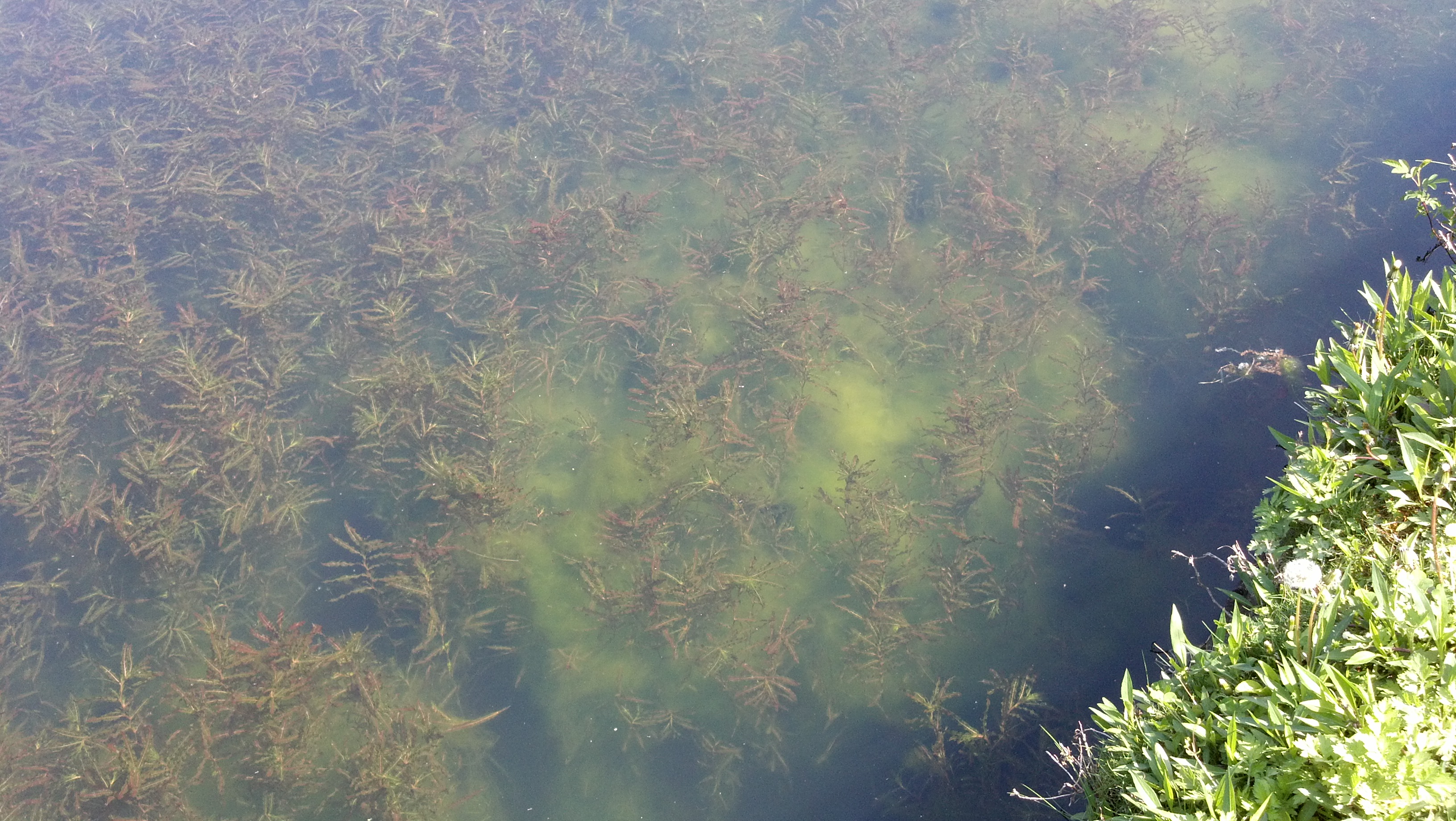
Curly-Leaf Pondweed poses the question: How to Fish? (photo taken 04 19 2012)

Classical Japanese painting has depicted fishermen throughout its history. One of these works, “Catching a Catfish with a Gourd”  – the illuminated poem rendered by the monk Taiko Josetsu in 1413 during the Muromachi period– is the most famous example  His visual rendition of a koan, a Zen question designed to enlighten the student on new ways of seeing, was in itself a revolution in Japan. The painting, full of mist and sparse bankside vegetation, is credited with establishing suiboku, the monochromatic ink style, as well as a deeper sense of space in the pictorial plane. The latter achievement was not unlike the technical experiments early Renaissance masters were tackling at the same time in Europe.

My first visit to Central Park’s ponds this season presented me with a similar question inspired by nature and the fishing situation. Harlem Meer, bordered by stands of willow and cattail just beginning to go green, appeared healthy and full of spring vigor on a crisp April morning. The pond also resembled a great soup bowl of salad greens. The plant responsible was curly-leaf pondweed, Potamogeton crispus, an aquarium plant that has escaped and thrived to the point where it now has a cosmopolitan (global) distribution.

The wind was negligible, the pond calm, water clarity and visibility excellent. Several species of fish were cruising within the narrow water column between the top of the weed beds and the surface. Nymphs, legs kicking from curly leaf to curly leaf, were being hunted and surely consumed. I spotted several avoiding the strike zone by milling about the Meer’s edge. No fish were rising, but numerous swirls indicated active subsurface feeding.

Casts would have to be more than delicate in this situation. A sinking fly of any type or size would surely foul in the plants after just a brief one or two count.

The Question: How to Catch a Fish in a Meer Full of Pondweed?

The Answer: TENKARA

The physical characteristics of the tenkara level line turned out to be the solution to the fishing problem, that being: How to fish a sinking fly in a quick, delicate manner over the weeds? Had I brought my conventional 5-weight, I might have endured a headache rather than enjoyed a fishing trip. The floating fly line, as light as it is, would have been still too heavy for the calm conditions and narrow window of fishability. Even a delicate cast would have rippled the water enough to spook the fish hunting nymphs over the pondweed flats.

My 5x tippet ended with one of the small family of nymph and wet fly patterns I can tie. The first is predominately brown, made simply from pheasant tail feathers and black thread. Another utilizes gray knitting wool matched with a natural deer hair wing. I also had several Pheasant and Orange soft hackles with me, although I wish I had brought some tied with olive floss as well. Many of the nymphs I saw were green in hue.

The twelve-foot length of the Ebisu rod matched with level line allowed me to cast as far as twenty-five feet out into the Meer. I retrieved the nymph with a high stick and short twitches. The fly casting techniques developed for tight spaces, the roll cast and bow and arrow, all entered into the process. There were plenty of irregular pockets within the flat expanse of weeds. Here I could let a pattern sink for an additional second, which often resulted in a connection with a pouncing fish, including:

Largemouth Bass

(photo taken 04 19 2012)

Bluegill

(photo taken 04 19 2012)

Black Crappie

(photo taken 04 19 2012)

One surprise catch eluded my camera; my first ever golden shiner, which inhaled a pheasant tail nymph. I knew this species resided in the Meer, but this was my first close encounter with one. Pulling this foot-long fish from a springtime pond filled me with the same aesthetic I perceive when reading and viewing the exploits of British coarse fishing as documented by my friend, Dominic Garnett, author of Flyfishing for Coarse Fish. His blog “Crooked Lines” is full of waterscapes that look like Harlem Meer and fish species that resemble the golden shiner, which has the coloration of a tench and the profile of a rudd. I landed the fish, fair and fully, but it flopped away from the camera eye and rolled into the water with the dexterity of a martial artist. Is the golden shiner, perhaps, an Anglophile in style with the sporting acumen of a Japanophile? Maybe!

Questions. Questions. I am not a Zen master, nor am I an expert tenkara fly fisher. I have, however, solved the most recent koan fishing fate has cast my way:

The Question: How to Catch a Fish in a Meer Full of Pondweed?

The Answer: TENKARA

– rPs 04 20 2012

Postscript:

View Taiko Josetsu’s “Catching a Catfish with a Gourd” at Wikipedia by following this link:

http://en.wikipedia.org/wiki/File:Hy%C3%B4nen_zu_by_Josetsu.jpg

Visit Dominic Garnett’s “Crooked Lines” blog by following this link:

http://dgfishtales.blogspot.com/

Comments (2)

Kendo Meets Tenkara

Kendo Meets Tenkara . . .

French Creek fallfish that fell for tenkara. (photo taken 04 15 2012)

When earlier I addressed the theme of all things Japanese, the one that has paralleled the course of my life, I omitted a single important example, which I wanted to save for this, the proper moment.

My wife, Maryann, has also cultivated a close relationship with the culture of Japan. When we met, during the wedding day of a mutual friend, we discovered we both had an affinity for the Japanese that went far beyond food. Her primary connection turned out to be the martial art of kendo: the way of the sword.

Best described to the uninitiated as Japanese fencing, kendo is a fascinating, beautiful, and artful approach to swordsmanship, or kenjutsu. When I first visited Maryann’s Manhattan-based dojo, Ken-Zen Institute, I found her and her fellow students, or kendoka, to be serious, even reverent, during study and practice. Under the tutelage of their sensei, Daniel T. Ebihara, Kendo Kyoshi, 7-Dan, each class first divides into two sides, which face each other and follow a series of exercises: a contemplative warm-up; kiri-kaeshi, in which strike centering and stamina are cultivated in successive turns; and wazo-geiko, when kendoka learn and rehearse techniques with a designated partner.

What follows is the dramatic peak of a kendo class. Kendoka suit up into full body armor, the distinctive indigo bogu, which is necessary for Ji-geiko. This part of kendo employs undirected practice in which all assembled fight one another at once. The dojo’s floor, polished wood similar to a basketball court, resounds with the barefootwork, fumikomi-ashi, combined with the collective kiai, the emotional vocal unleashing of the fighting spirit. When this part commences, the experience can be rendered in words as a human eruption. The violence of the sound and controlled chaotic motion of the combat produce a visceral effect in the third-party viewer, an effect that reminds us that kendo is battle.

Ji-geiko in action at the Ken-Zen Institute, NYC. (photo taken 01 08 2012)

Conversely, my practice of fly fishing is commonly called the quiet sport. I was delighted, then, when Maryann not only expressed an interest in trying my way of the fly rod; she actually found she liked the experience. The 5-weight, in particular, appealed to her. The structural logic of the rod, this fishing tool, neither intimidated nor baffled her. Several years of study with the bamboo shinai translated into an easy transition to the fishing instrument. She was, to use the phrase, a natural.

I proposed to her in June of 2009, a few weeks after she had landed a large bluegill on an Olive Woolly Bugger. That first fish moment had all the details of a classic tale. We were casting along the grassy banks of Harlem Meer in Central Park. A passing breeze and a bad reaction on my part created a bird’s nest so complex I had to sit down on the ground to unravel my leader. A few minutes passed, and I heard her call my name. I thought she must have fouled up her line in the wind as well. When I looked up to see, I saw instead her 5-weight bent, its tip vibrating with life: “Fish on!”

We were married a few months later. I moved to New York City to join her. We have since fished freshwater and saltwater, warm water and cold water, lakes and ponds, rivers and streams. Whatever the fishing situation, we seem to find ourselves on the same side of the bank. We are more than life partners; we are fishing buddies.

Last year, when tenkara began to appear again and again on my online angling reading radar, Maryann encouraged me to learn more, to purchase a rod, and then to learn even more together with her. She liked the symbolism embodied by a Japanese sword and a Japanese fly rod residing under the same Manhattan roof. I agreed, but waited until the spring of the year, mainly so we could jump right into the experience after receiving the equipment.

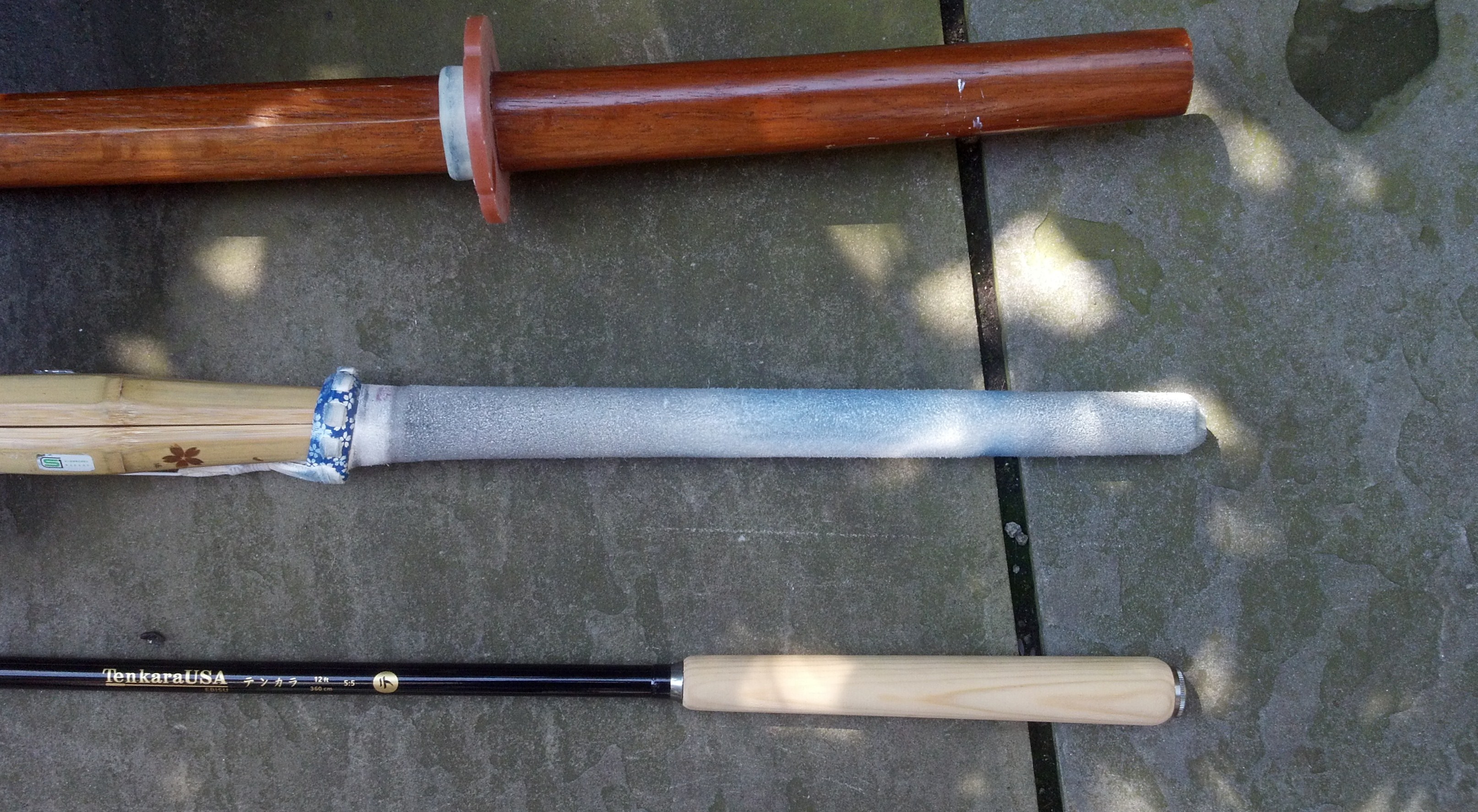
The simplicity of the tenkara rod, especially the fact it supports no reel, continues to feel fresh to me, yet it has a familiar appeal to her. The red pine handle of our Ebisu model, in fact, resembles the tsuka of a bamboo shinai and hardwood oak bokuto.

From top to bottom: bokuto, shinai, tenkara. (photo taken 04 16 2012)

Close-up comparison of the tsuka. (photo taken 04 16 2012)

The traditional grip, with the index finger extended, allows the tenkara rod to be held at an angle familiar to a kendoka:

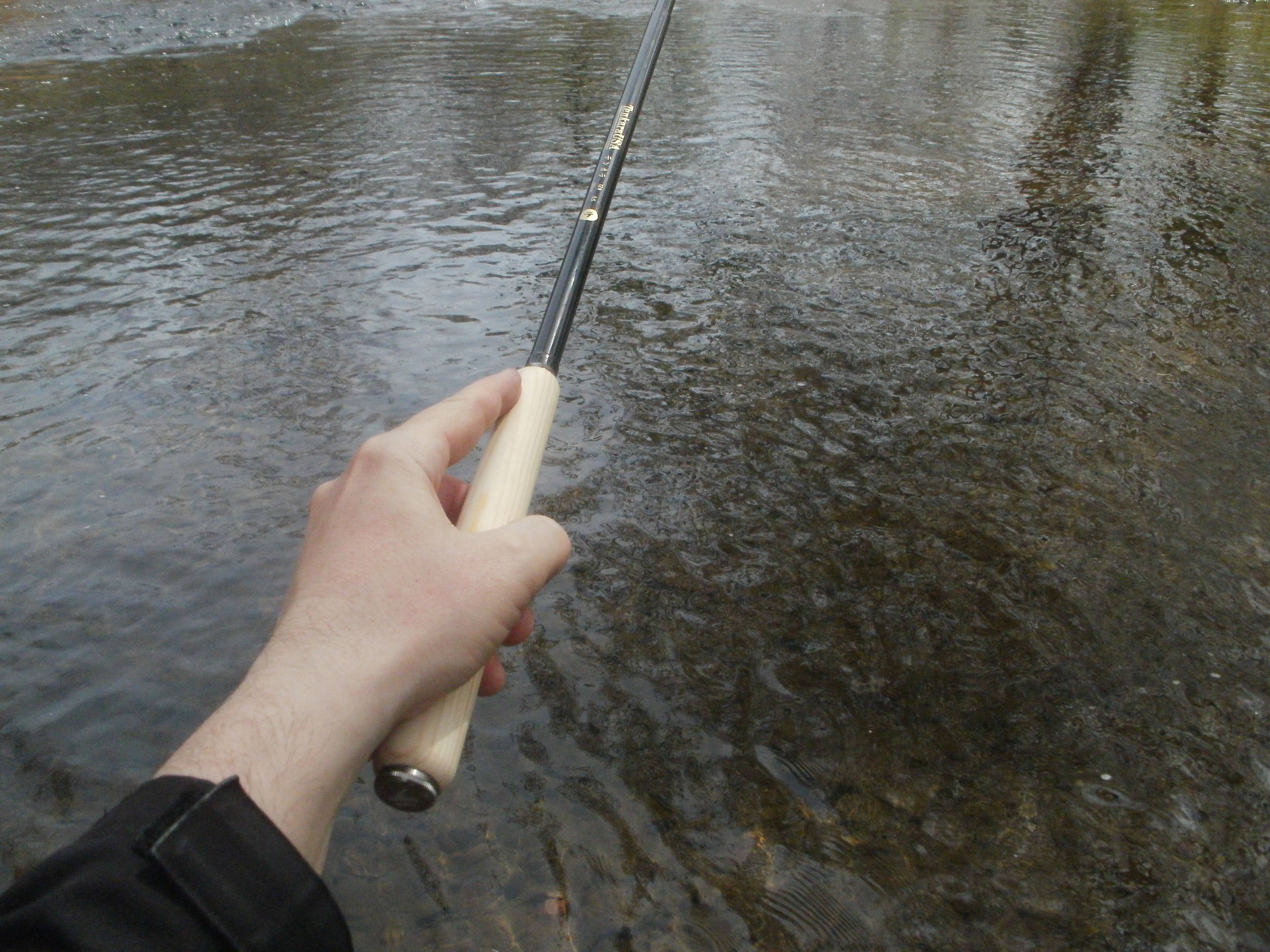
Tenkara grip: note position of index finger. (photo taken 04 14 2012)

The narrower range of ideal casting motion fits the technique of those accustomed to striking with a sword. When done correctly, with feeling, and surrounded by a pretty natural setting, a successful 3-Dan kendoka turned fly fisher can easily slip into the zone:

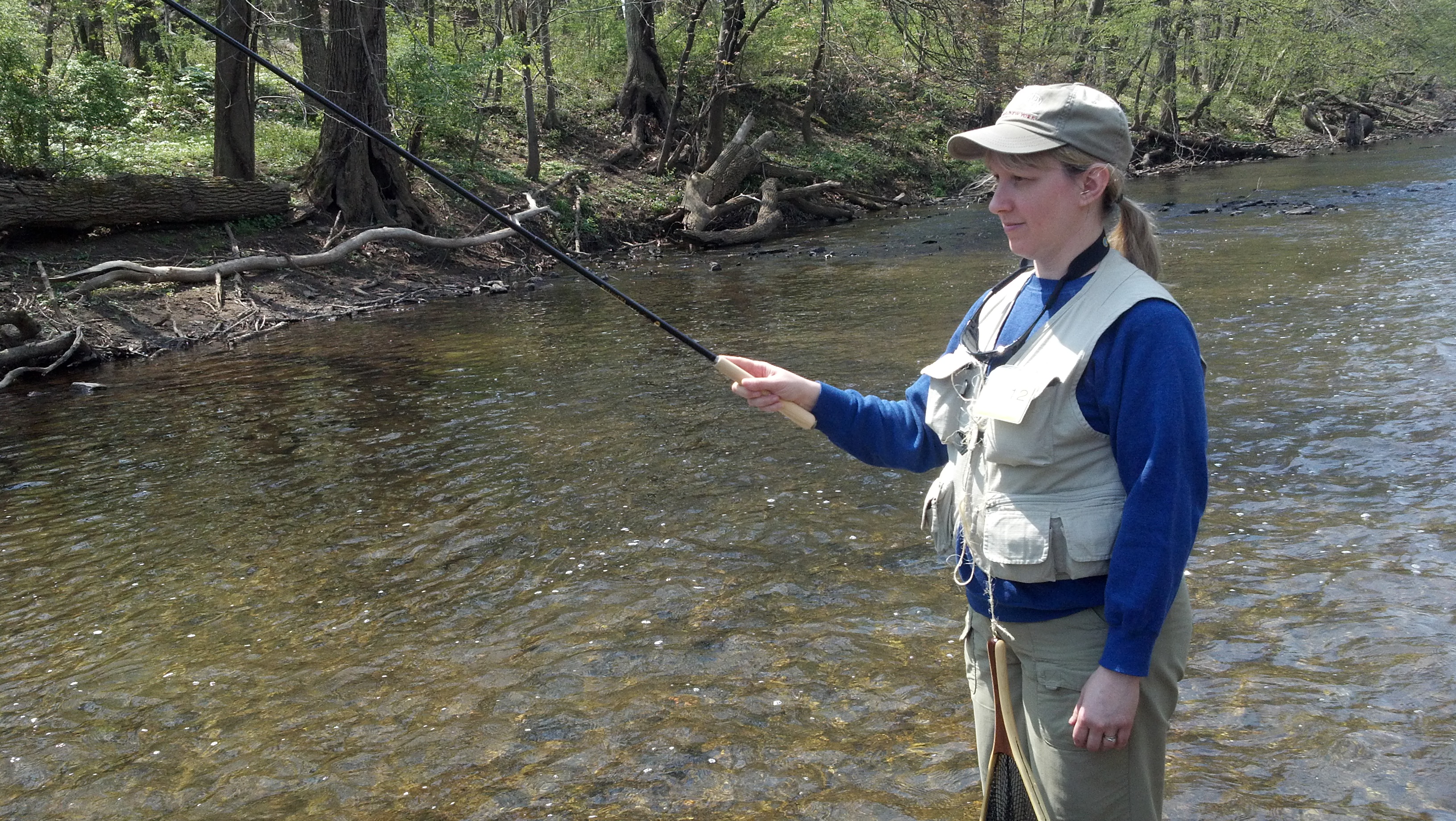
Maryann, casting the Ebisu model tenkara rod. (photo taken 04 15 2012)

Recently, we spent Maryann’s birthday weekend in southeastern Pennsylvania with her twin brother and parents, who live just a few blocks from French Creek, a freestone stream suited to the tenkara rod and method. The flow averages between thirty and forty feet in width along its main stretches. Several riffled areas, bends, and chutes narrow down to ten to fifteen feet. Here there are brown trout, some smallmouth bass, and one of my favorite fly-friendly species, fallfish, perhaps the gamest member of the chub family of minnows. The fallfish averages between six and twelve inches in length and, being insectivorous, makes a great fly rod quarry.  Once hooked, a fallfish will fight hard like a baby tarpon, a fish which it actually resembles, albeit one that is one-thousandth of the size.

Fishing the tenkara along French Creek created a pleasant experience. The casting proved to be easy and light. We both found the long rod and level line could swing an Amano Kebari or a soft-hackled fly into the kind of small bathtub depressions found in front of fallen trees and behind projecting stones. Tiny pools like these often hold all the catchable fish in shallow stretches overlooked by spin fishers who require greater depth. The result, then, is more fish for the fly fishers, which during our weekend included brown trout, common shiner, smallmouth bass, and fallfish.

A small stream, a simple rod, a single fish: these three can become one under a rising spring sun.

Maryann, out standing in her home water of French Creek, holding her first tenkara-caught fallfish. (photo taken 04 15 2012)

– rPs 04 16 2012

Leave a Comment

By Ebisu

By Ebisu

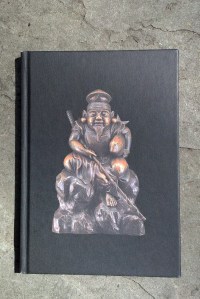
Ebisu: front cover of the catalogue for The Vision and Art of Shinjo Ito. (photo taken 04 10 2012)

A recurring theme in one’s life may be perceived either upon past reflection or by present reminder. When one encounters the latest example of the latter and, for whatever reason, be it curiosity or impulse, begins to trace the line of occurrences backward from there, something profound often is found staring one in the face.

One leitmotif that has appeared along the road of my life like a string of green lights indicating “Go!” is all things Japanese. The root occurrence, the one I remember, was a seventh grade geography paper. I pulled JAPAN out of an upturned hat resting on Mr. Armstrong’s desk.  The World Book encyclopedia and a trip to the Carnegie Library followed, supplemented by visual and historical details culled from James Clavell’s Shogun, both the novel and the nine-hour television miniseries, which happened to air at roughly the same time as my assignment.

By the time I arrived at university in 1985, Japan was a dominating player in the world’s coalescing global economy. My plan at Penn State was to study print journalism. The idea of me being an arts and culture reporter in Tokyo lit my imaginative fire. I enrolled in a four-credit Japanese language class.

Mr. Takahashi, sensei, my instructor throughout my formal study of the language, was an enthusiastic young man who sported black glasses and a grey tweed coat. He taught us, he said quite frankly, the way he had instructed grade school children. Each morning we began by vocalizing the entire hiragana alphabet: “a, i, u, e, o . . . ka, ki, ku, ke, ko  all the way through to the concluding “wa, o, n”. . . The consonant and vowel combinations rolled off my tongue with a clear, staccato cadence that lacked the multisyllabic twists of the German that had challenged and daunted me throughout high school.

Classes in East Asian philosophy and history of art followed until I had accrued enough credits for an East Asian studies minor, although I was too distracted by college life to declare one. The thought front and center in my mind back then was a single detail that I noticed was present in a lot of the images I studied, paintings which were actually illustrated poems. Many, it seemed, depicted some variation on the theme of a contemplative monk, sitting beside a pond or stream, holding a rod without a reel, fishing.

University life’s dreams translated into adult life’s reality; I moved to Philadelphia rather than Tokyo. I spent two decades within its red brick setting, focusing on library science by workday and creative writing the rest of the time. The book dominated my life, so I naturally kept up on my reading of Japanese fiction, everything from the pop culture lit of Banana Yoshimoto’s Kitchen to the metaphoric epic of Yasunari Kawabata’s The Master of Go. His storytelling was so powerful that I bought a set and took up the game of black and white stones with a few other Japanophiles who played on weekends beside the large front windows of a nearby coffee shop called The Last Drop.

Besides café culture, there was music – the yin of acoustic guitar and the yang of synthesizers – which was a serious pastime of mine, one that bloomed into something bigger than a hobby in 2006. A friend who managed another café called La Colombe, and who also owned a small recording studio, invited me to play keyboards for a series of sessions. The goal of the project was to work some songs into shape for Murai, a vocalist who sang both in English and Japanese. During rehearsals, the occasional Japanese word I could recognize – like neko (cat) – would inspire me to improvise a grace note, a pitch bend, or a sound effect that often stopped the song, but always with a smile or laugh from the rest of the band.

I sometimes did cat sit for the husband and wife team of Murai when they visited her family, natives of the bucolic horse country on the northern island of Hokkaido. When once her parents visited the states, they invited me, the cat man, to a dinner hosted at her apartment. When, at the start of the meal, I mentioned I spoke some Japanese, her father asked me what I did. I told him I was a writer and a  fly fisher; I wrote about using a rod, reel, and line tipped with a hae, which is Japanese for fly, the insect. Mr. Murai responded with a humorous look and corrected me. The hae, I learned, is the kind of fly that crawls on a window screen. “Kebari,” he said, “this is the name of a feathered lure designed to look like a fly.” This, then, from the source, was my initial introduction to Japanese fly fishing.

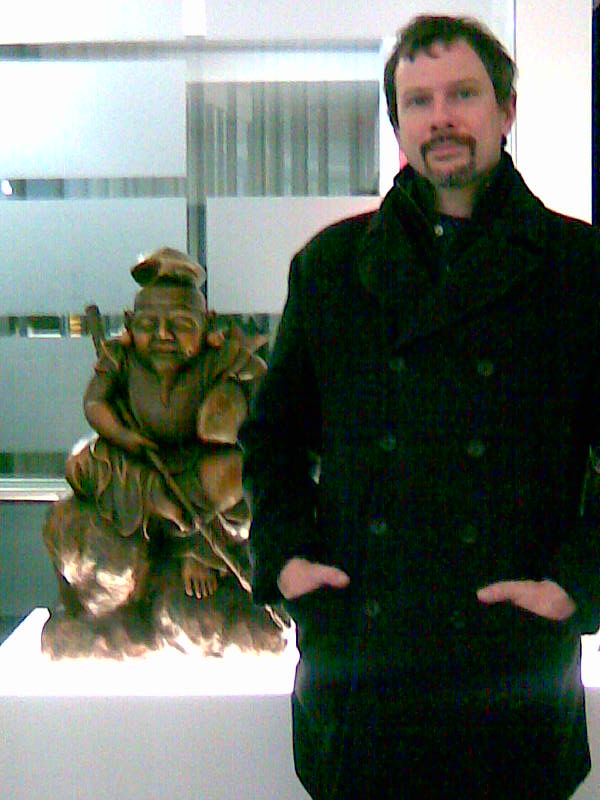
Perhaps the most significant confluence of the Japanese with my path occurred in 2008, and it was because this one was to have a profound impact on my fishing writing life. During February of that year, my then fiancée and I visited the Milk Gallery in Manhattan to see the  “Art and Vision” retrospective of the Japanese Buddhist master and artist, Shinjo Ito. One of his pieces in the exhibit was a cast bronze sculpture of Ebisu, the Japanese god of fisherman, good luck, and workingmen, as well as the guardian of small children’s health. He is one of the Seven Gods of Fortune, and the only one of the seven to originate in Japan.
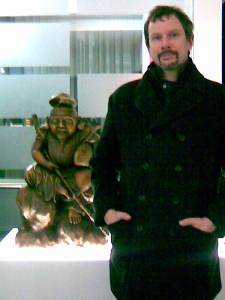
Self, standing by Ebisu by Shinjo Ito at the "Art and Vision" retrospective, Milk Gallery, NYC. (photo by Maryann Amici 02 2008)

I purchased a catalogue of the show and one evening, while contemplating Ito’s image of Ebisu, I experienced an epiphany in the form of a new way to spread the word about the manuscript of my second book, Small Fry: The Lure of the Little. I realized I might be able to serialize the book in the old-fashioned way with a set of biweekly installments, and do so in the most contemporary forum – online, which later came to fruition in the form of collaboration with Martin Joergensen of Global Fly Fisher. The success of its digital appearance resulted in its publication as a paperback published by The Whitefish Press in 2009. Thank you, Ebisu!

Ebisu: a Japanese god, a god of fisherman, residing in the pantheon with all of the others. The fact he was there, representing us little people casting nets and rods in search of fish, inspired a poem about the mortal masters of a related discipline, the art and craft of fly tying . . .

Patterns go
In a stream’s flow.

Fishers,
Men and women,

Tie together
As feathers and fur do

When wrapped
By thread and floss;

Their names, embossed,
Become floating sculptures.

While Ebisu was rejuvenating my own fishing life, he was at also apparently guiding another amerikajin at work on the opposite side of the country. Daniel Galhardo, a young man working in international finance, was manifesting reality from his own Japanese dreams. His experience travelling and fishing in Japan compelled him to introduce the traditional Japanese expression of fly fishing, both the unique gear and their specialized techniques, to America. To do so, he founded a company, Tenkara USA.

Marriage and a move to Manhattan filled my life in 2009. Once established, I began to encounter Galhardo’s name and angling mission on fly fishing blogs everywhere, so I paid a visit to his company’s website. The embedded videos of tenkara gear in action along narrow mountain trout streams fit my fishing style and temperament. I have always appreciated intimate environments, finesse casting, and especially small fish. Large fish, landed on heavy tackle, heave and gasp and reveal the exhaustion of their life or death struggle. By contrast, small fry are a quick, fun catch, almost playful. The way a little largemouth bass or brook trout springs from your open hand is a much more positive conclusion to a fishing encounter than the tentative, winded descent of a giant into the opaque unknown.

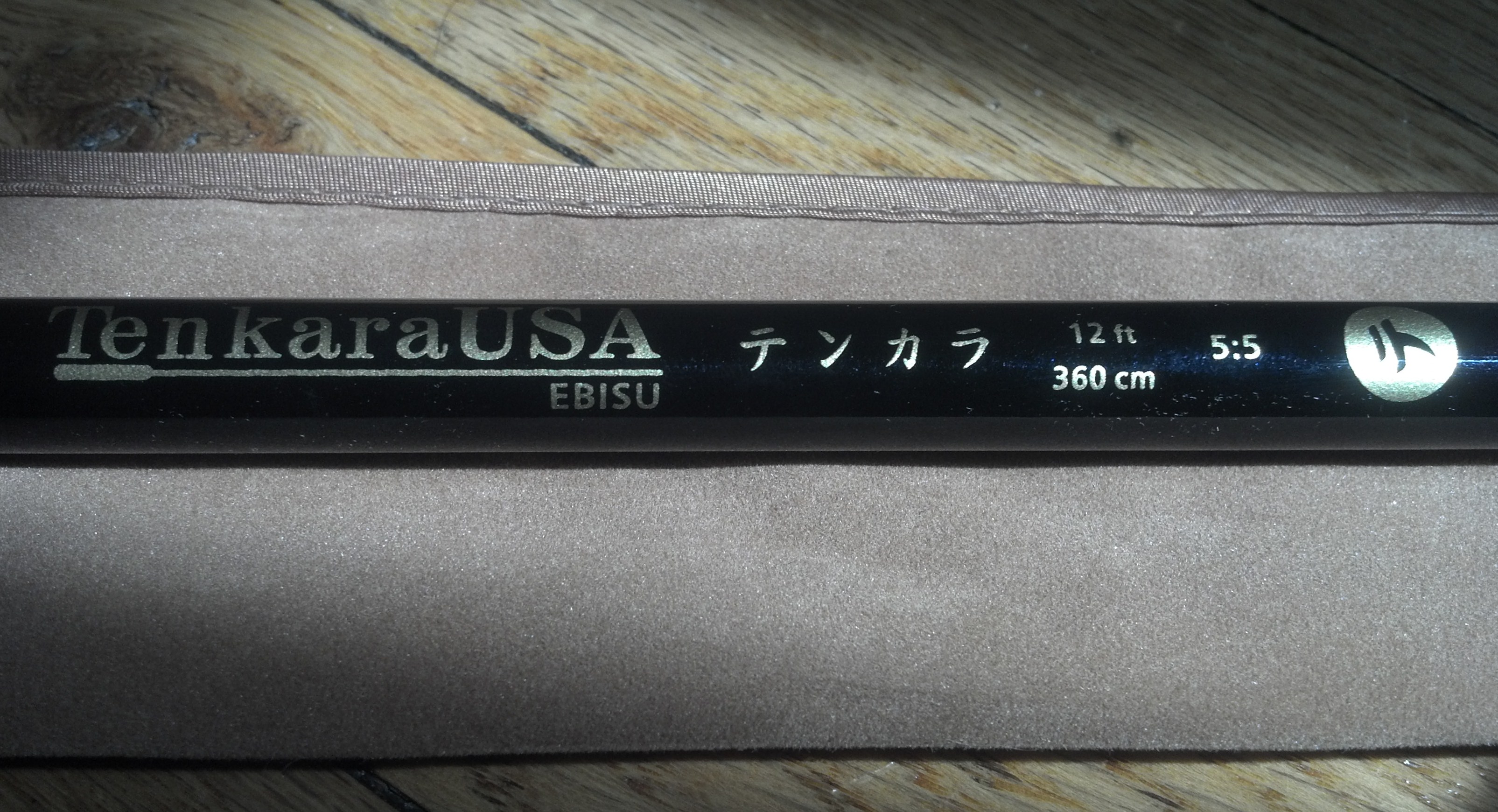
Galhardo’s Tenkara USA proved to be a kind of one stop shop that offers a complete assortment of traditional Japanese fly fishing equipment: the Kebari, lines, nets, and several different tenkara rods. One of the models his company offers is named the Ebisu: a telescoping, twelve-foot, light-action rod with a red pine handle. Of course, seeing the name, reading its description, knowing it would fit the kind of fly fishing I have long loved and written about, I pounced. I pounced the way a pugnacious sunny hits a popper floating on a quiet farm pond.
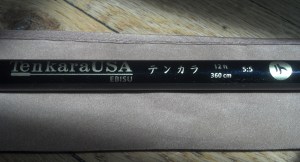
Ebisu: a tenkara rod. (photo taken 04 07 2012)

– rPs 04 10 2012

Comments (5)

Welcome

Welcome to Tenkara Takes Manhattan

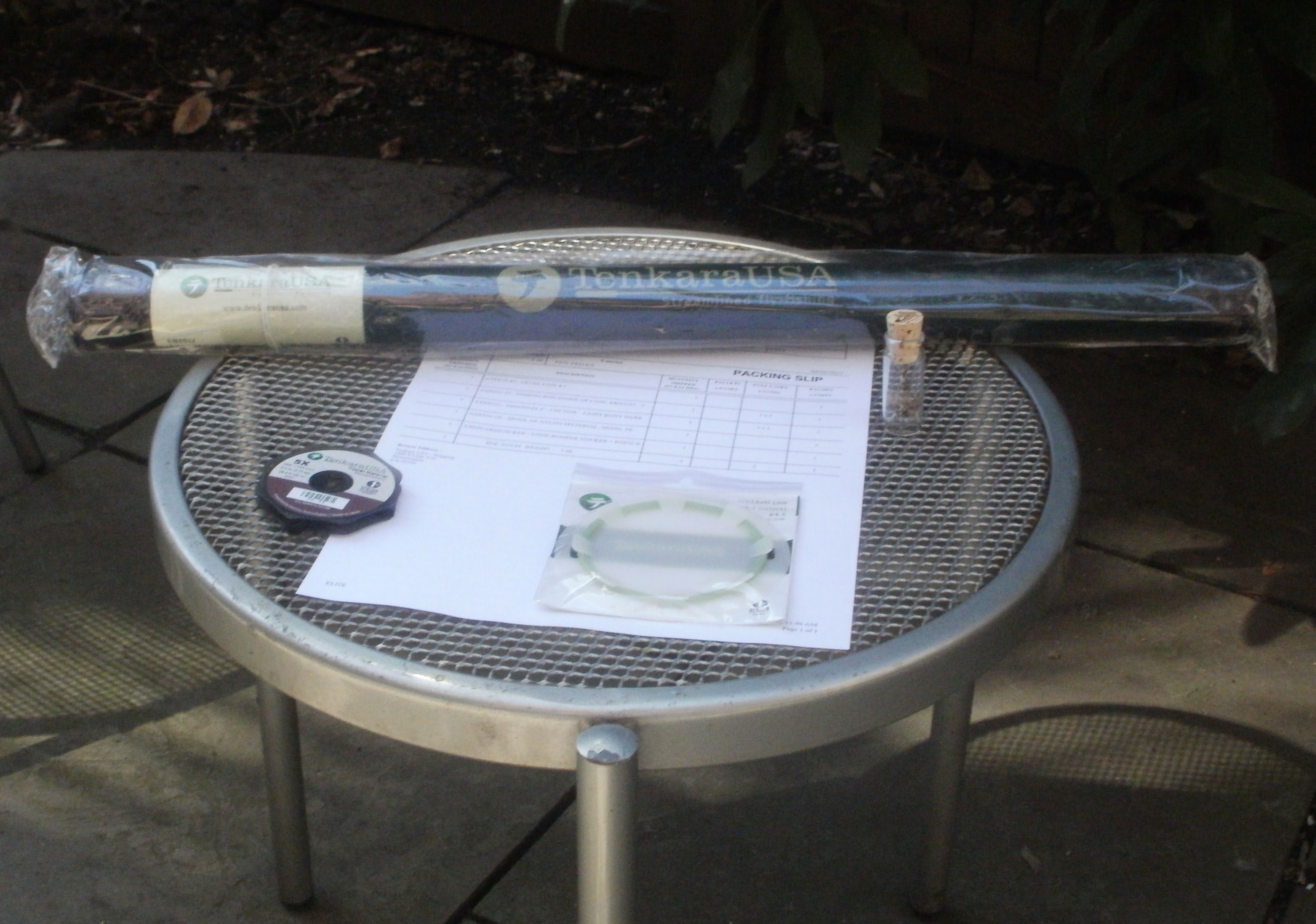
Delivery Day: a complete tenkara rig, after unpacking. This one includes an Ebisu telescoping rod, level line, tippet material, and Amano Kebari. (photo taken 04 07 2012)

Tenkara is the traditional Japanese method of fly fishing. Manhattan is one of America’s most urbanized fisheries. Tenkara Takes Manhattan is the ongoing story of urban angler, artist, and author ron P. swegman – long a proponent of streamlined fly fishing, small fish, and small waters – as he documents his investigation of East Asian angling methods, his exploration of East Coast fishing destinations, while experimenting with techniques, patterns, and fish species that are, at times, outside the flybox . . .

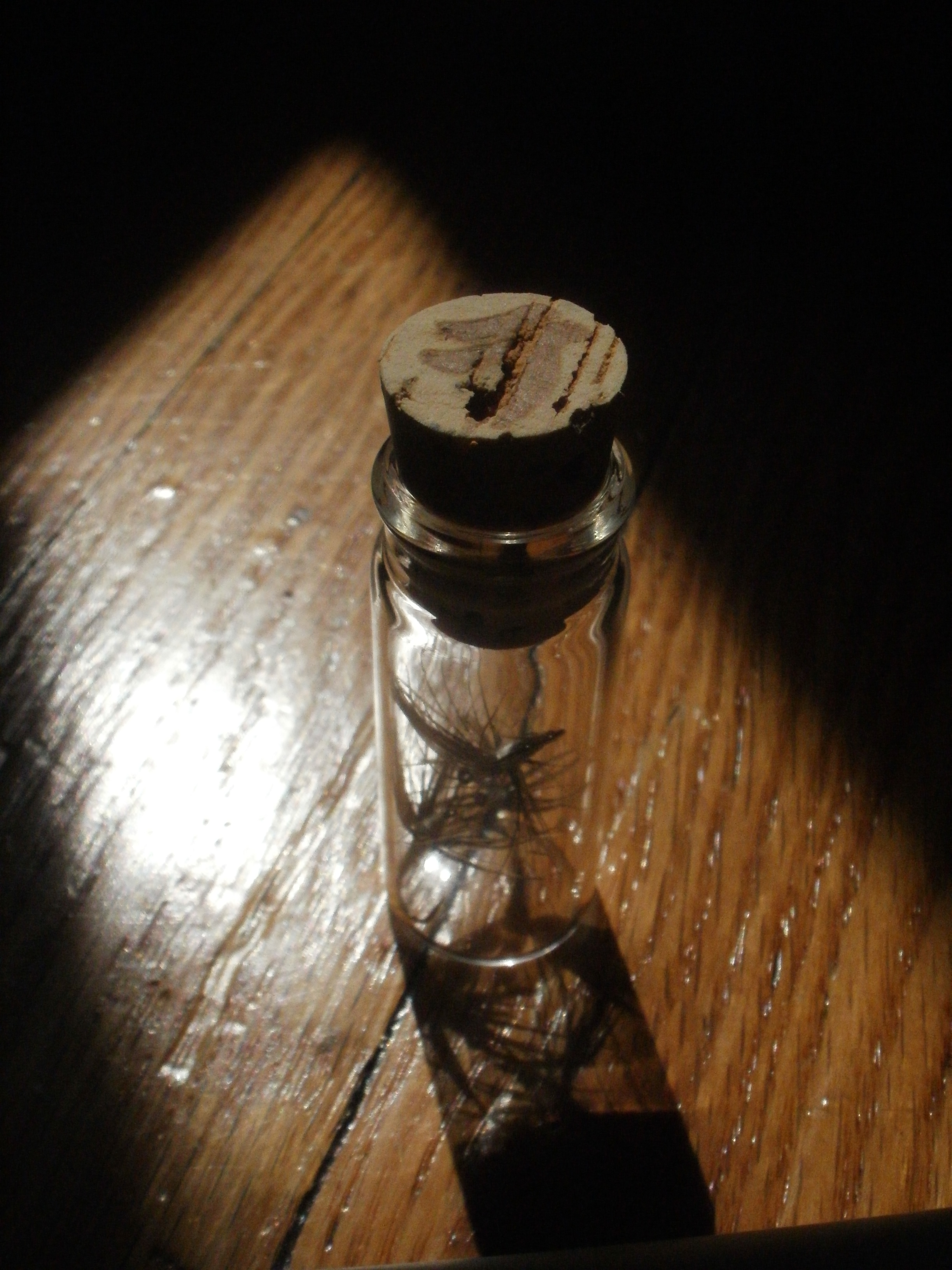
Anticipation . . . Amano Kebari flies . . . Catch the morning light. (photo taken 04 07 2012)

– rPs 04 09 2012

Comments (3)

« Newer Posts
Design a site like this with WordPress.com
Get started