Posts Tagged Tenkara

Tippets and Tibbetts

Tippets and Tibbetts . . .
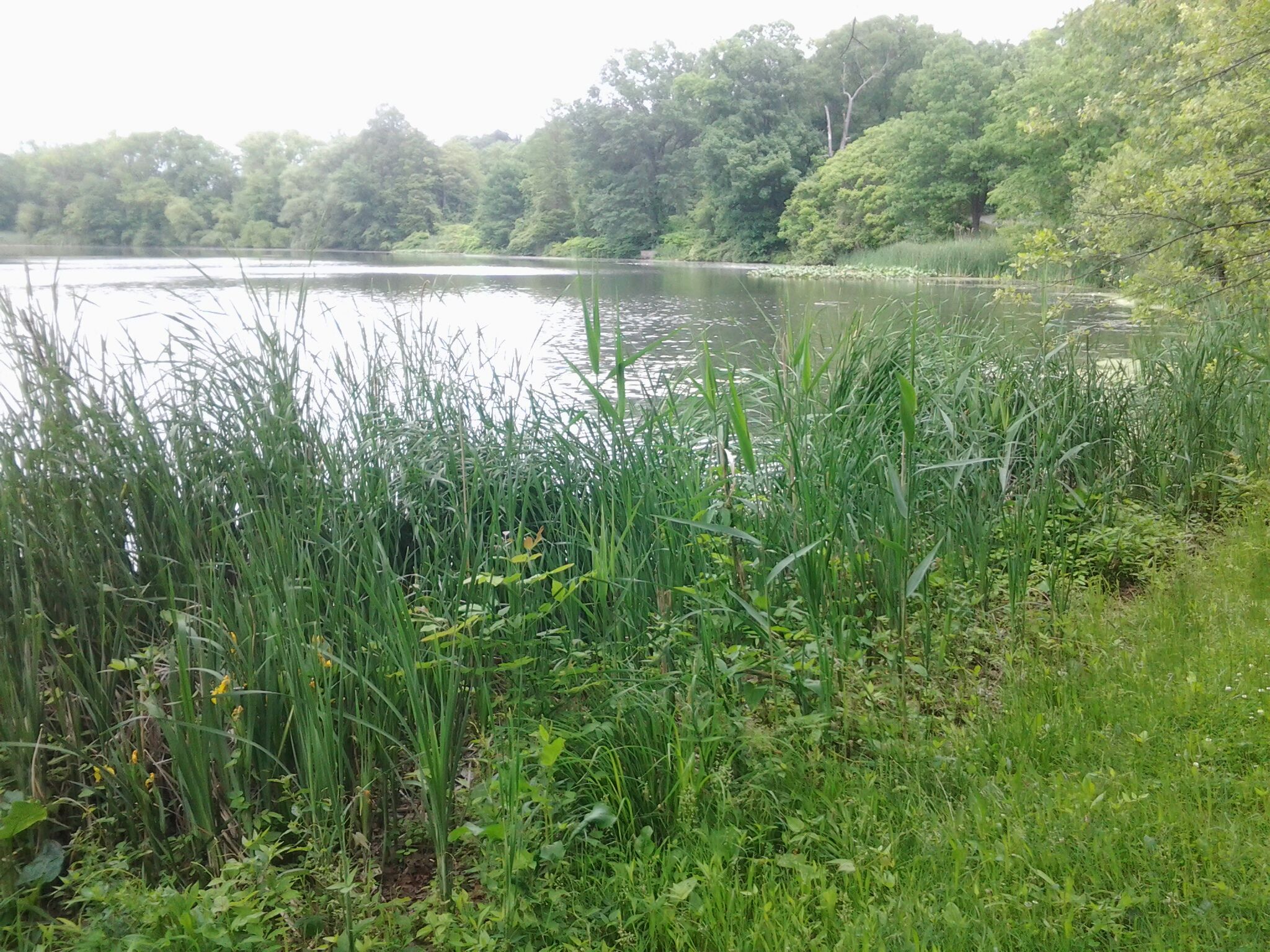
 

Tibbetts Brook (06 2015)

Tibbetts Brook
(06 2015)


George Tippett, a colonial loyalist, lost his land where a major skirmish in alliance with native tribes was waged against the British crown during the American Revolution. The battle was lost, the war was won. The outcome turned the land over and again, a name alteration emerged into a new standard, and land acquisition through marriage came to Jacobus Van Cortlandt.

Tibbetts Brook flows, rather meanders, meanders down through a forested vein in The Bronx. Two parks: Tibbetts Brook and Van Cortlandt, give the northern frontier of New York City freshwater fishing as close as the salt of the Hudson River where the striped bass swims.

Water Lily, Spatterdock, and sediment flats offer a few fit and fat Centrarchidae with an appetite. Females, finished doing duty and ready for a meal, make up the bulk of the menu in June. Scattered few have fallen for a kebari. Others have been and may be in future flushed by frisky waterfowl or a passing cyclist if one pauses to inquires “How’s the fishing?” or “Catch any?” The most polite individual encountered, the one I ally with, is instead the semiaquatic genus Ondontra. The only one of its kind, the Muskrat deserves a most elevated status for its humble, pleasant nature and mild, herbivorous ways.

Calm water, or perhaps rippled from a sustained breeze, both enjoy the presence of the solitary bass of several pounds lurking below. Patterns may take the form of a size 6 Green Guarantee streamer or perhaps a kebari of a different kind, such as the foam Panfish Spider. Experiments on the latter pattern using all game feather and fur remain ongoing and make for awesome time at the vise.

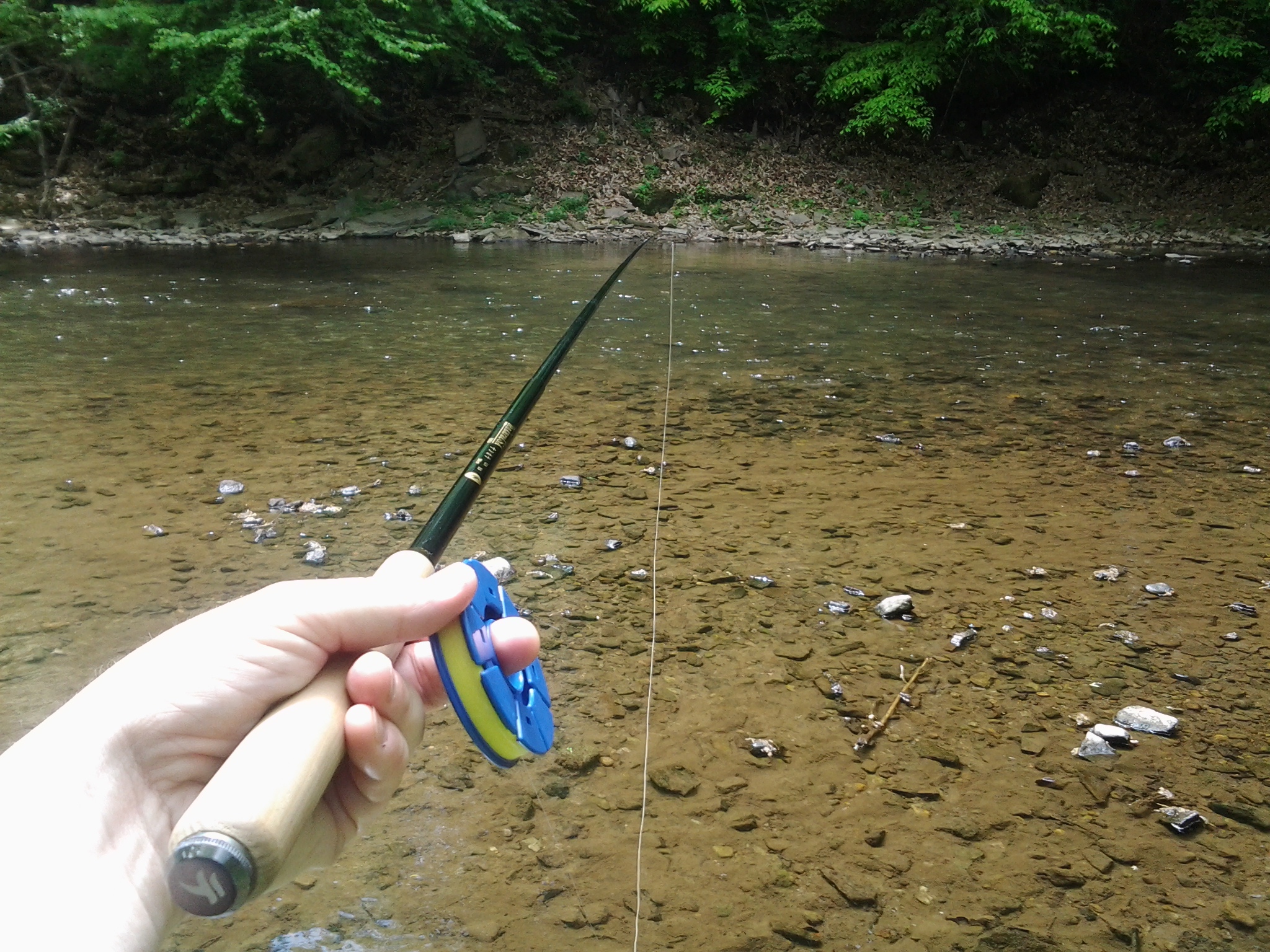
Tippet, here in 2015, takes the form of three to six feet of 4x monofilament knotted to a twelve foot Level Line or Traditional Tapered Line. The less opaque Level Line makes a better choice in skinny water and finds itself used more often for this fly fishing. The line and leader formula gives a surging bass of three pounds sporting opportunity to break free into cover. Fishes with a face full of weed can come with this territory, making a stiffer 7/3 flex like that of the Tenkara USA Yamame rod a prudent choice.

Fights are fun, and fishes landed by bending rod and body in the protracted wrestle strike the profile of a true football. Nerf nerds might appreciate a comparison in the mix as well. A female, long and muscled, at this time of year will feel deflated and seem somewhat airy next to an earlier one heavy with eggs, the kind of bass an angler with a soul let rest, as she is best then left alone.

Aggressive females: the after party is a second story. Hungry, collected, they strike if presented a morsel of opportunity during a cruise in open water. A big girl emerges from cover with a slow, confident pulse that excites. Casting form may suffer from adrenaline jitters unless absolute focus is maintained.

The female Largemouth Bass now wants to bite, to pounce on prey lingering too far from a green algae mat or lily pad or stand of pickerel weed. The pond permit, the Bluegill, shares the pattern. Olive and silver in tone with distinct vertical bars, the ladies inhale a fly, hold it in mouth often without the hook penetrating, making release easy if forceps have been brought along.
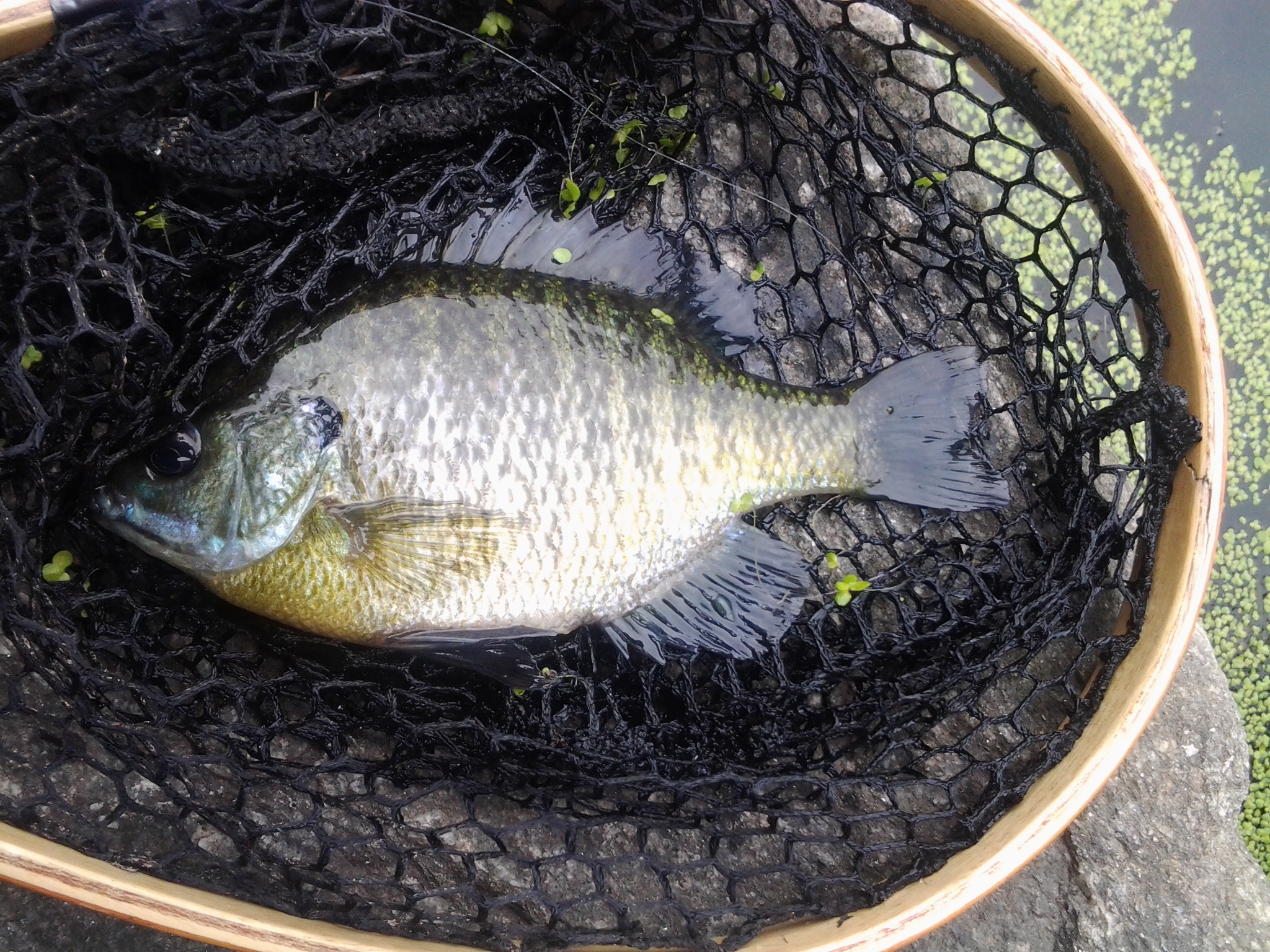
 

Aggressive Female Bluegill (06 2015)

Aggressive Female Bluegill
(06 2015)


Meanwhile, male Centrachidae are too busy to bite. Young bucks are swift, nimble, and chase instead of take. Try your best. The men are interested in pushing you away, not pulling. Noses nudge a fly pattern along, far away from nests full of fry, far from from a potential hook set. Smart behavior expressed by strong fish.

From bottom to top, from end to end, full fishing reportage takes at minimum a full day to cover. The explorer angler’s hike, jog, or bike best includes some time in between to stop and read the informative historical markers and enjoy the wildflowers. Tippett’s land has changed, as has the legacy of his name. Still, scattered spots along this namesake brook in the Bronx may offer encounter with the kind of Largemouth Bass that can begin and end a memorable day in one respectable cast.


A size 8 Panfish Spider lured this solid female largemouth bass to the top. (06 2015)

A size 8 Panfish Spider lured this solid female largemouth bass to the top.
(06 2015)

– rPs 06 12 2015

Postscript: In Memory of Andrew Victor Amici, United States Navy, 1950-2015
Leave a Comment

Trout 3, Ebisu 1

Trout 3, Ebisu 1 . . .


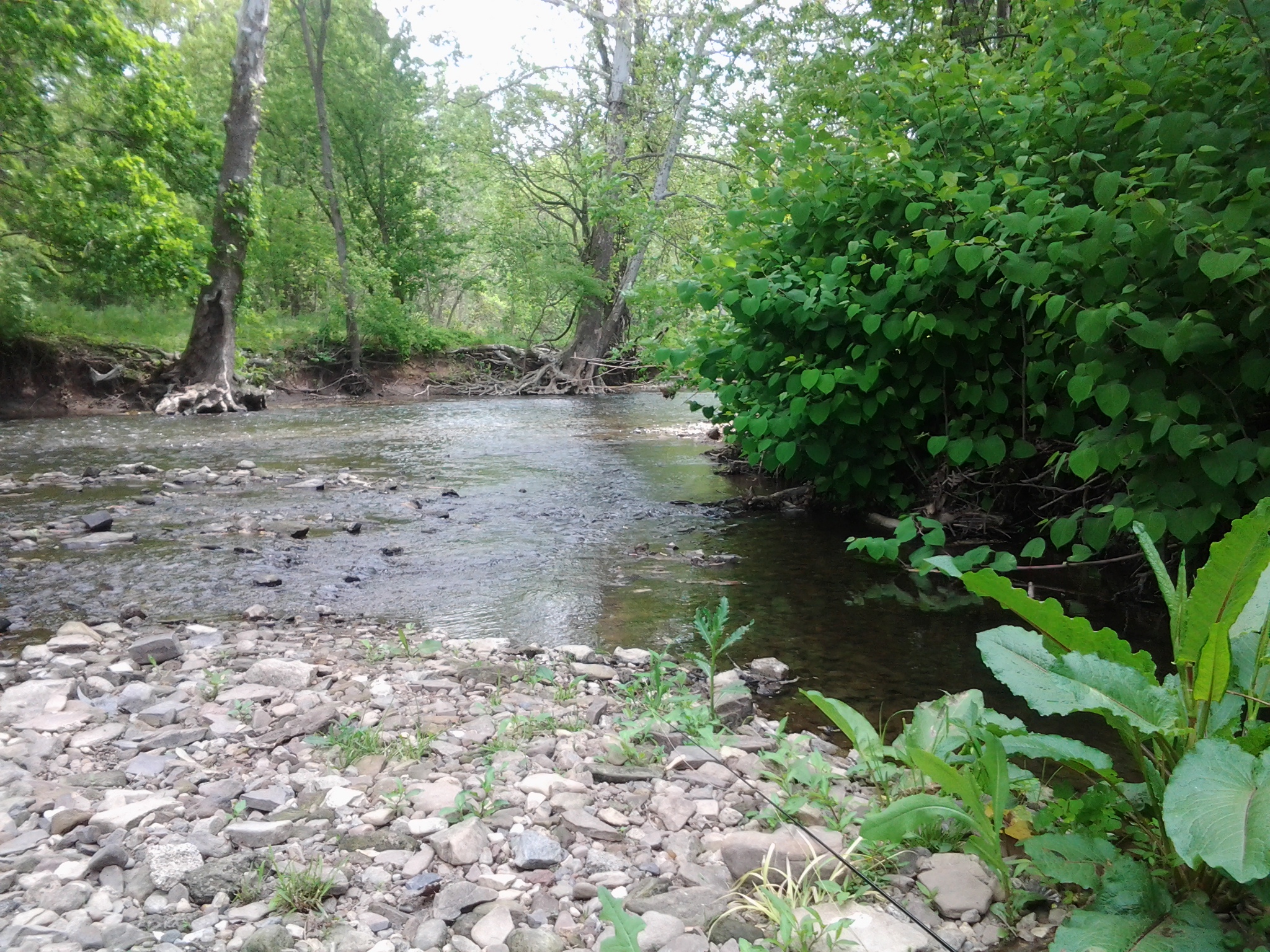
Eastern PA Trout Stream (05 2015)

Eastern PA Trout Stream
(05 2015)


Streams that for whatever reason hold a sparse number of trout, perhaps two or three per mile, can make even a stocked trout fishery a challenge tenkara can handle.

Handle of pine: the Ebisu this time out. The 12-foot rod’s more limber 5/5 flex allowed tighter casts within side channels the width of city sidewalks. Runs walled by spring green, everything from tenacious native saplings to the shallow-rooted immigrant Japanese Knotweed.


Side Channel Drift (05 2015)

Side Channel Drift
(05 2015)


The traditional tapered line with six feet of 6X tippet landed soft hackles and nymphs with stealth along promising seams. The pine handle gives the Ebisu the feel of a baseball bat tapering to a 1-weight graphite tipped with a matching fly line.


Pointing In The Trout's Direction: Ebisu, Line Holder, Traditional Tapered Line (05 2015)

Pointing In The Trout’s Direction:
Ebisu, Line Holder, Traditional Tapered Line
(05 2015)


The Philadelphia Phillies, hosting the New York Mets and Pittsburgh Pirates, in that order, brought me to Philadelphia for a few days. Valley Creek, French Creek, and Pickering Creek were nearby. The Wissahickon, The Schuylkill, and The Pennypack were within range. Waters borne on the pages of Philadelphia on the Fly and Small Fry: The Lure of the Little.

What mattered more than destination this time was the full fishing experience with all of its supporting details. Spring fishing offers riparian zones flush with wildflowers and songbirds and streams, some marginal at other times of the year, now with trout, holdovers, survivors from the weeks following the opener.

Reports of “little black stoneflies” were replaced by the actual witness to a few scattered rising Hendricksons approximated by a size 14. Forage of the moment took many, more meaty, forms: tiny black tadpoles, parent frogs, crayfish, and earthworms all were sighted in and along several streams. The flows were solid, clear, and warmer than expected given the long winter that had encased the Northeast in snow for three months.

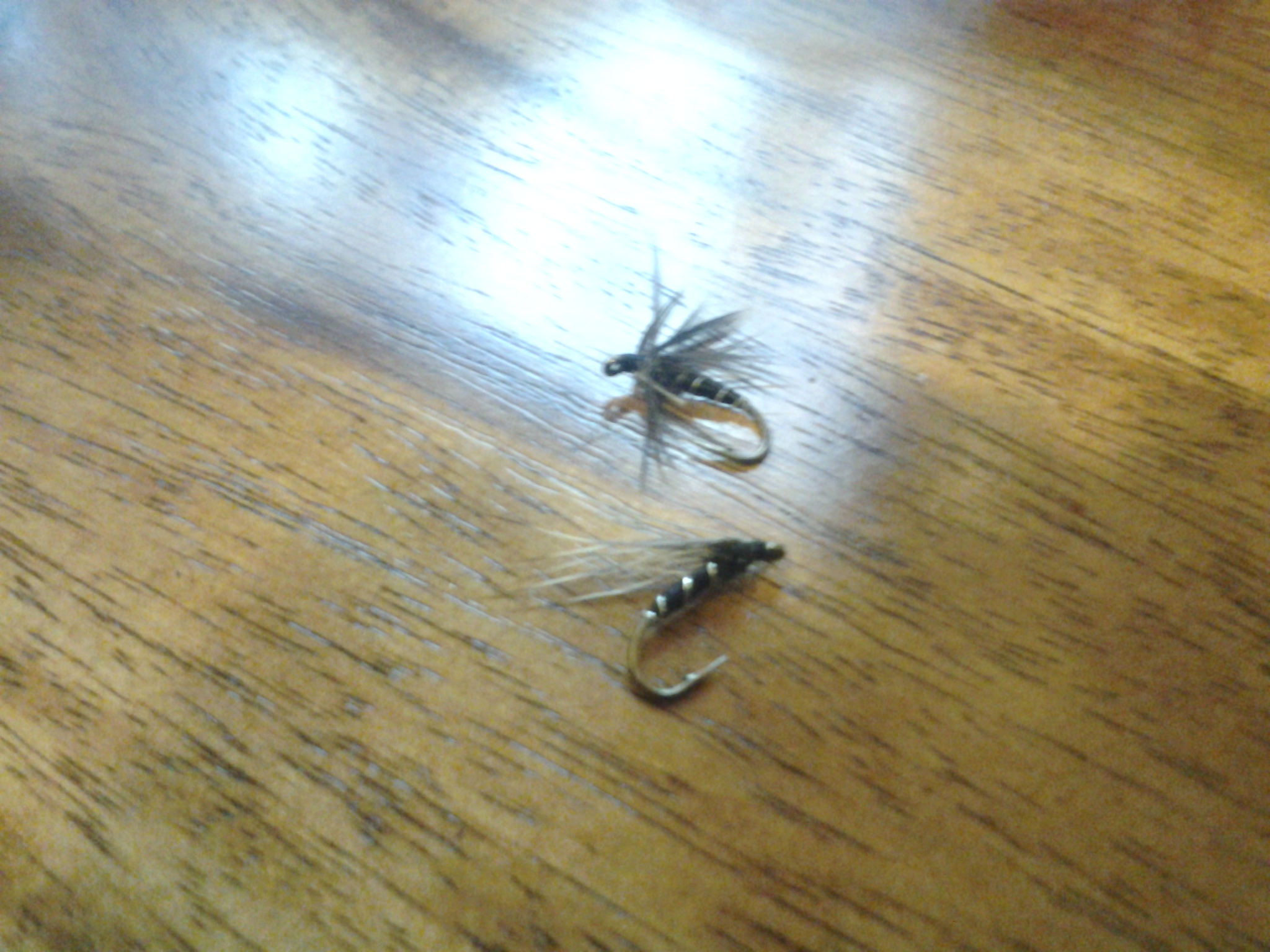
My India Hen and Herl and Silver Ribbed Deer Hair and Black soft hackles in size 12 fit just as well a hatchling tadpole. They were that small; the squiggling creature’s head and tail resembled a comma.


The Ronnie Cash: Soft Hackles Dressed In Black (05 2015)

The Ronnie Cash:
Soft Hackles Dressed In Black
(05 2015)


Both patterns worked.

Trout, the simple fins to face direct encounter, were few. Again, these were scattered survivors of the opener. Natural forage was on their menu. Artificial colors and sweeteners had been by now learned to be avoided. Imitation, a general for the surveyed stream forage, called for some personal combination of thread, feather, perhaps fur and various glitter of some material, the blacker, the better.

Tussles on the Ebisu were strong, yet static, a kind of slow motion take that saw trout drop the fly three out of four times along two wades of a mile and back.

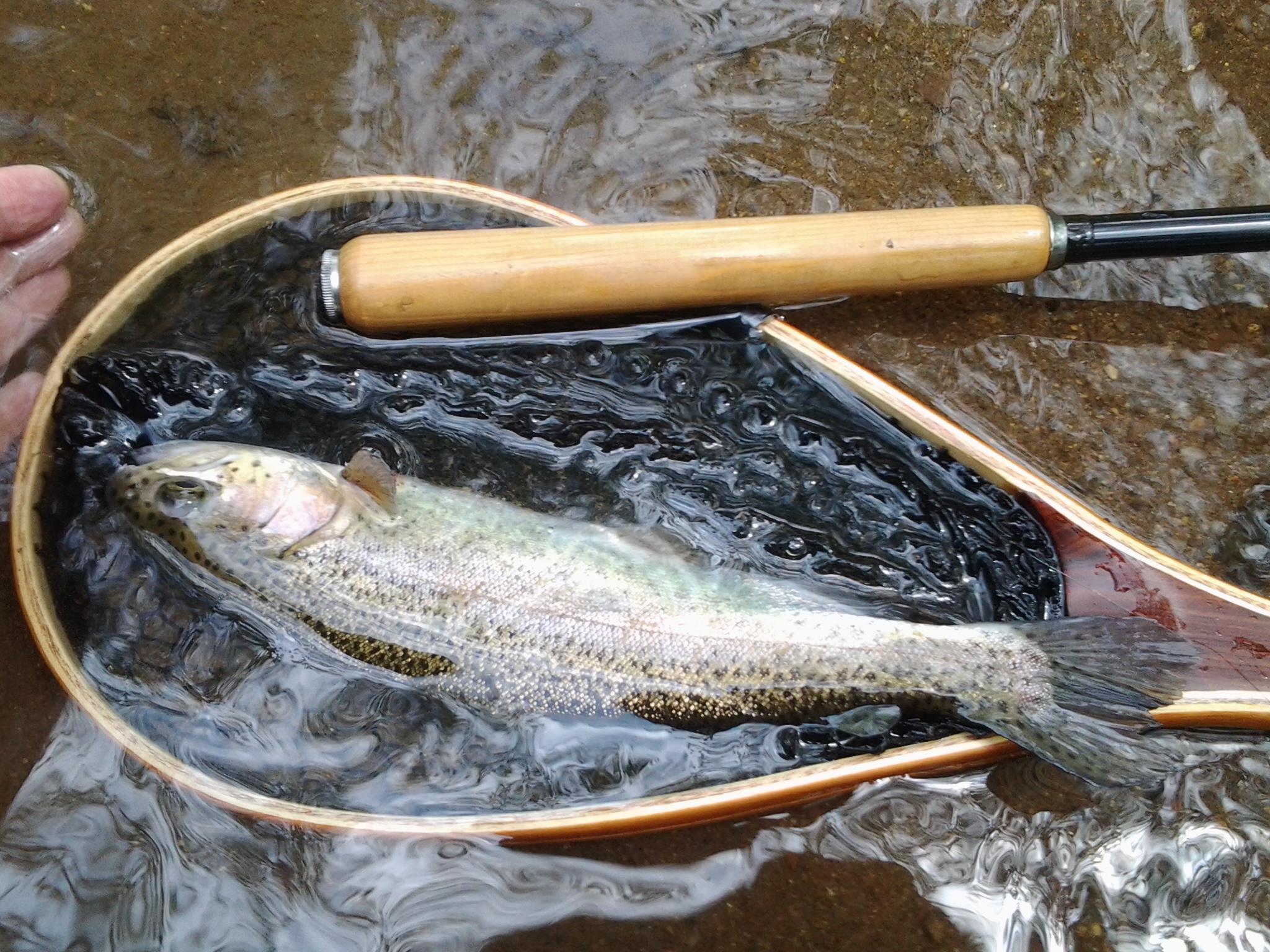
One rainbow in the net serves posterity enough. One rainbow a caudal fin short of a foot. The fish landed, and all the fish lost, were appreciated in light of the effort involved to lure their strikes.


Rainbow Trout (05 2015)

Rainbow Trout
(05 2015)


Insights on fly pattern awareness, as well as sightings of Baltimore orioles in full song and flight, wildflowers like the Mayapple, wild Mustards in abundance, plus a single Jack-in the-Pulpit, made a satisfying spring weekend of baseball and fly fishing that ended: Trout 3, Ebisu 1.

– rPs 05 13-14 2015

Leave a Comment

Tenkara & Sabiki

Tenkara & Sabiki . . .

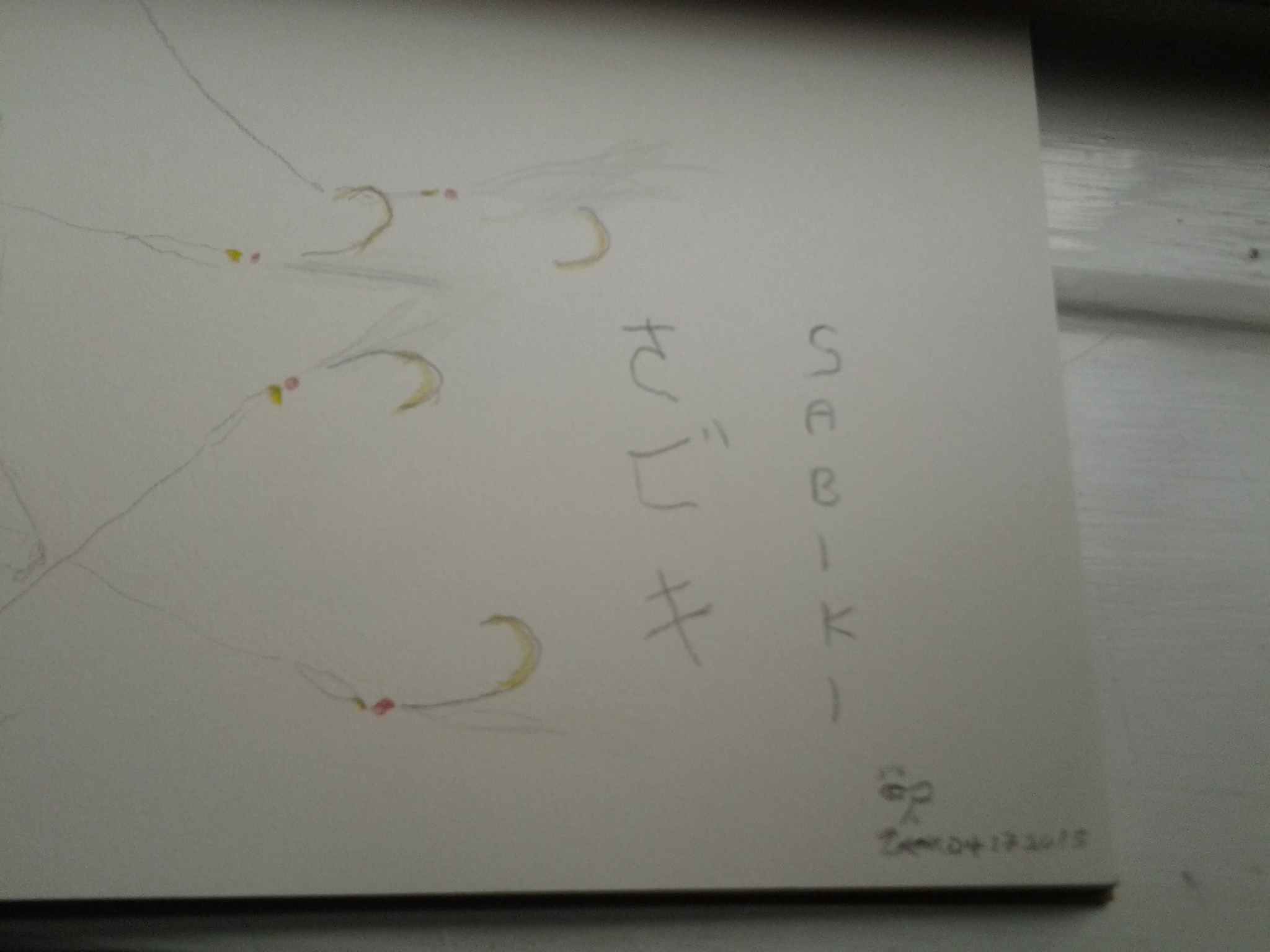
Sabiki: pencils on paper (04 2015)

Sabiki: pencils on paper
(04 2015)

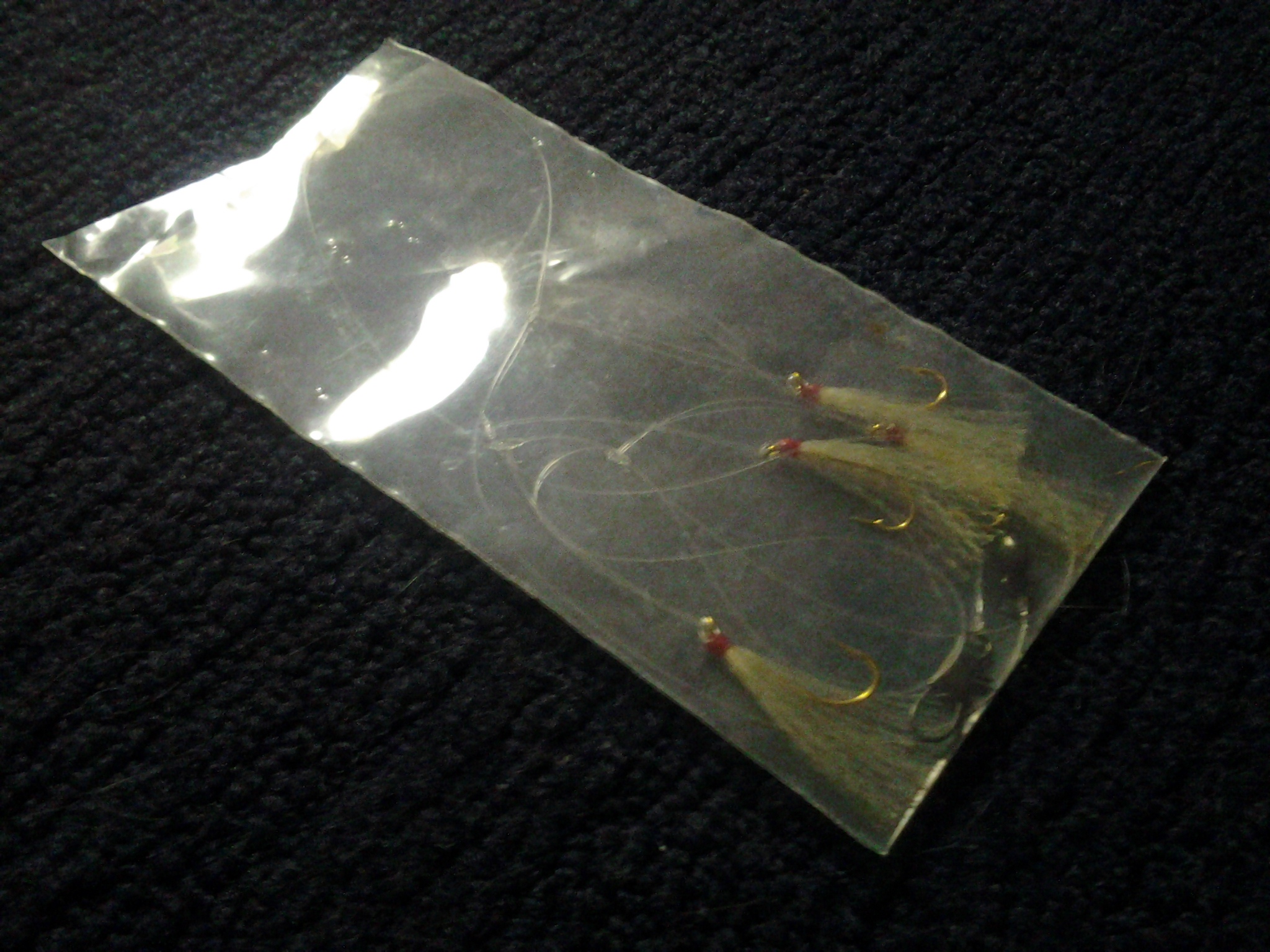
Sabiki rigs employ another Japanese method of catching fish. Perhaps some variation might be employed using a tenkara rod? Last year’s toe dip into the world of saltwater panfishing proved tenkara equipment was up to the challenge.

A Typical Sabiki Rig

A Typical Sabiki Rig

Stay tuned for more reportage from the salt. Meanwhile, traditional tenkara kebari remain a model for some of my sketches-in-progress.

Kebari Model and Sketch (04 2015)

Kebari Model and Sketch
(04 2015)

— rPs 04 30 2015

Postscript: Here is a link to last year’s initial foray into saltwater tenkara: http://tenkaratakesmanhattan.com/2014/07/25/the-salt-on-the-level/

Leave a Comment

Swegman’s Sunfish Catches A Fish

Swegman’s Sunfish Catches A Fish . . .

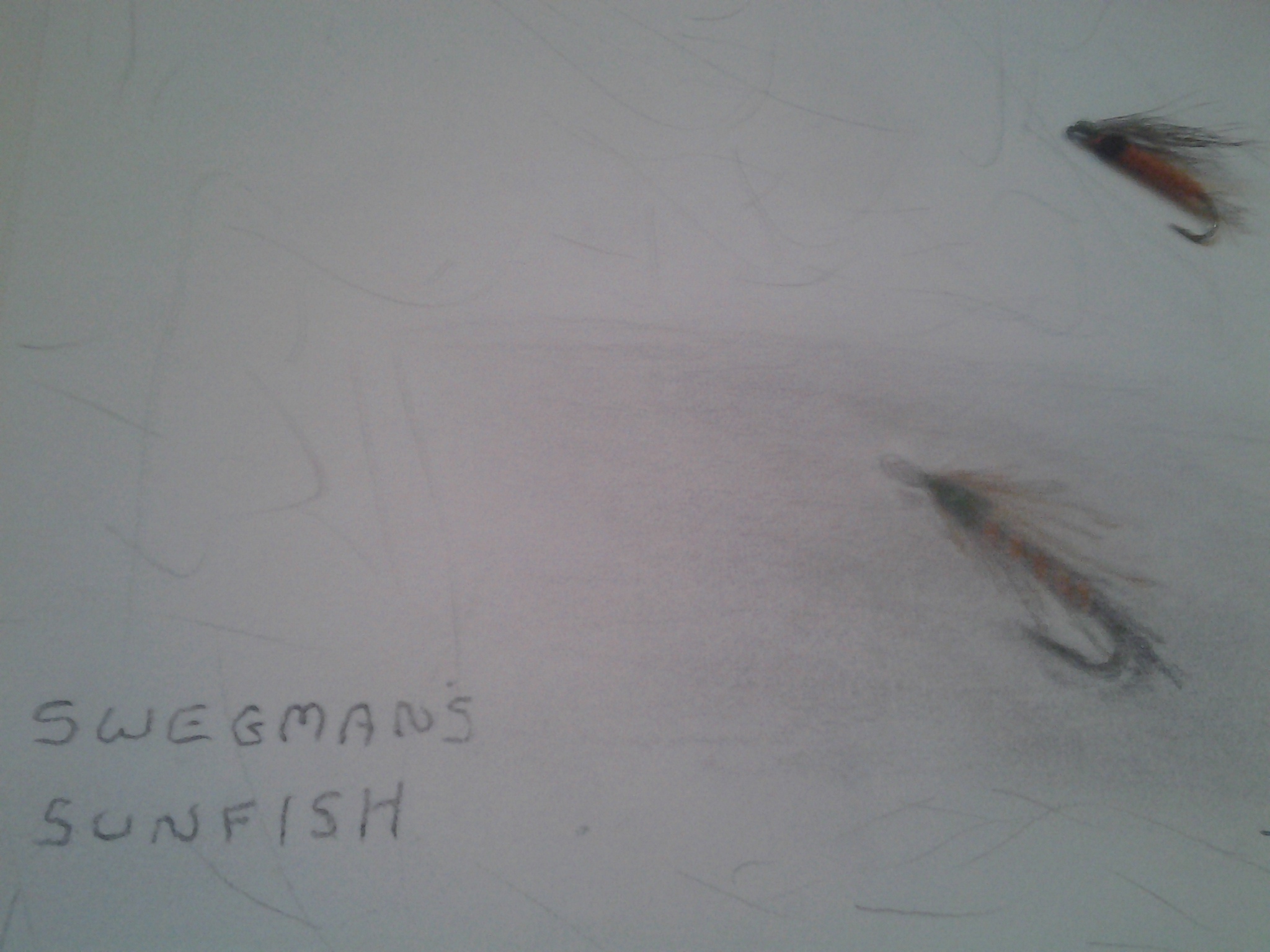
Swegman's Sunfish

Swegman’s Sunfish

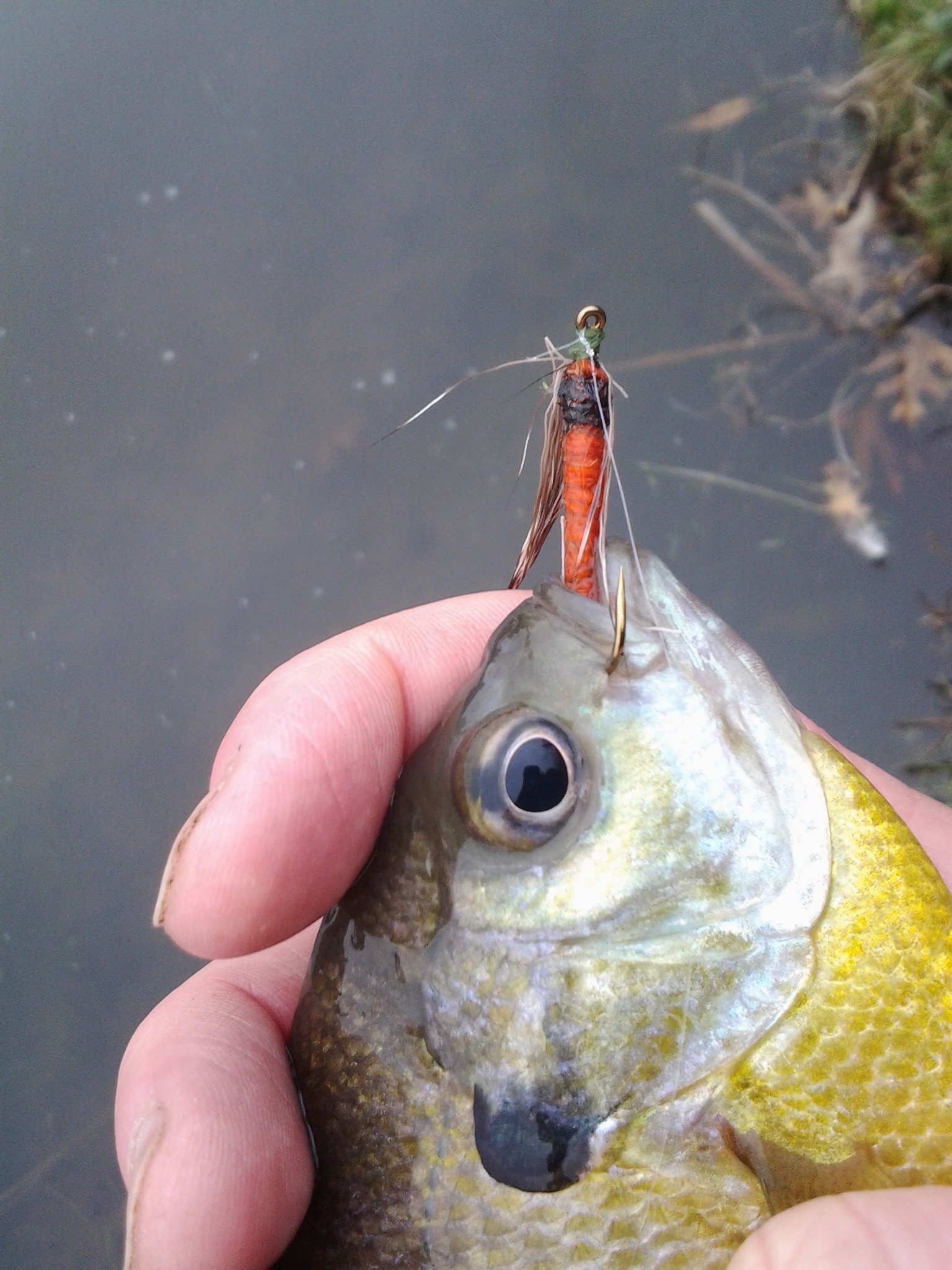
Swegman’s Sunfish lured Lepomis with orange breasts to match the twitch, hooked, and tethered to a hook holding hair rather than feather.

Swegman's Sunfish Angle

Swegman’s Sunfish Angle

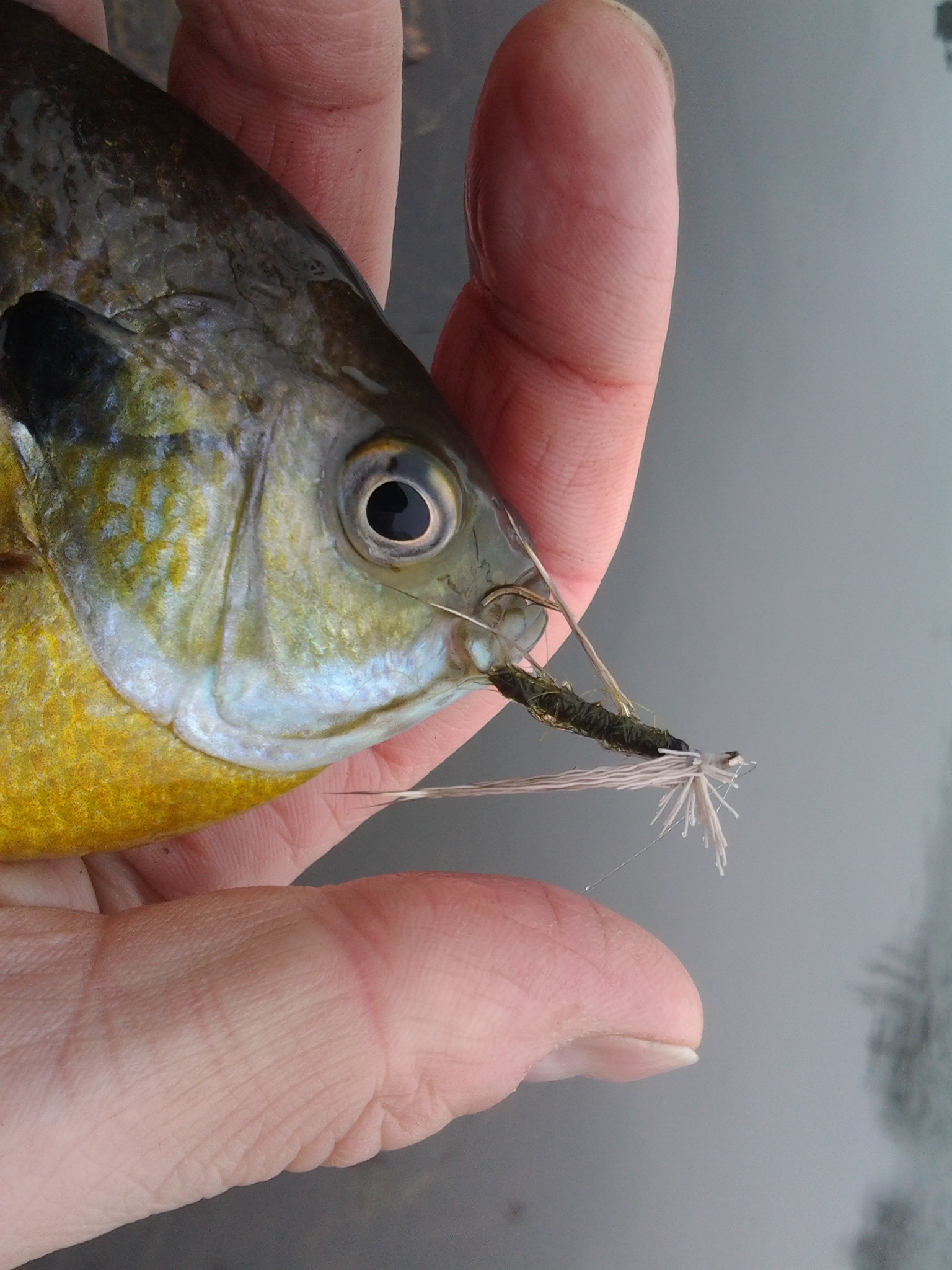
Will mention also another mention of the Green Guarantee:

Green Guarantee Incite Bluegill

Green Guarantee Incite Bluegill

As well as the smaller Deer and Green soft hackle:

Deer and Green Incite Bluegill

Deer and Green Incite Bluegill

Green guaranteed even as the NYC region remains brown.

– rPs 04 13 2015

Leave a Comment

April Gray

April Gray . . .

Gray Ghost

Gray Ghost

The image at the head is a photo in situ of Gray Ghost, an original work reproduced in color on the pages of Philadelphia on the Fly.

Check “A Very Scary Fish Story” next time you crack open the first edition.

A Very Scary Fish Story

A Very Scary Fish Story

— rPs 04 07 2015

Leave a Comment

Tenkara Art: Primary Kebari 2

Tenkara Art: Primary Kebari 2 . . .

Primary Kebari 2: a partridge and white warm season soft hackle. (image copyright 2015 by ron P. swegman. All rights reserved.)

Primary Kebari 2: a partridge and white warm season soft hackle.
(image copyright 2015 by ron P. swegman. All rights reserved.)

Partridge and White

The Partridge and White Rabbit kebari is another pale pattern for warm day hatch matches of light mayfly and caddisfly species in sizes 12 to 18. Note the traditional tenkara orientation of the feather hackle. Ribbed or not, the texture of angora rabbit adds extra body. Drift from upstream with the intent on guiding the float back to the angler’s waist or free hand unless the lure of the little trout or panfish intercedes first.

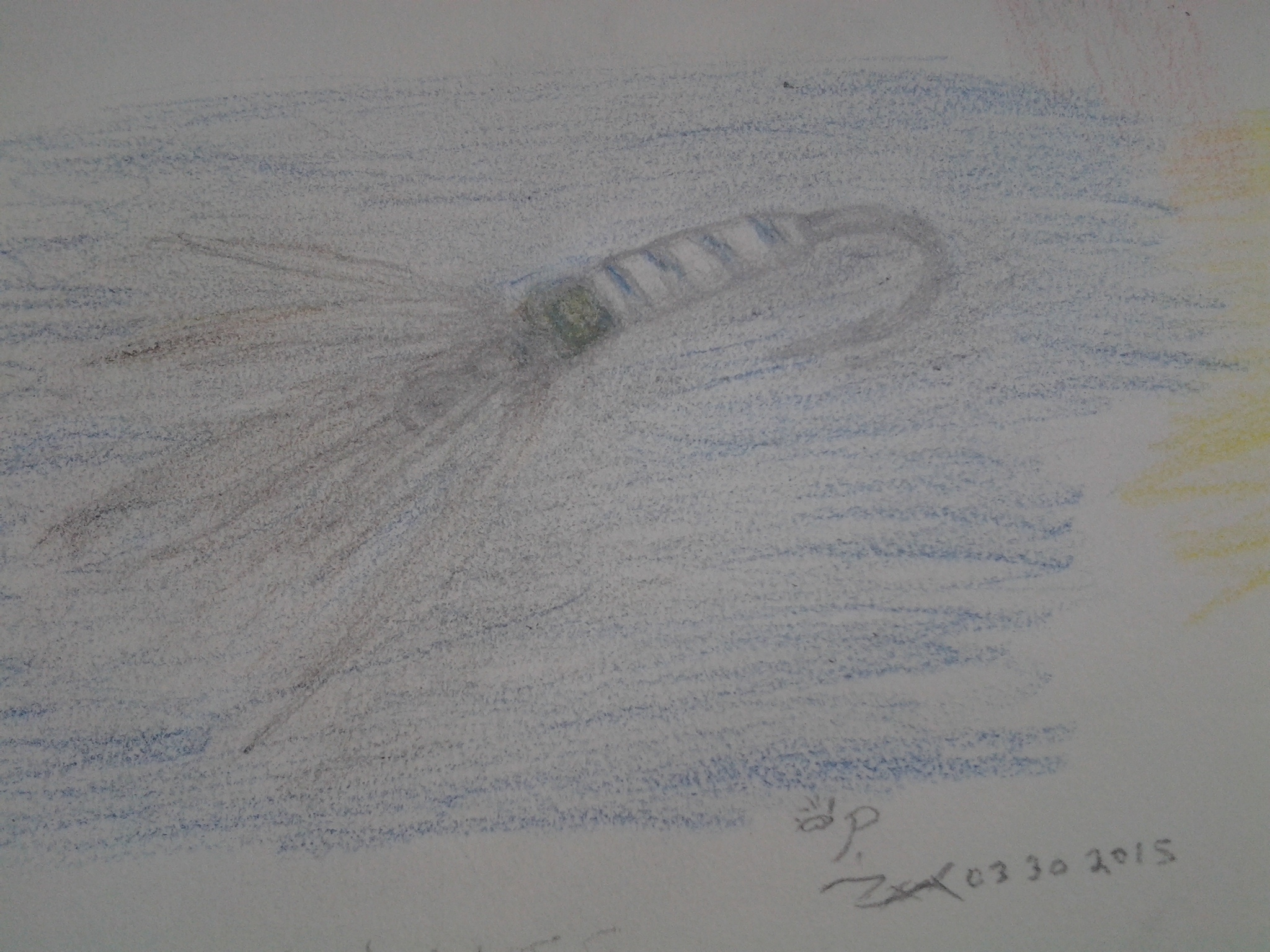
The illustration uses primary colors rendered in an abstract expressionist manner to contrast with the subaqueous white.

— rPs 03 30 2015

Leave a Comment

Tenkara Art: Deer and Green

Tenkara Art: Deer and Green . . .

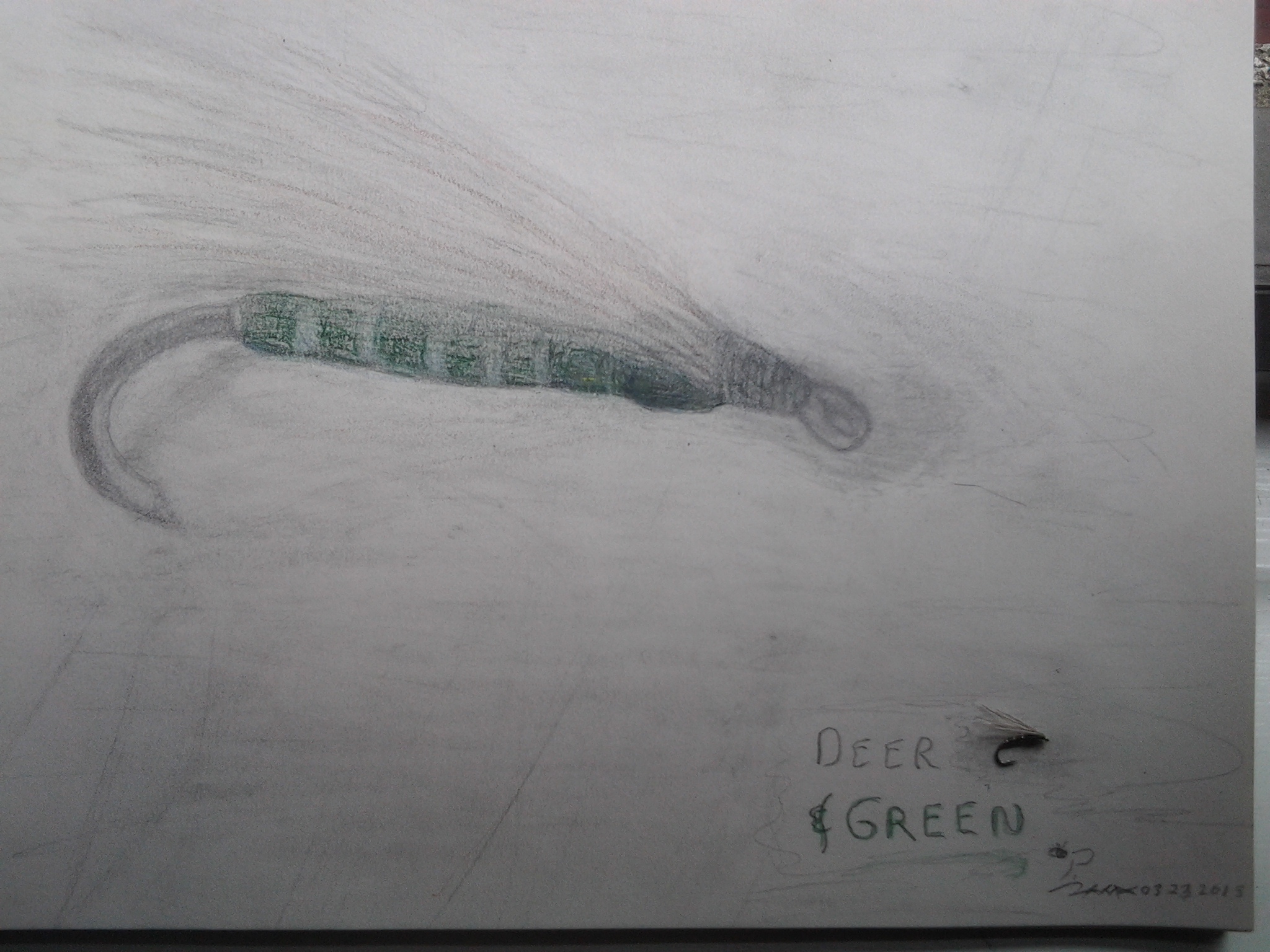
Deer and Green: an American kebari (image copyright 2015 by ron P. swegman. All rights reserved.)

Deer and Green: an American kebari
(image copyright 2015 by ron P. swegman. All rights reserved.)

The Deer Hair and Green is a soft hackle kebari tied with an American or Western oriented hackle. The recipe includes four-strand floss, French tinsel, and deer hair. Eastern brook trout are attracted to this pattern in size 14 through 18.

A large portrait of a small kebari lends an illustrative slant with a faded, marbled, impressionistic effect, the way the eyes perceive the soft blur of a pattern set in clear stream water. Colored and other pencils on acid-free paper in natural light remain my medium and process.

— rPs 03 23 2015

Leave a Comment

Bare Months Bluegills

Bare Months Bluegills . . .

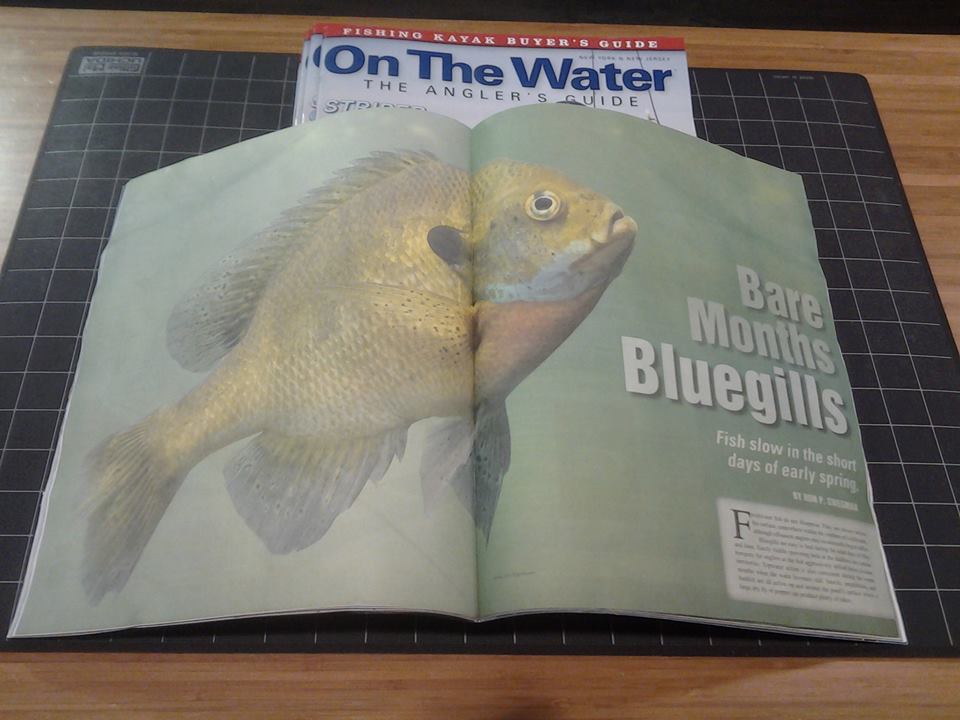
Bare Months Bluegills by ron P. swegman On the Water 03 2015

Bare Months Bluegills
by ron P. swegman
On the Water 03 2015

The March 2015 issue of On the Water features my story “Bare Months Bluegills”

Bluegills can be difficult to find and fish for during the bare months, those slivers of time when the ice may be off the water and leaves are still off the trees. Elements of conventional and tenkara fly fishing are included in the piece. My personal tenkara pond fishing technique, which includes elements of high stick nymphing and the Leisenring Lift, are described along with useful nymph patterns that can coax reticent panfish to strike.

— rPs 03 09 2015

Postscipt: The website of On the Waterhttp://www.onthewater.com/

Leave a Comment

For Short

For Short . . .

Theodore Gordon and Deer Hair Cahill Sakasa Kebari (photo taken 03 01 2015)

Theodore Gordon and Deer Hair Cahill Sakasa Kebari
(photo taken 03 01 2015)

“Deer Hair Cahill Sakasa Kebari”

Testaments of all faiths have in their spirit the sense of a letter from one to another. Letters “Of and To” are “For and From” as well. A blog in a sense is such a form. When standards are held up, when the focus is on a subject rather than an “I,” a post can be a literary act of sharing with conviction most commendable.

The level of Art is reached at times in any endeavor. The epistolary word, being of high standard, demands much from an author to become Art. Theodore Gordon’s mayfly patterns are canonical, so is his correspondence with G.E.M. Skues and Frederic W. Halford, written when he was nestled in the ‘kills of New York, read still a century after composition.

Gordon remains a compelling figure for contemplation when engaged in the sport of fly fishing and the craft of fly tying. Readers now are individuals never to be connected to the man in real time or place in the physical sense. We may never fish with him, although tethered we are by Gordon’s active mind talking from the page printed in his own careful words.

Gordon and his thoughts on the artificial fly are well known. Another fly fisher of New York, Daniel Cahill, goes more unsung, perhaps for the simple reason he did not write, although his surname stands attached to another of the canonical Catskill patterns. He was a brakeman for the Erie Lackawanna railroad and a fly tier during the late 19th Century. His Light Cahill and its variants, a staple imitation of the pale Stenecron (Stenonema) mayfly, endure as surely as those of Gordon, although the man’s actual voice, from mouth or page to ear and mind, may be silent.

Gordon and Cahill, mayfly and trout: all four have combined along one tenkara path to form a pattern I find works when trout fishing during the warm months of May through August. Shaded runs, a calm evening, or when the sun lets go of the water during the middle of a morning. A trout rising at such a time on a ‘kill might find such a basic pattern effective fished wet or dry.

I combined the deer hair I have kept close this tying season with 6/0 olive, tan, black, or white thread and bodies of yarn, feather, floss, tinsel necked with a standard peacock herl thorax. One with an angora rabbit fur body resembles a very impressionistic Light Cahill.

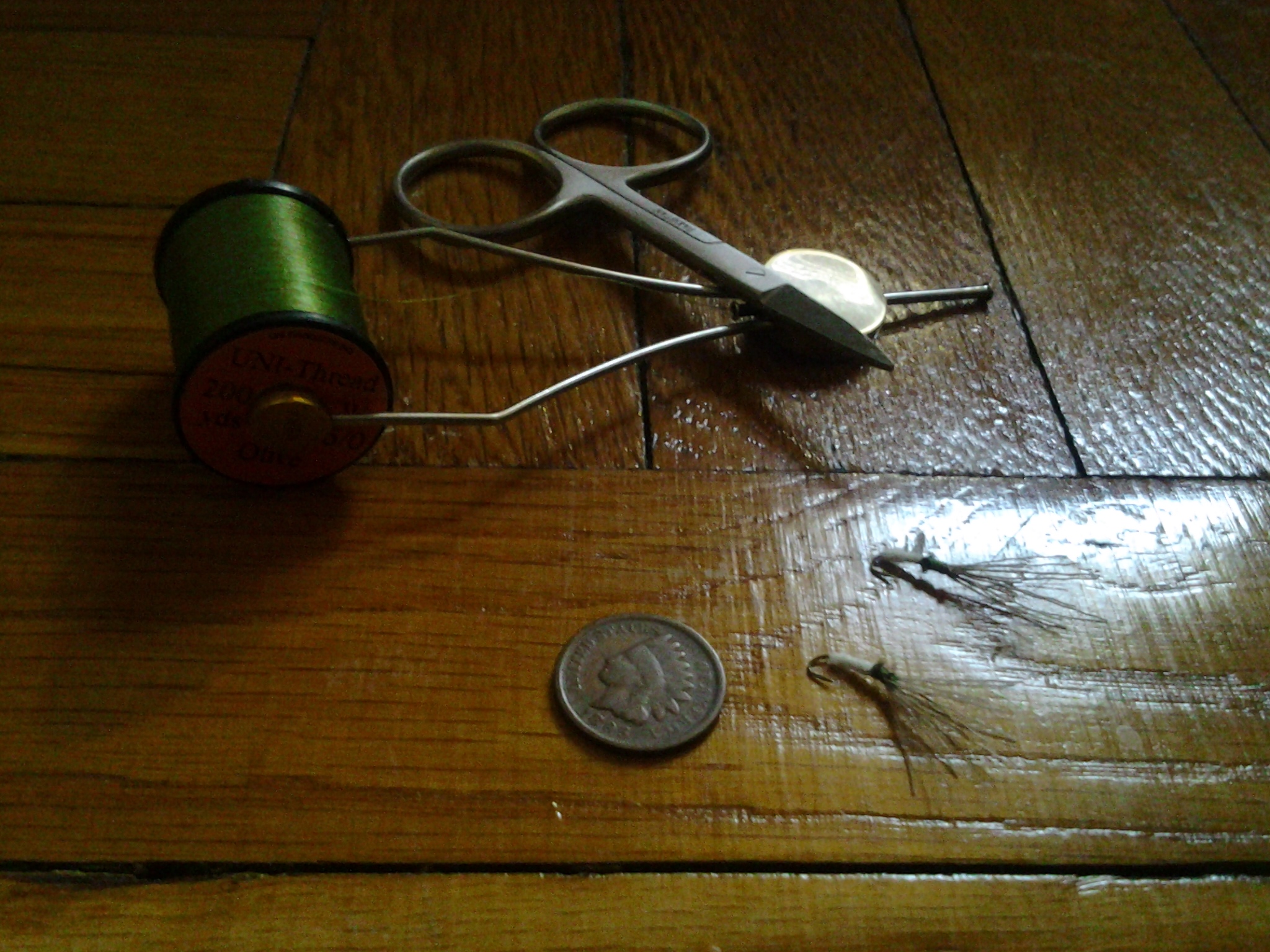
Deer hair is employed for the hackle rather than feather. This is a sakasa pattern, one that holds a Japanese traditional tenkara hackle orientation. The trick with deer hair folded forward is to retain a soft and parse head, which I half hitch at the rear base of the hackle. Scissors, bobbin, and thread are all the tools most necessary. Visual aids, if or as needed, of magnification 1.0 to 5.0 times can help on the details when hooks are on the smaller end. My preferred size for this pattern, based on satisfactory catch rates, is a 16.

“Has the pattern a name?” or “What do you call it?” has been asked. I reply in conversation: “(Swegman’s) Deer Hair Cahill Sakasa Kebari or Deer Hair Cahill Sakasa Kebari, for short.”

Recipe:
Size 14 to 18 hook
Angora Rabbit for Body
Peacock herl for thorax
Deer hair for hackle
6/0 thread for wrap

All the Tools Most Necessary: Tenkara Still Life (photo taken 03 02 2015)

All the Tools Most Necessary: Tenkara Still Life
(photo taken 03 02 2015)

Deer Hair Cahill Sakasa Kebari: a mouthful for fish . . .

– rPs 03 02 2015

Leave a Comment

Tenkara and Trichoptera

Tenkara and Trichoptera . . .

Olive Tenkara Trichoptera Larva (ties 02 17 2015)

Olive Tenkara Trichoptera Larva
(ties 02 17 2015)

“The architect in the stream.”

One could make the case that bugs are in my blood. My paternal uncle, Bernard G. Swegman, has worn several hats over the course of an academic career that includes published papers on caddisflies, the trichoptera. i

Caddis patterns are a pillar of creative fly tying and effective fly fishing. The caddis dry fly can be like potato chips to an eager trout. The nymph and emerger must offer a flavor that overcomes the texture of their exterior cases self-constructed from sticks and pebbles and mortar. Yes, to me, the caddis is an architect of a stream insect.

Besides trout, wet caddis imitations make an excellent start pattern for the smallmouth bass and sunfish found in the freestones of the Mid-Atlantic region. Green sunfish, redbreast sunfish, and rock bass all take the nymph swung by structure and drifted along current seams.

One tenkara trichoptera of my own I like to swing along rock ledges and other deep bank areas. A simple larva pattern, not unlike a Poopah pattern, the body of this one appears more straight and sinuous on account of ultra chenille instead of dubbing; I also employ a standard wet fly hook that extends the ribbed tinsel body just a bit.

A tenkara rod’s greater length allows me to high stick this fly in areas open overhead where exposed clay banks are often found beside meadows. Smaller sizes 14 through 18 in olive, tan, or gray all lure fish with the olive coaxing more specimens to net on an average day

Olive Tenkara Trichoptera Larva

Recipe:
Size 14-18 Mustad 3906 wet fly hook
Olive ultra chenille for body
X-SM French tinsel for rib
Peacock herl for thorax
6/0 Green UNI-thread for wrap

– rPs 02 17 2015

i “Occurrence Of An Intersex Individual Of Psychomyia flavida (Trichoptera)”
B G Swegman Entomological News 89: 187-188 (1978)

Leave a Comment

« Newer Posts · Older Posts »
Design a site like this with WordPress.com
Get started